
Member
Across the country, water distribution and wastewater collection systems are reaching the end of their asset life, and creative solutions are needed to restore capacities and rehabilitate the structures cost-effectively and efficiently. Several rehabilitation tools are available such as pipe bursting, spray-on liners, and liner inserts that can be used for system rehabilitation. As many of these existing utilities are in areas that have developed greatly since their original installation, the selection of rehabilitation techniques must consider factors including access, traffic volumes, potential service disruptions to customers, impacts on the community, and cost/benefit considerations. In many instances, the familiar dig-and-replace is no longer a viable option, leaving trenchless and near trench methods as the remaining viable options.
Read More
A very important but sometimes forgotten part of city infrastructure is sidewalks. Before 2018 the City of Sugar Land used contractors to identify defects using handheld GPS units to place…
Read More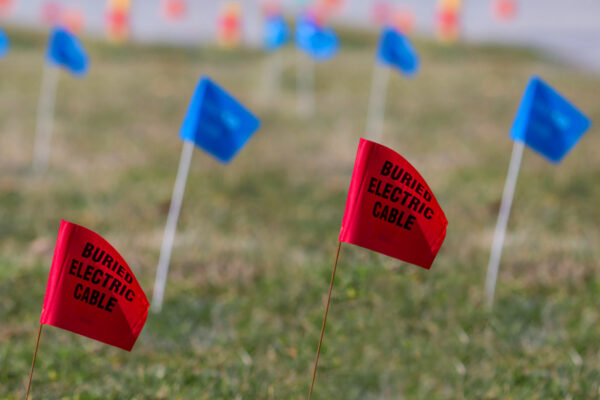
APWA’s Utilities and Public Rights-of-Way Committee developed this document to provide guidance on uniform temporary marking of underground facilities.
Read MoreCalibration is an important tool for winter maintenance best practices. Evaluating different materials, solids, or liquids for calibration is a standard for testing or running a pilot program. Properly calibrated…
Read MoreSolid waste and recycling collection services are broad and vary from community to community. Local governments across the United States often contract with private haulers to provide all or part…
Read MoreIn a post-pandemic world, public works officials will need to enhance their resiliency, add layers of redundancy, and most importantly–re-configure their systems to operate “virtually everything–virtually.” Beyond simply operating some…
Read MoreTo meet the demand for 5G, telecommunications companies are erecting hundreds of thousands of small cell towers—often two towers per streetlight. Many cities are adopting innovative strategies to not only…
Read MoreThe presentation will give a brief history of Charlotte's first African-American park, the purpose for the renovation project, determination and analysis of existing conditions, and how and why the design…
Read MoreMobile observations have become an integral part of snow and ice programs. Mobile sensors have also evolved throughout the years from traditional units that only gave air and pavement temperatures. Learn about the FHWA IMO (integrating mobile observations) initiative. Learn how these sensors have evolved and what these new units are capable of doing. The speakers will discuss how they help both the operator and the agency, how the data is visualized and used, and how agencies and airports have implemented these units.
Read MoreThe speaker will share how bringing new ideas to his department as a new Street Supervisor were initially met with resistance, making his transition difficult. However, as time went on, with some employees leaving and new ones being hired, he was able bring new strategies from the APWA North American Snow Conference to his division. By learning how to get total team buy-in and learning from his failures, the department is now seeing great success with snow removal efforts while minimizing salt use.
Read More