15-Minute City
“A 15-minute city enables residents to access most daily amenities within a 15 to 20-minute walk, bike or other mode of transportation from any point in a city, town or village regardless of size. The concept integrates transportation planning, urban design, mixed-used development, safety on streets and sidewalks, with policy making and the real-life experiences of residents to allow for more freedom of mobility and increased opportunity” (National League of Cities).
2000-Watt Society
The 2000-watt society concept, introduced in 1998 by the Swiss Federal Institute of Technology in Zurich (ETH Zurich), aims to reduce the average primary energy use of first-world citizens to no more than 2,000 watts (equivalent to 2 kilowatt-hours per hour or 48 kilowatt-hours per day) by 2050, without compromising their standard of living (Swiss Federal Institute of Technology).
In 2009, energy consumption averaged 6,000 watts in Western Europe, 12,000 watts in the United States, 1,500 watts in China, and 300 watts in Bangladesh (Swiss Federal Institute of Technology).
Circular Economy
“The Circular Economy is a model of production and consumption which involves sharing, leasing, reusing, repairing, refurbishing and recycling existing materials as long as possible. In this way, the life cycle of products is extended. In practice, it implies reducing waste to a minimum. When a product reaches the end of its life, its materials are kept within the economy wherever possible thanks to recycling. These can be productively used again and again, thereby creating further value” (European Parliament).
Climate: Mitigation and Adaptation
Mitigation: “Avoiding and reducing emissions of heat-trapping greenhouse gases into the atmosphere to prevent the planet from warming to more extreme temperatures” (World Wildlife Fund).
Adaptation: Altering our behavior and systems to reduce vulnerability to extreme weather events, sea level rise, droughts, wildfires, and other climate-related impacts.
Green Infrastructure
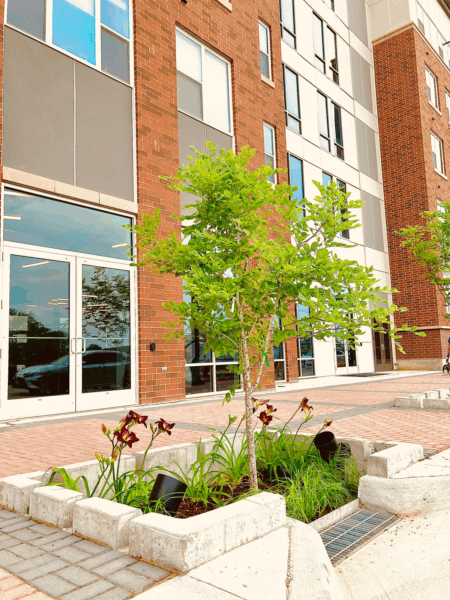
"The range of measures that use plant or soil systems, permeable pavement or other permeable surfaces or substrates, stormwater harvest and reuse, or landscaping to store, infiltrate, or evapotranspirate stormwater and reduce flows to sewer systems or to surface waters” (US Congress, Water Infrastructure Improvement Act, 2019).
Hydrogen Energy
“Hydrogen is a versatile energy carrier that can be used to power a range of applications, from transportation to industry. It produces zero emissions when burned, making it an attractive option for reducing greenhouse gas emissions. However, not all hydrogen is created equal, and there are different types of hydrogen available, each with its own advantages and challenges.
- Grey hydrogen is the most commonly used type of hydrogen, accounting for around 95 percent of global hydrogen production. It is produced from natural gas using a process called steam methane reforming (SMR), which involves reacting methane with high-temperature steam to produce hydrogen and carbon monoxide. The carbon monoxide is then reacted with more steam to produce additional hydrogen and carbon dioxide. The resulting hydrogen gas is then purified for use. While grey hydrogen is readily available and relatively inexpensive, it is not a clean source of energy. The production process generates significant carbon emissions. It is estimated that for every kilogram of hydrogen produced using SMR, around 9-12 kilograms of CO2 are emitted into the atmosphere. As such, it is not considered a sustainable source of energy.
- Blue hydrogen is similar to grey hydrogen in terms of the production process, but it includes an additional step known as carbon capture and storage (CCS). This involves capturing the carbon emissions generated during hydrogen production and storing them in geological formations deep underground, preventing them from entering the atmosphere. The addition of CCS makes blue hydrogen a cleaner option than grey hydrogen, reducing the emissions associated with hydrogen production by up to 90 percent. However, blue hydrogen still relies on fossil fuels as a feedstock, and the carbon capture and storage process can be complex and costly.
- Green hydrogen is produced using renewable energy sources, such as solar or wind power, to power the process of splitting water into hydrogen and oxygen through an electrolysis process. This results in a zero-emissions hydrogen source, making it the cleanest option. The hydrogen produced can then be used to power a range of applications, from transportation to industry. While green hydrogen is the most sustainable source of hydrogen, the production process is currently more expensive than grey or blue hydrogen. It also requires significant investment in renewable energy infrastructure, such as solar or wind farms, to produce the necessary electricity.
- Other types of hydrogen. In addition to grey, blue, and green hydrogen, there are other types of hydrogen in development, including turquoise and yellow hydrogen. Turquoise hydrogen is produced using natural gas, but the carbon emissions are captured and used for other purposes, such as enhanced oil recovery. Yellow hydrogen is produced using biomass, such as agricultural waste or forestry residue, and can be a low-carbon option.
Industrial Symbiosis
“The association between industrial facilities or companies in which the waste or by-products of one become raw materials for another.
Industrial symbiosis can be described as a collaboration between several different, often geographically proximate entities, i.e. companies and factories closely co-located in clusters or industrial parks exchanging resources (e.g. materials, energy, water and by-products) that can be used as substitutes for products or raw materials that would otherwise be imported from elsewhere or treated as waste.
Industrial symbiosis can also involve the joint provision of utilities and services between the actors in the network” (Nordregio).
Nature-Based Solutions
“Nature-based solutions (NBS) align natural and engineering processes to deliver infrastructure that provides economic, environmental, and social benefits” (American Society of Civil Engineers).
Resiliency
Resilience: The ability to prepare for and adapt to changing conditions and withstand and recover rapidly from disruptions. (FEMA.gov)
“Similar to resilience, robustness highlights the ability of systems to withstand change through both flexibility and resistance” (Nelson et al, 2012).
Sponge City
“A sponge city essentially soaks in rainwater and retains excess stormwater, then filters and releases the water slowly, much like a sponge. Sponge cities primarily utilize BMPs like wetlands, greenways, parks, rain gardens, green roofs, and bioswales” (People’s Republic of China, 2022).
Sustainability
Sustainable: The ability to meet the needs of the present without compromising the ability of future generations to meet their needs. (https://www.un.org/en/academic-impact/sustainability)
Symbiotic City
“A future landscape that creates beneficial relationships between humans and nature” (The symbiotic city; Voices of nature in urban transformations,” Wageningen Academic Publishers, 2022).


 Drinking Water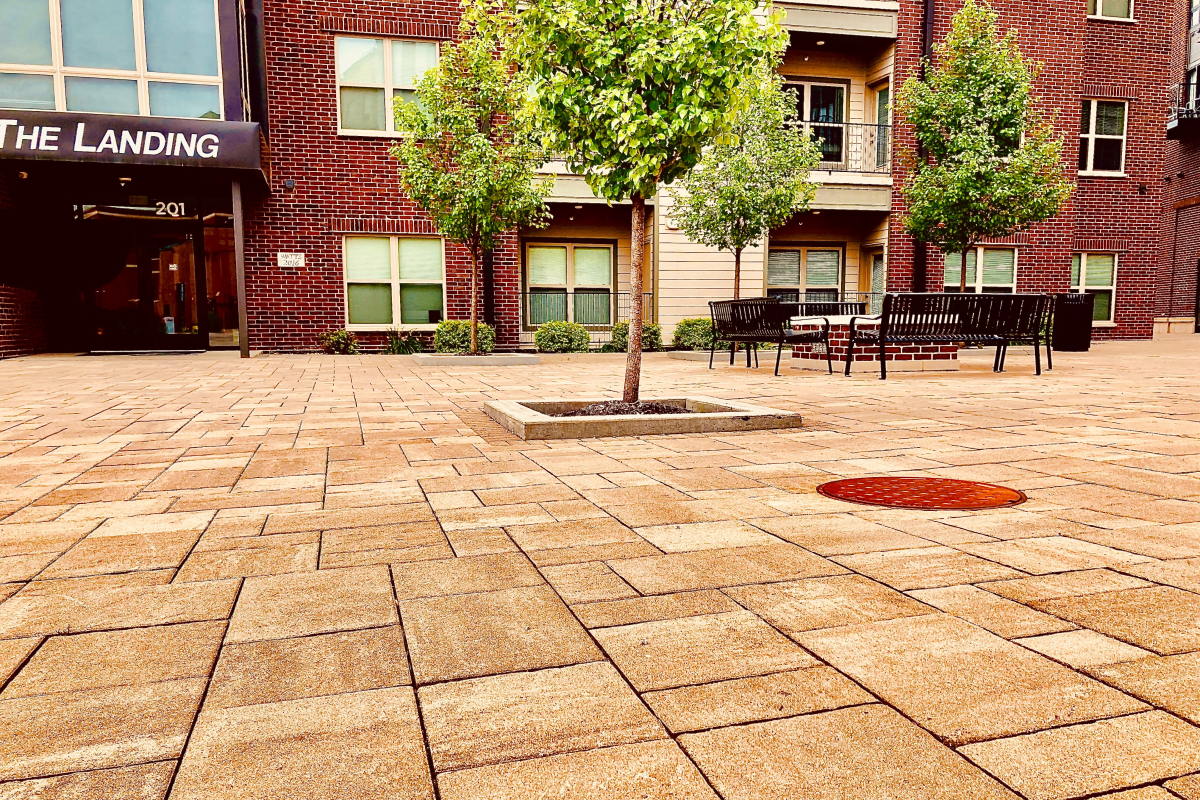
 Green Infrastructure Operation and Maintenance wiki