

Committee News

Lowell Patton, Vice Chair

Margaret Medellin, PE, MPA, Chair
One of the most important ways APWA supports public works professionals is through developing educational resources and professional credentialing programs. As members of the Engineering and Construction Committee, we believe professional credentials help recognize the knowledge, experience, and commitment that public works professionals bring to their communities every day. That is why our committee is proud to support the Certified Public Infrastructure Inspector (CPII) program and contribute to resources such as the Construction Inspection Manual, which is currently being updated by a team of dedicated volunteers.
In a recent article, Lowell Patton, Engineering and Construction Committee Vice Chair and former Chair of the CPII Certification Council, highlighted the unique value of the CPII credential. Unlike many inspection certifications that focus on a single discipline or agency, CPII recognizes broad experience and knowledge across public infrastructure inspection. As Lowell noted, “An inspector that possesses the CPII certification can give employers and supervisors confidence that they have both the experience and knowledge required to perform effectively.” The credential provides value not only to employers seeking qualified professionals, but also to inspectors looking to demonstrate their expertise and advance their careers.
Credentials are about more than passing an exam. They represent a commitment to professional excellence and lifelong learning. That is why support from APWA’s education and technical committees is so important. By helping develop educational resources, reviewing industry practices, and supporting credentialing programs like CPII, committees help ensure that APWA credentials remain relevant, respected, and aligned with the real-world challenges and changes facing public works professionals. We are proud to support these efforts and the professionals who continue to raise the standard for our industry.
Certified Public Infrastructure Inspector (CPII)
The CPII certification program is for individuals who inspect the construction of public infrastructure (e.g., roadways, highways, utilities, bridges, dams) and facilities (e.g., pump stations, treatment plants, water storage facilities) and other types of construction work and materials to ensure compliance with plans and specifications.
The certification covers key concepts such as materials testing, planning, management, compliance, and documentation. These skills are essential to consistently delivering successful infrastructure projects.
Learn more about the CPII certification or apply.
Live Programs
Register today for the July 23 Click, Listen & Learn, “Resilient by Design,” to learn how innovative design, collaborative planning, and data-driven decision-making are helping public works agencies build more resilient infrastructure in the face of increasingly severe and unpredictable weather.
Trending Resources
Exploring and Selecting Alternative Project Delivery Methods
As design and construction delivery continues to evolve, alternative project delivery (APD) methods are changing how projects are planned, delivered, and measured for success. This session provides an introduction to these approaches, covering the fundamentals and practical applications of design-build (D-B), construction manager/general contractor (CM/GC), construction manager at risk (CMAR), progressive design-build (PDB), and integrated project delivery (IPD), along with other emerging delivery methods gaining traction across the industry.
Building a Responsible and Responsive Public Drone Program
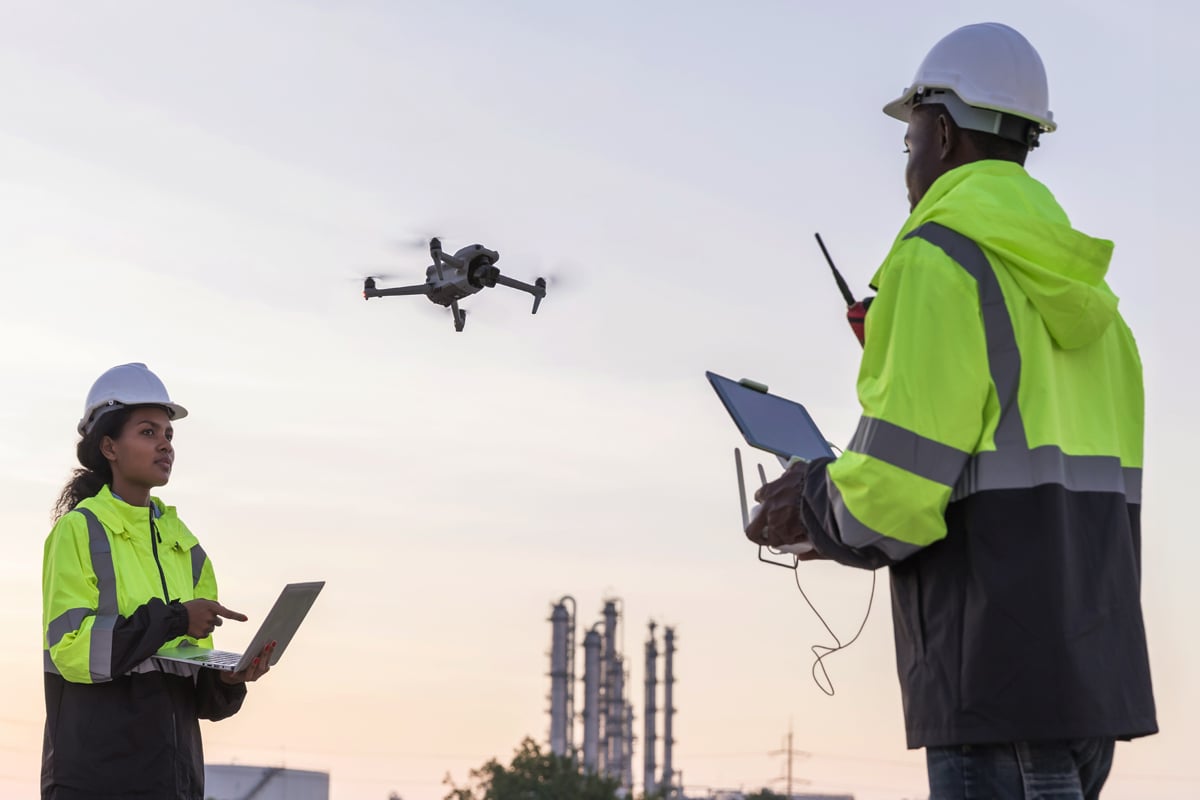
Discover how the Salem, Oregon, Public Works Department successfully launched their drone program. Learn about the different uses of drone data in municipal operations, from infrastructure inspections to emergency response.
AI Case Studies in Sewer Inspection and Pavement Assessment
This recorded program will explore the use of non-generative AI tools in public works through case studies on sewer inspection and pavement assessment. Presenters will discuss strategies for implementing AI tools in the field, the importance of data assessment, and the impact of AI tools on new project design.
APWA Partners
Engineering Workforce Consortium
The Engineering Workforce Consortium (EWC) held its third annual strategic planning meeting on April 21, 2026. The members met for a productive meeting to set priorities around recruiting and retaining engineering and public works professionals. The consortium identified five focus areas to further develop into action items. Those five areas include:
- Early Career Awareness and Recruitment
- Retention, Professional Development, and Leadership
- Credentialing and Licensing
- Policy and Advocacy
- Organizational Capacity Partnership and Innovation
The EWC is a joint effort led by the American Council of Engineering Companies (ACEC), APWA, and the American Society of Civil Engineers (ASCE) with a singular focus to address and provide solutions to the workforce shortage facing the engineering and public works industries. The EWC has grown to 21 organizations, all working on attracting the next generation of engineering talent. Learn more about the EWC here.
BuildWitt
BuildWitt offers public works professionals access to a training management system that offers a variety of training videos great for recruiting, training, and retaining engineering and construction staff. APWA members receive a special discount through our partnership. Learn more about BuildWitt by accessing the recording from our June Partner Showcase with BuildWitt:
Envision Sustainability in Public Works Projects
The Envision Sustainability Framework was designed to help infrastructure stakeholders implement more sustainable, resilient, and equitable projects. Managed by the Institute for Sustainable Infrastructure (ISI), Envision can be aligned with the specific goals of an infrastructure project or program.