
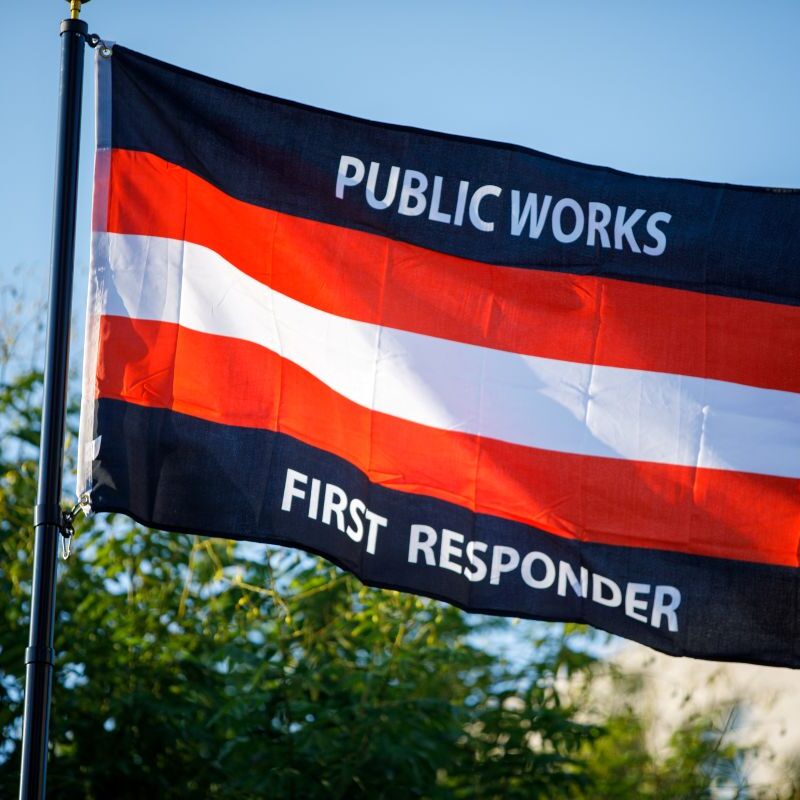
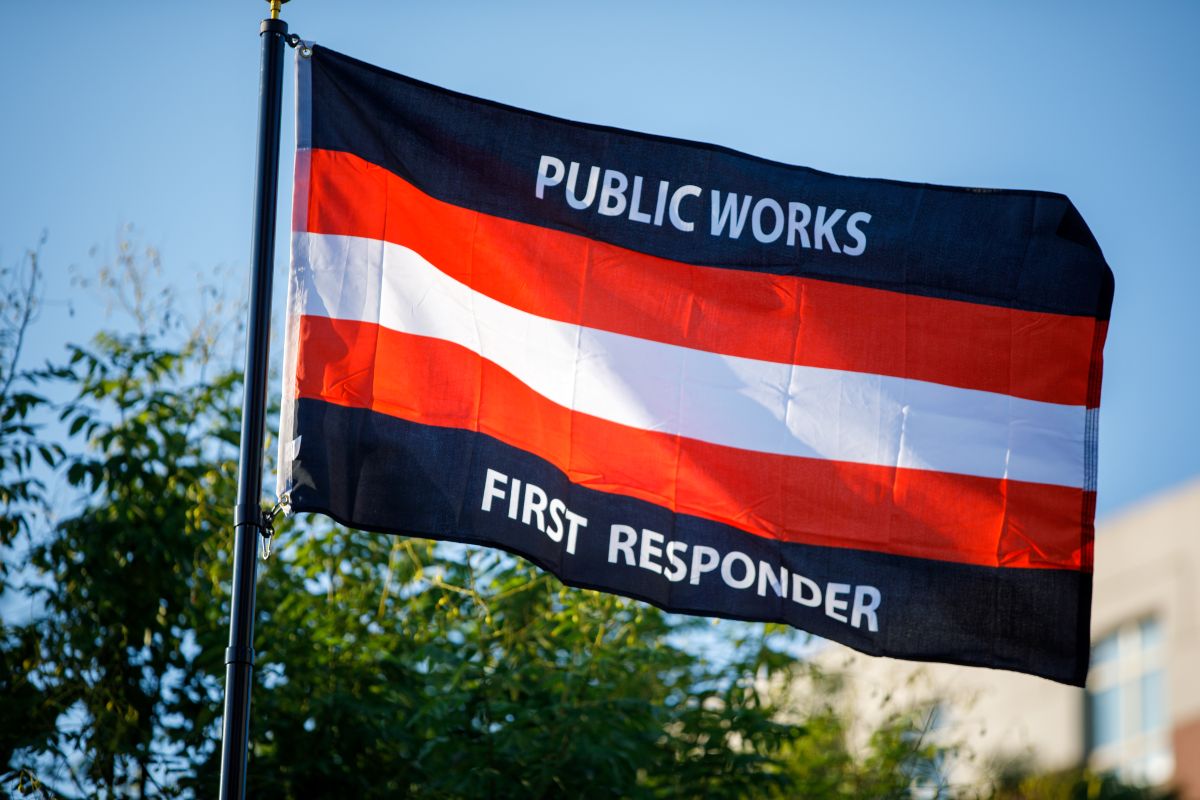
While police, fire, and EMS are commonly recognized as first responders, public works professionals are often on the scene as well, quietly doing essential work to restore normalcy in communities without the praise or recognition.
In this week’s edition of Public Works Radio, the official podcast of the American Public Works Association (APWA), we’re exploring the stories of why public workers are first responders and addressing the efforts it will require to ensure more formal recognition of public works professionals designated as first responders.
The movement requires many public workers to step out of their comfort zones, help get the word out about the fundamental role public works plays in partnership with their fellow first responders, and ensure more people in their communities understand the incredible work they do.
In this episode we hear from the following guests:
- Philip Mann. He serves as Special Project Administrator in the City of Gainesville, Florida, and previously served as Public Works Director.
- Leon Berrett. He is retired from Salt Lake County Public Works in Utah, where he previously served as Associate Director of Public Works Operations.
- Kürt Blomquist. He retired in 2023 from the City of Keene, New Hampshire, where he served as Public Works Director, Assistant City Manager, and Emergency Management Director.
Public Works Radio is hosted by Bailey Dickman, Senior Digital Marketing Specialist with APWA. Each episode dives into a wide range of topics designed to educate and inspire, making public works more visible to everyone—from the general public and elected officials to industry peers and the media. If you haven’t already, please subscribe wherever you get your podcasts, rate and review the show, forward it to a friend, and drop us a note at podcast@apwa.org so we can hear your feedback directly!
More Show Notes and Links
- Public Works as First Responders resources from APWA
- Lessons as First Responders: Responding to the 2024 Hurricanes (webinar)
- From FEMA’s YouTube Channel, “Public Works & Emergency Management”
- Learn more about Kürt Blomquist’s impact on Keene, NH
- Phillip Mann on LinkedIn
Transcript
View transcript >
0:00:00.4 Philip Mann: Our unified command team universally consists of police, fire and public works. And the biggest thing we do after an emergency is make normal happen again. To me, it’s all about all of the first responders doing our respective jobs to make the other responders’ jobs easier.
0:00:18.0 Bailey Dickman: That was Philip Mann. He serves as the special project administrator for the city of Gainesville, Florida, where he previously held the position of public works director. While police, fire, and EMS are commonly recognized as first responders, public works professionals are often on the scene as well, quietly doing the essential work without praise or recognition to restore normal. The quiet courage that public works professionals display on a daily basis saves lives and rebuilds communities. Here’s Leon Berrett, who served as associate director of public works operations in Salt Lake County, Utah, before his recent retirement.
0:00:48.9 Leon Berrett: They don’t recognize the value that we have until a disaster happens. And then suddenly, “Oh yeah, of course, we need to do this.” But in the preparation that we need for the training, the equipment, the commitments, they may be a little bit lacking there sometimes until a disaster happens and then it’s a wake-up call.
0:01:10.8 Bailey Dickman: Welcome back to Public Works Radio, the official voice of the American Public Works Association. Each episode we’re diving into a wide range of topics designed to educate and inspire, making public works more visible to everyone. I’m Bailey Dickman, the senior digital marketing specialist with APWA. Getting public workers recognized as first responders will require many public works professionals to step out of their comfort zone, help get the word out about the dangers and bravery of their jobs, and ensure more people in their community actually understand the incredible work they do. In this episode, we also hear from Kürt Blomquist, who retired in 2023 from the city of Keene, New Hampshire, where he served as public works director, assistant city manager and emergency management director.
0:01:48.5 Kürt Blomquist: There’s a tendency for us to, I guess, public works folks to kind of look at that, “Well, that’s just our job.” They’re right, it is just our job. But guess what? Fighting fires is the job of the fire department. Law enforcement is the job of the police department, so really our jobs are along the same lines as our brothers and sisters in the emergency service sector.
0:02:09.9 Bailey Dickman: Now let’s get into it. Here’s my conversation with the passionate and energetic trio of Philip Mann, Leon Berrett and Kürt Blomquist.
0:02:17.7 Philip Mann: Public works folks are first responders because we maintain critical infrastructure. And critical infrastructure is important to providing lifeline services to our communities. And that includes like providing water for firefighting, roads and access for police. So in order for the police, fire and public works respectively to get our jobs done, we must rely on each other. And from the public works perspective, we must respond.
0:02:52.3 Leon Berrett: I think sometimes people are kind of surprised thinking of public works as first responders until we start talking about some of the things we do. So we talk about earthquakes and there’s a lot of debris in the road, or we need to open the roads from windstorms. People realize, “Oh, yeah, you need to be there first before fire and police can even get through.” Or if there’s flooding, obviously, as good as our firefighters are, they’re not… equipped with the equipment and heavy equipment and the tools that we have to help fight flooding. If there’s water problems and water’s needed to fight fires, we have to be there or the fire department doesn’t operate. There’s just a lot of different scenarios where we are definitely first responders.
0:03:41.3 Leon Berrett: When you talk about it with other people, it becomes obvious, “Oh, yeah, of course, you have to be there.” Right now, we haven’t had a lot of snow in Utah on the roads, but there are times when we do get hit hard with snow. That is an emergency response. We need to be out there to clear the snow so emergency vehicles can get through if they’re needed, and also to provide safety for the public. And we gotta be out there quick. And so people recognize that we are first responders for snow removal, for example. And so it’s interesting when you talk to people and they don’t really think of us as first responders because traditionally we don’t go to save a life in an accident or if there’s a fire in a house, we don’t go to put out that fire. But when you start talking about the things we actually do, then it makes a lot of sense that most everybody I know agrees, “Well, yeah, of course, you’re first responders.”
0:04:38.1 Philip Mann: I live in a hurricane-prone state and so kind of like snowstorms, we get to prepare for hurricanes. And in Gainesville, part of our hurricane preparation is putting together a strike team. And that strike team includes having a fully outfitted fire engine company, a police car, a public works debris crew, and our utility company linemen. So that as Leon was talking about, we can quickly open roads after a hurricane passes, and then we can start providing the full gamut of emergency services to our neighborhoods.
0:05:14.7 Bailey Dickman: For Kürt, his military background gave him a unique perspective as to why public works professionals are first responders. And he’s been on a long-time quest to get the word out about it.
0:05:23.5 Kürt Blomquist: I started out my public works career in the military, military engineers. And in the military, of course, over time, we particularly in the ’80s and early ’90s, we were some of the first people into places because we built facilities. We built, again, in my case, we built, operated, and did maintenance on runways, et cetera. So I started off in having that view that engineering, public works, infrastructure folks, really, we are part of that first in, last out, view. So when I left the military, moved over to the civilian world, it was, again a little interesting getting involved with public works because we didn’t necessarily have that same sort of view of ourselves there, even though most, the services we provide are health, safety, and welfare for a community. You can’t have a town, you can’t have a city without water, without wastewater.
0:06:28.5 Kürt Blomquist: You need highways for people to move around on, and then you need people to respond when those things don’t work. I guess, I always used to say, “public works, we have slow emergencies.” We’re not necessarily a fire department where you can have that instantaneous, you have that very dramatic. A water main break is critical. When you’re watching water under pressure going up 20, 30 feet, eh, your system’s offline. Yeah, it’s not good. There’s a tendency for us to, I guess, public works folks, to kind of look at that, “Well, that’s just our job.” They’re right. It is just our job. But guess what? Fighting fires is the job of the fire department. Law enforcement is the job of the police department. So really, our jobs are along the same lines as our brothers and sisters in the emergency service sector.
0:07:23.7 Bailey Dickman: You say first responders to the average person on the street, they’re gonna think fire, police, medical. They’re gonna think those. Why don’t they think public works? Is it a branding thing? Is it a marketing thing? Why?
0:07:38.9 Kürt Blomquist: Oh, absolutely, it’s a branding and marketing thing. One of the… And again, I say that because if you ever read the International Fire Chief magazine or some of the other ones for those professions, they always talk about how do you get out in front, how do you tell your story? And public works, we’ve never been good at that because the people who come in the public works, we’re doers. We like getting the things done and then moving on to the next thing. We’ve never been really good at going, “Wow, look. Yeah, when you turn your faucet on every day and the water comes out, here’s all the things that it takes to do that.” And oh, by the way, when it doesn’t happen, we’re out there making sure it comes back online. So again, we’re there, but again, we just have a tendency and we have never really talked about, again, what we do, why we do it, and how important it is to a community. So yeah, it is marketing.
0:08:36.4 Leon Berrett: They’re not the A-type of personalities that you have with fire and police. With fire and police, you tend to get a lot more individuals that want to be there, take charge, move forward. Whereas in public works, it’s more like, “Hey, I just want to get the job done.” If the media comes out, they don’t want to talk to the media. They just want to do their jobs. And whereas fire and police, they’re a little bit more camera-ready and more eager to be in the public eye. And that’s served them very well because they’ve been able to get a lot of funding and recognition that way, which is deservedly so. But when they go to the city council for funding and so forth, they’re very assertive and they do well.
0:09:22.7 Leon Berrett: With us, not as much as we should be. We need to, I think, toot our own horn a little bit more. Not so much toot our own horn, but just explain where our situation is so that we can get better funding, we can get better recognition from the public. I think there’s a security and just a good feeling that the public has if they know, “Hey, if there’s a flood, if there’s a hurricane, if there’s a big windstorm, we’ve got a big, strong public works department that’ll come and fix it and help us.” And obviously, any type of natural disaster, you become overwhelmed quickly, but they know that that is our role. And so just like fire and police, we have a role too.
0:10:07.7 Philip Mann: I think part of the issue also is that fire and police are first responders by nature. They work 24/7. I mean, our fire and our police department, their primary responsibility is to respond to emergencies. Whereas with public works, we’re a Monday through Friday, 8:00 to 5:00 operation. We spend our workdays maintaining that critical infrastructure, whether it’s stormwater, roads, picking up your trash, all that gamut of stuff that public works does on a daily basis. And then when there is either a natural disaster or a planned special event, then do we pivot to becoming a first responder? And a lot of the incidents that we come upon… You know, the motto in public works is “First to arrive, last to leave.” That is because a lot of times when these events happen, we’re already out on the road working our regular maintenance programs.
0:11:11.0 Leon Berrett: Yeah. And that is very true. What Phil’s saying is that our workers work a lot under the radar unless there’s a problem. Obviously, if your water’s running, you’re not worried about it. If your toilet flushes, if your sewer works, you don’t think about it. But as soon as it stops working, if there’s a natural disaster, then it becomes a big issue. So there’s so many times that our workers can be out… they’re out doing their jobs and people don’t know.
0:11:42.8 Bailey Dickman: What people fail to realize is that public works have already been recognized as first responders on the federal level. In 2003, Homeland Security Policy Directive 8, issued by President George W Bush, recognized public works alongside other federally recognized first responder groups. Additionally, in 2019, U.S. Senate Concurrent Resolution 15 included public works as first responders recognized annually and established National First Responder Day. As you’re going to hear our largest challenges are at the state and local levels to formally recognized public workers as first responders.
0:12:10.8 Philip Mann: I’ve been working on getting public works recognized as first responders on the national level for many years. And to me, the process is the first thing, and I won’t say it’s prove ourselves, but we have to demonstrate why we’re designated first responders. Police and fire by nature are get-things-done no matter what happens, and they’re there 24/7. Public works has to be willing to show up and provide the assistance that we’re trained to provide on a daily basis to get the support of our police and fire partners to be first responders. And then once we, like in Gainesville, once we got the recognition from our police and fire that, “Hey, we need public works at our scenes,” then it’s an easy sell to get everybody else to understand why we should be first responders.
0:13:10.4 Leon Berrett: I’d have to say that in Utah, we’re very fortunate. I think probably a lot like Gainesville, I think you work very well with other first responders, Phil. Public works does. In Utah, we’ve had a number of different exercises where we’ve had multiple disciplines in those exercises, emergency disaster exercises. And so we’ve had a history of working with other public departments like fire and police. We’ve also gone through a lot of tabletop exercises with them. And so we’re very fortunate that they’re one of our biggest advocates, that they want us to the table because of what we provide. Not all communities are that way. Some communities are kind of protective of that name “First responder.” They feel like it’s something sacred that’s only for fire and police. And I can recognize some of those sensitivities, but I think it’s more of a recognition that a first responder isn’t necessarily just to go to an accident or a fire. There’s flooding, there’s snowstorms, there’s so many other things. And so that really helps in that conversation with others to try to promote us as first responders or, not really promote us, recognize us as first responders.
0:14:38.9 Philip Mann: When I came to work with the city of Gainesville back in 1987, our emergency manager was a gentleman named Craig Fugate. And when Craig was here, he recognized early on the need for public works to assist. And I remember one of the trainings we were on that Craig was leading, there was a conversation about having public works people in heavy equipment on a fire scene. And one of the firefighters asked, “What good is a public works guy going to do me on a fire scene?” And Craig’s answer, I will remember it forever, was, “A lot more on a piece of heavy equipment than a firefighter with a shovel.” And I have remembered that since that training.
0:15:26.8 Bailey Dickman: As Kürt explains, much of the process for getting public works professionals recognized as first responders often boils down to storytelling, relationships, basic communication, and earning trust.
0:15:37.1 Kürt Blomquist: Really part of it is, again, it goes back to telling our story. It also is us making sure we are there in offering our assistance to our emergency services folks. And again, the example I get, I was very fortunate over my time. I had some really good police and fire chiefs and we earned their trust. And how did I earn their trust? Well, hey, when they would have a major accident, I would go and say, “Hey, what help do you need?” Again, do you really need to have a police officer standing there with cars blocking the roads? I’ve got good-sized trucks and oh, by the way, on a day-to-day basis, what do we do in public works? We move traffic around because we’re doing construction, et cetera. It’s really about those initial relationships, and it’s local. It’s always local. If a public works director doesn’t know the police chief or, as I like to say, doesn’t know what he takes in his coffee, that’s a problem. Because we have resources and things that can be used to support them. We had light carts.
0:16:44.2 Kürt Blomquist: So if, again, fire department or police department had an incident as you move towards night, they wanted to, again, have area lighting. Hey, I was there. I called my folks in and have them go and pull things out and set them up for them. So I think that’s part of the process is starting that sort of local connecting. Connecting with your fire, police and working with them on a day-to-day basis as they’re going about doing their job. At the same time, it’s also then talking to your select board, your city council, your thing, as you’re doing just your budget. Again, reminding them as you’re talking about, again, the budget for water or sewer or highways that, “Oh, by the way, part of our job is to, again, respond to this.” And, “Oh, by the way, last year we had six water main breaks and we responded to those in X period of time to bring water back on.” So again, it is back to really kind of marketing yourself. Then when you start working in the state, in New Hampshire, we’ve been very fortunate.
0:17:44.9 Kürt Blomquist: A couple years ago, we got the state legislation amended for the state definition of first responder, which now includes public works, water, wastewater, solid waste folks at both the town and state level. And again, how we did that, part of it was the years ahead of time, those of us that were supporting and talking with our emergency services folks and recognizing, “No, we’re not here to take anything away from them. We’re here as part of that team and that it’s important for the full team to be recognized. And we were able to work through and, for example, when we went in with our legislation through, again, our state legislature, we had the Police Chiefs Association supporting this change for us. We also then, a couple years later, we got the state law amended about line of death duty. Back to, again, most states there is a payment that if a police officer, EMS, fire, et cetera, die on duty, there is a payment that goes to the family.
0:18:58.3 Kürt Blomquist: So after we got the designation of first responder, we then approached on that saying, “Hey, yeah, if one of our folks is, it’s the same.” I was recently talking with some folks from DOT over our last series of storms. They had five of their trucks and drivers get injured because cars plowed into them. It’s like, “How can you not miss a plow truck?” But it happens. So again, it’s a process, but it’s also more than just saying, “We’re first responders.” And that’s really, I think, I try to emphasize to departments and to leadership in public works departments. It really is about being there when you’re needed and not just say, “Well, hey, hey we’re first responders.” No. It is, “Hey, what do you need? Chief, what do you need for help? Can I take care of that traffic control for you? What do you need? I’ve got this.” Not just, I said, not just doing it. And it means knowing their names. I’ve always been surprised how many public works directors don’t know who their emergency management director is.
0:20:05.2 Bailey Dickman: The importance of building relationships in the community was also something that Philip points out as vital.
0:20:09.4 Philip Mann: And one of the things we do here in Gainesville that started when I was the assistant public works director, if we get a major structure fire, our fire department will literally call us and ask us to bring out like a track hoe or some other piece of heavy equipment. And we’ve done a variety of things like creating a dam around the fire scene so that as they’re spraying, hazardous materials doesn’t run off into the adjacent creeks. If it’s a big structure fire that is pretty extensive, we’ll use our track hoe to help them pull the building apart so they can water down all the hotspots. So it’s been a pretty good working relationship, and we work with them, they work with us. And the bottom line is we help them get the fires put out in a safe manner.
0:21:05.8 Bailey Dickman: Yeah.
0:21:06.2 Leon Berrett: That’s a good point that Philip makes. We also are first responders in a big way for hazardous spills. So when you have hazardous chemicals and they’re spilling, sometimes you need heavy equipment to go out there and dam things off and to help clean things up. And like Philip said before, we’re first responders, but first to respond and also last to leave. We’re at disasters and sites for many, many days, months, years, even in some cases decades after a disaster. We are still working that cleanup or that mitigation or that debris removal, trying to figure it all out and provide support.
0:21:51.3 Bailey Dickman: What sort of pushback are you seeing on the idea of public works as first responders? Because if everybody’s on board, then it should have been designated long ago. What sort of pushback is there?
0:22:02.2 Philip Mann: So when I’ve had the opportunity to talk about public works as a first responder on the state and national levels, the pushback is when we don’t respond. I will hear that, okay, public works is pushing to be a first responder, but then somebody will point out an agency or an area where they don’t respond. And so the biggest pushback is on us for not responding. I think I said it earlier, if we want to be designated first responders, we have to respond. When police and fire call, we have to show up.
0:22:38.9 Leon Berrett: And it’s tough with elected officials because they don’t see daily what we do. And so like Phil says, we need to respond, but we also need to advocate for ourselves and beat that drum of what we do as public works. And so it’s really increasing that awareness for elected officials. And unfortunately, in many cases, it’s upper management. Even our own upper management, even some public works directors, are shy about getting out there and making sure that everyone knows, “Hey, we’re first responders. We need to be able to get out there and do these things. This is what we do.” But like I say, unfortunately, sometimes upper management, in the busyness of their own jobs, on their defense, they don’t recognize the value that we have until a disaster happens. And then suddenly, “Oh, yeah, of course, we need to do this.” But in the preparation that we need for the training, the equipment, the commitments, they may be a little bit lacking there sometimes until a disaster happens, and then it’s a wake-up call.
0:23:55.0 Bailey Dickman: For you personally, why is public works first responders important to you? Why is this a cause you’ve decided to champion?
0:24:02.0 Philip Mann: I know in Florida and all of the Gulf and Atlantic coast states, when we go into emergency management for storm preparation, our unified command team universally consists of police, fire, and public works. And those three departments stand up to be prepared to whatever the storm deals us to provide services to our citizens. And another guy that Leon and I both know, Mark Ray, says that public works makes normal happen. And the biggest thing we do after an emergency is make normal happen again. And it takes all three of the first responders or all of the first responders working together to make that happen.
0:24:47.3 Bailey Dickman: If a public works director at a public works department anywhere in the country wants to get more involved with public works as first responders, how do they do that? How do they step into the ring to be able to speak for their profession?
0:25:01.2 Kürt Blomquist: No. Again, I think you start off with those coffee cup conversations. And again, as a public works director, if you don’t really know your police chief, if you don’t really know your fire chief, if you don’t really know your EMD, you gotta start there. And then you have to start doing the PR. You have to start talking about what you do, why it’s important, and you take that advantage every opportunity that you can. I mean, public works director, we go in and we brief our city council about our capital programs or major projects. That’s an opportunity as there are projects that you have the opportunity to say, “We’re doing this because…” Our operating budget, the same thing, that you bring in this topic. You just don’t kind of go in going, “Any questions? Great. Thank you very much. Have a good day.” You talk about, again, what your department does, what those responses are, and you put it in the language of health, life, and safety. Because again, we have a tendency to not think of ourselves in that light, but at the end of the day, if we didn’t provide the services that we do and provide the support that we do, hey, there wouldn’t be businesses, there wouldn’t be homes, there wouldn’t be the community that’s there.
0:26:20.7 Kürt Blomquist: And again, at the end of the day, I don’t know why we’ve been reluctant to say that, but we have been. And hopefully now this next generation of public works directors are less concerned about saying that. And it’s not an arrogance. You don’t say it in arrogance. You don’t say it in a way that’s demeaning. It’s just matter of fact. Again, if a storm hits and trees are down across the road, it’s not the fire department that removes them. It’s not the police department. Where are all the pictures? The pictures are of the cruiser in front of the tree. Then the cruiser goes away. No one takes a picture of the public works crew cutting it up and moving it off the road. So we gotta, again, back to, we gotta do that and then we’ve gotta push that out. We like the job, but we don’t necessarily like talking about it to other people. When we get together ourselves, oh my gosh, you can’t stop us talking. But when it comes to standing up in front of a room full of people and others, eh, we have a tendency to say, we just say, “Yep, yep, we’re doing well. Yep, things are going well. Thank you very much.”
0:27:22.4 Bailey Dickman: Any last thoughts that you have? Anything that you think I didn’t cover here?
0:27:27.3 Kürt Blomquist: I think bringing everything together, it’s again, about biggest is telling our stories. I think we’ve gotta be more willing and more comfortable in telling our stories and why the services we do and what we do is critical to a community. So that’s sort of that first piece. It’s establishing those relationships. As I talk about is, and we talk about with directors around the state over the years, it’s getting to know your other first responders, your fire chief, your police chief, your EMS, your emergency management director. And not just once a year. It’s having some frequency of conversations. It’s about them being there when support is needed. It’s about recognizing that, “Yes, okay, I’m gonna take a crew off today and go do this,” and that’s okay.
0:28:26.4 Kürt Blomquist: Again, sometimes we get focused. So I think those are… If directors start focusing on those three things, the designation as a first responder will naturally start occurring and you can then push for more of that. And then at the end of all that, it is then looking at, “Well, where is those definitions?” Is there something in the local ordinances of the community that identifies them? Is there something in the state legislation that identifies them? We know from the federal level, we’ve been included in most of the federal legislation today. So from a federal standpoint, we’re there. But in most cases, it’s not necessarily there at the state level and sometimes at the local level, again, if they have those definitions there at the local level. Public works as first responders, we are, we always will be. We just have to admit it to ourselves.
0:29:20.5 Leon Berrett: I’d probably share to anybody listening that’s in public works or anybody outside of public works is to really try to be an advocate, and get educated, be an advocate for public works as first responders, and look for ways that you can promote public works in your own community and in your neighboring communities. Look and see if you have a public works mutual aid agreement with the communities around you and in your state. There’s not a lot of states that have public works mutual aid agreements that are specific for public works. There are a few, but look around and try to promote public works mutual aid agreements in between cities and counties and do what you can to increase that involvement.
0:30:13.2 Philip Mann: Before we really got involved in unified command and when police and fire did their thing and we just supported. One of the things I recognized one time being in incident command is, during a hurricane or during a tropical storm is we would have engine companies and police officers by downed power lines or trees with lines tangled up in them. And it made no sense to me why we had a sworn police officer or an entire engine company when I could just as easily send out one of our barricade trucks to barricade off that area and return that engine company or those officers into service to do more important things. And to me, it’s all about all of the first responders doing our respective jobs to make the other responders’ jobs easier.
0:31:09.3 Leon Berrett: I agree with that. There’s many times when, I know when we had an earthquake here about six years ago, we had to cordon off Magna, which was the city where the epicenter was, and the downtown, because they had a lot of old structures that had been damaged. And so we went down there and put up barricades, like Phil said, and were able to… So they didn’t have to have as many police officers there directing traffic and so forth. And anything we can do to help provide our brothers and sisters in first responders to help them do their jobs, it just helps all of us.
0:31:52.1 Philip Mann: Yeah. The bottom line is it doesn’t matter who gets the credit. It’s the citizens we serve.
0:31:57.4 Bailey Dickman: Thank you for listening to Public Works Radio, the official voice of the American Public Works Association. And a special thank you to today’s guests, Philip Mann, Leon Berrett, and Kürt Blomquist. Make sure to subscribe wherever you get your favorite podcast, rate it, review it, or forward it along to a friend. And don’t be shy about dropping us a note over at podcast@apwa.org so we can hear your feedback directly. We’ll catch you next time.

Related Resources
Proficiency Levels
Introductory
Focuses on a general or broad overview of the topic, awareness of basic factual recall. Limited experience of the subject matter is necessary to understand content areas.
Applied
Focuses on practical implementation of technical steps or strategies, some prior knowledge and experience of the topic is necessary.
Advanced
Mastery of basic concepts associated with an area has been obtained. Focuses on understanding nuances, advanced concepts, and intricacies with implementation within knowledge area. Strong understanding of how the concept impacts other factors or areas of operations.
Program Types
CLL
Click, Listen & Learn (CLL) are interactive educational webinars. Each program is led by top experts in the field who share new ideas, methods, and technologies in a fast-paced two-hour time frame. These programs are available free to APWA members. CLL programs are eligible for continuing education units (CEUs).
Primer
Primers are used to educate policymakers about public works roles and responsibilities in public rights of way, the impact of federal workforce development policies on the industry and workforce, and the importance of resilient infrastructure.
Public Works Radio Podcast
Public Works Radio is the official podcast of the American Public Works Association (APWA), bringing the stories behind our communities to life. This podcast shines a spotlight on the people and projects that keep our cities running—humanizing the work and the professionals who make it happen. Each episode dives into a wide range of topics designed to educate and inspire, making public works more visible to everyone.
PWX
PWX session recordings cover a wide variety of topics, including integrating modes of transportation, traffic and transit, construction management, emergency management, engineering and technology, fleet and facilities, management, parks and grounds, snow and ice control, and stormwater/flood control, as well as solid waste, roads and bridges and water/wastewater. PWX sessions are eligible for continuing education units (CEUs).
Reporter Articles
APWA Reporter articles are written by public works practitioners on subjects such as solid waste management, water resources, municipal engineering, transportation, equipment services, buildings and grounds, snow removal, and other public works-related topics.
Snow
The Snow Conference session recordings feature public works professionals sharing the latest best practices in managing winter/snow operations more successfully, taking advantage of emerging technologies, understanding and preparing for the challenges ahead, and providing better service to their communities. Snow sessions are eligible for continuing education units (CEUs).
Tech Boxes
A tech box is a PDF take-away that provides information in lists, steps, or defined areas specifically focused on trending technologies.
Virtual Program
Virtual programs are live, interactive educational programs led by top experts in the field who provide timely information or address trending topics within an area. Programs often conclude with an open forum for Q&A.