
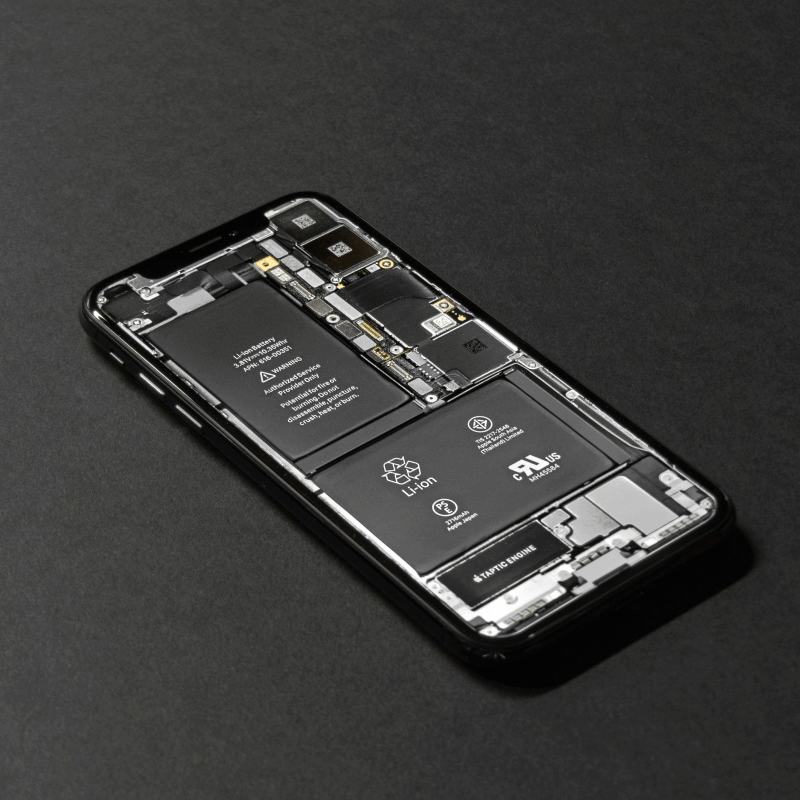
The world’s growing appetite for energy continues to grow, and lithium‑ion batteries are at the forefront of that wave, especially when it comes to powering the gadgets and products that define modern life in North America.
Lithium‑ion batteries are everywhere: smartphones, laptops, medical devices, power tools, EVs, and the newest culprit—vapes and e‑cigarettes. Yet there is an overwhelming lack of awareness among the general public as to why proper disposal is so important.
The increasing number of resources and time dedicated to addressing these dangers has become a major theme within communities across North America. It is one of the most urgent safety issues facing society today, and frankly not enough people are talking about it.
In this episode, we hear stories from three guests who are on the front lines of these hazards every day and what they’d like to see done by the public to help address the problem. Our guests include:
John Gorney — Public Works Director, City of Grand Rapids (Michigan)
Scott Messier — Operations Manager, Snohomish County Public Works (Washington)
Craig Willis — HAZMAT Captain, Special Operations, South County Fire (Snohomish County, Washington)
Public Works Radio is hosted by Bailey Dickman, the Senior Digital Marketing Specialist with APWA, and each episode dives into a wide range of topics designed to educate and inspire, making public works more visible to everyone.
If you haven’t already done so, please subscribe and follow along wherever you get your favorite podcasts, rate it, review it, forward it to a friend, and don’t be shy about dropping us a note at podcast@apwa.org so we can hear your feedback.
More Show Notes and Links
- Grand Rapids Public Works Department
- Snohomish County Washington Public Works
- Guide for Establishing Lithium-ion Battery Management Practices at Materials Recovery Facilities
Transcript
View transcript >
0:00:00.2 Bailey Dickman: It’s 2026 and lithium-ion batteries are everywhere. Smartphones, laptops, medical devices, power tools, electronic vehicles, and the newest culprit, vapes and e-cigarettes. For a little more context, here’s Scott Messier. He’s an operations manager for Snohomish County Public Works, just north of Seattle.
0:00:17.8 Scott Messier: Everybody’s smoking, you know, the coconut pie flavored vape, right? And when that is done, what happens? People throw it out. However, they all have an embedded lithium-ion battery which could potentially cause fire.
0:00:32.0 Bailey Dickman: Welcome back to Public Works Radio, the official voice of the American Public Works Association. Each episode we’re diving into a wide range of topics designed to educate and inspire, making public works more visible to everyone. I’m Bailey Dickman, the senior digital marketing specialist with APWA. And in today’s eye-opening show, we’re going to talk with people on the front lines of a crisis.
0:00:51.9 John Gorney: And since then we’ve had three other truck fires and found that all three of them were linked back to the vape pens.
0:00:59.5 Bailey Dickman: That was John Gorney. He’s the Public Works Director for the city of Grand Rapids, Michigan. Fire, explosions, toxic fumes, lithium-ion batteries are impacting the safety of everyone and it’s hitting our first responders especially hard.
0:01:12.1 Scott Messier: The one thing about the waste business is it’s one of the, typically, it’s one of the most dangerous occupations listed by OSHA. It’s always in the top five. It’s dangerous as it is with all the unknowns, but now with the lithium-ion battery, it has just made it so much worse.
0:01:35.3 Bailey Dickman: In this episode, we also hear from Craig Willis of Snohomish County. He’s a Hazmat Captain serving in special operations for South County Fire.
0:01:43.1 Craig Willis: While he was inside, he heard a whoosh and a pop and a bang, and he walked out to his garage and his garage door was blown off and his garage was on fire. We understand this is a major problem. We understand we are dealing with this every single day in the fire service.
0:02:01.4 Bailey Dickman: This is one of the most urgent safety issues facing society and frankly, not enough people are talking about it. So here it is. My conversation with John Gorney, Scott Messier, and Craig Willis on the hidden hazard of lithium-ion batteries.
0:02:15.5 Bailey Dickman: What are like the specific difficulties when it comes to lithium-ion batteries?
0:02:19.8 John Gorney: So I can tell you what we’ve had, especially over the last say four or five years, we’ve had specifically here in Grand Rapids. We have, so we manage the material collection, so trash, recycling, yard waste. What we’re finding is that quite simply, people don’t know all of the different devices that lithium-ion batteries are in, so then they just throw them in the trash or they don’t know how to properly dispose of them. And then what happens? For us, the challenge that we come across, and we’re not the only ones, as soon as you get that into a refuse truck and it compacts and you break that battery, now not only is it exposing that lithium to everything, but it creates a friction point. And now think of all the trash that’s in there. It’s all combustible. And so over the last, I would say, four to five years, we’ve had for our staff, we’ve had four trucks catch fire. The very first one that happened, we were not able to track down what exactly caused the fire. We just, based on our now experience since then, presume it was a lithium-ion battery. But that truck, unfortunately, was a total loss.
0:03:36.9 John Gorney: Fortunately, the driver got out okay. Nobody else was hurt. But immediately we knew we had to come up with a process and SOP to make sure that we keep the driver safe. We try to save trucks if we can. And since then, we’ve had three other truck fires, some minor damage, but we haven’t had a total loss again. We haven’t, nobody’s been hurt or anything like that. But each one of the other three, we’ve been able to track back because we caught it soon enough and found that all three of them were linked back to the vape pens. One in particular, which was really surprising, was it was actually thrown in the recycling, which you would think a vape pen, they’re generally made out of plastic or metal, could go in the recycling. Well, it can’t because of the battery. And in that particular case, the driver caught it right away. So the fire actually happened in the hopper where you dump the cart. So it happened right away. He recognized it. He did something he shouldn’t have done, but he jumped in the hopper, threw the burning material out of the truck.
0:04:42.5 John Gorney: That was not part of the SOP. He went outside of that, but I think it was just a, he reacted. And fortunately, nothing became of it. But the other two were refuse trucks, and we were able to catch those soon enough too. And based on the SOP that we wrote, it’s kind of a unique situation. So if you think you’re driving down the road and all of a sudden you see smoke rolling out of the back of your truck, what do you do? You don’t want to just pull over to the side of the road because there could be parked cars, it could be wires overhead or trees overhead or you’re close to a house. So the SOP, and I know this is going to sound crazy, is look for the nearest parking lot that has open space. And if there isn’t one of those, turn down a side street and go to the nearest intersection. Usually, there aren’t trees and overhead wires. So that’s what we’ve had to do. We’ve had one parking lot and one intersection, and both times there was some damage to asphalt, but, you know, that can be replaced.
0:05:40.1 John Gorney: But basically get to that point and dump the load. Dump the load, get the truck away from it and let the fire department handle the load that’s burning.
0:05:48.5 Bailey Dickman: Unfortunately, truck fires are not limited to Grand Rapids. Scott is seeing the same scary scenarios happening in Snohomish County.
0:05:55.2 Scott Messier: We’ve had several folks that operate collection vehicles call us and come in and they’re telling us that, I think my trash truck is on fire, right? So it happens all the time, because as they’re collecting the trash, they’re also compacting it in the truck, which could potentially mechanically rupture the battery somehow. And that’s all it needs to start going. And as Craig pointed out, once it starts, there’s nothing you can do. It’s not going to go out very easily, and it’s going to take everything else that it’s contained in with it. And that could possibly include the truck. While we haven’t personally seen a truck completely burned to the ground here in Snohomish County, it has happened across the United States. And it is a real, real danger. By diverting the batteries from the waste and getting them in a proper collection, that is the only real thing that you can do to prevent this sort of thing from happening.
0:07:01.2 Bailey Dickman: The lithium-ion batteries in discarded vapes are also causing major issues in Snohomish County.
0:07:06.8 Scott Messier: And lithium batteries are in everything. Big problem that we see are vapes. Vapes are super popular, right? Everybody’s smoking the coconut pie flavored vape, right? When that is done, when it no longer contains any of the vape solution, what happens? People throw it out. However, that has an embedded battery in it, which is lithium-ion. So I can’t speak for how many vapes are sold every day. Some of them are sold as being billed as completely disposable, but that’s technically not true because they all have an embedded lithium-ion battery, which could potentially cause fire. It’s a really hard thing to prevent. In the waste industry, we take things that nobody else wants, right? And we do our absolute best to handle that with care and to make sure that nothing happens to it once it comes into our hands and we’re trusted with it. But we just don’t know what’s in all the waste people are bringing us, and we don’t have the time to go through every bag or every truck. So we’re relying upon the public to help us with this mission of separating these dangerous batteries and preventing people from getting hurt, especially solid waste folks, fire responders. I mean, it’s just a huge, huge problem.
0:08:47.5 Bailey Dickman: But I suppose it makes sense because people just don’t know that there’s a lithium-ion battery in there, whereas we know they’re in our phones and our computers. Every fire needs three things to start. It needs heat, a fuel source, and oxygen. What makes lithium-ion batteries so uniquely bad is that they have all of those things within the battery itself. And once a lithium-ion battery has caught fire, it enters a state called thermal runaway. The chemical reactions inside of the battery keep bolstering the fire. It’s a self-sustaining process at that point. It doesn’t need anything else to keep going, which is what makes fighting these fires just so difficult.
0:09:33.0 Bailey Dickman: What makes these batteries explode or catch fire so much more than any other type of battery that makes its way into a trash truck?
0:09:38.3 Craig Willis: They’re filled with a chemical that once they start touching each other, they produce their own heat and oxygen, so they can burn underwater. So once they get into the waste facility, usually what happens, they get crushed, and that creates a heat, a toxic flammable gas, and it gets to that point to where it catches on fire with the rest of the garbage, and then we have a problem on our hands.
0:10:06.1 Bailey Dickman: So what does it take to put out a fire that just starts spontaneously?
0:10:11.0 Craig Willis: We add a lot of water, right? So a lot of water trying to cool the lithium runaway. It’s called a thermal runaway. We try to cool that, and that’s the key into that, because it’ll continue to burn. Like I said, they can burn underwater. They produce their own oxygen.
0:10:26.8 Bailey Dickman: Okay.
0:10:27.4 Craig Willis: It all depends on the size of the battery, right? We have everything from a little cell phone battery, like a little puck, all the way to these gigantic lithium batteries that are in these BESS systems that are in buildings, so everything. So it can be fairly tricky.
0:10:46.6 Bailey Dickman: When it comes to community outreach, what do you wish the public understood more about these lithium-ion batteries and their hidden hazards?
0:10:56.5 John Gorney: Well, that’s one thing in particular I want them to know is whether you’re throwing it in the trash or the recycling, neither one of those are the appropriate place for that. And what I want them to know is what’s the ripple effect? So the ripple effect is it, it could be a fire that’s caused in a vehicle. It could be either damage to that vehicle or complete loss. And if you look at just the vehicle, depending on how the vehicle is equipped, that could be up to a million-dollar vehicle. I’m sorry, a half-a-million-dollar vehicle that is now out of commission.
0:11:35.1 Bailey Dickman: Yeah.
0:11:35.6 John Gorney: And so you’re having to replace that vehicle. There could be a hazard to other human beings. I mean, you could literally cause a truck to explode or some damage that would not only hurt a driver, but other drivers nearby. Beyond that, if the truck makes it… So in Grand Rapids, we’re fairly unique because we we have an incinerator or a waste-to-energy facility. So that material goes to waste-to-energy. So if we do get that load to the waste-to-energy facility and dump it there, now we’re causing a hazard or potential hazard to that facility and or the employees that work there. So there’s just that piece of it. So what I’d like them to know is there are proper ways to dispose. And our county public works department has a very robust SafeChem program that they use. And so they collectively, we do… I won’t say advertising, but we do promote the SafeChem program and how to access that. I think sometimes the challenge is you actually have to go to the location and that might be a little bit inconvenient when you can just throw it in the trash that’s right there. So, it might be inconvenient, but it’s the right thing to do.
0:12:58.8 Bailey Dickman: Scott, from a solid waste perspective, what is something you wish the public knew about the dangers of these lithium-ion batteries?
0:13:07.0 Scott Messier: They are extremely prevalent and they’re in everything. Okay. Lithium-ion batteries have made life so much better in certain ways, but they’re embedded in everything. And they require special handling when they’re at the end of their life or you don’t need that certain product anymore. I wish the public would understand that, number one, they’re a real hazard to not only the solid waste system, but to the people that work in the system. And the possibilities of having a fire, an explosion, they’re real. And we’ve had those happen at our facilities. So just by having the little extra caution before you throw something into the trash, maybe you should consider that the trash receptacle might not be the proper place to put that battery and you should recycle it or get it to a place where it can be properly handled.
0:14:08.9 Bailey Dickman: What percentage of time or effort do you or your team have to dedicate to solving this lithium-ion battery problem?
0:14:19.0 Craig Willis: I can answer the fire department side real quick. I spend probably 80% of my job dealing with energy, as far as… And that which is component with lithium-ion batteries. So anywhere between, like I said, the small batteries all the way up to these big backup systems that we have fall under the energy umbrella with what we’re dealing with. And so I spend a lot of time. Like I said, 75 to 80% of my time is just dealt with energy, which lithium batteries falls under that umbrella. It’s a tremendous amount of time because it’s ever changing all the time. New things are happening, being brought to Snohomish County, and we’re playing catch up all the time. And it’s once we get our crews trained on one thing, something new pops up. Lithium batteries are a wonder, they do a wonder for us. And you know, they’re in everything and they do a really good job. But there’s a consequence if it’s not properly disposed.
0:15:33.0 Scott Messier: I would say that our teams at all the facilities, this is probably 100% of their time. It is always on their minds when a load comes in as to whether or not it contains batteries or not. And we are real cautious about the batteries or potential damage of batteries in our facility. Our system runs a little bit differently than most other solid waste systems where we actually may have trash on the floor in our facility overnight that we cannot process. As you know, we stockpile it sometimes in a pile if it’s too much. We’ll finish it the following day. But what that makes us possibly think of is what happens when we go home for the evening and that pile of trash that has a compromised battery in it decides to have thermal runaway when no one’s there. So we’re always thinking about segregating trash and planning things so that if there were some sort of event, the damage would hopefully be minimal. We have no landfill facilities here in Western Washington, so most of our systems are all waste-by-rail. And if you can think about all the opportunity that these batteries have to all of a sudden have an incident, it could be on the collection truck, it could be when it gets to our floor, it could be when we put it into a container.
0:17:09.8 Scott Messier: It could be… It could go off in the container when the truck is being driven or even on the train. Right. And then there’s the other side of things where it gets to the landfill. You know, they could dump it out on the landfill and then when they compact it, it could potentially ignite there. So it’s on our minds all the time. It is a big, big concern.
0:17:34.7 Bailey Dickman: For any regular person on the street, when lithium-ion batteries become compromised, what should they do about that?
0:17:44.6 Craig Willis: There’s different ways that it appears. If you get to your battery to where it’s end of life and it’s no longer charging, we want you to recycle it. Go to Snohomish County Hazardous Materials site. Go to a facility that collects these things. Go to Call2Recycle, which is a company that has different sites throughout the county at Home Depots and Lowe’s where you can get rid of your batteries. If your battery is compromised to where it is damaging your equipment, which happens all the time, computers, cell phones, any kind of instrument that you have in your house where it is actually going into that pre-thermal runaway, where it’s emitting smoke or bulging, that’s a different story where we want you to call 911 because that toxic flammable gas that is produced is a real hazard. It holds a lot of nasty chemicals in the smoke that can compromise yourself and your family.
0:18:43.8 Bailey Dickman: When you say proper collection from a solid waste side, what does that look like?
0:18:50.3 Scott Messier: That would include segregating and diverting the batteries from a normal solid waste stream. So you would want them separately. Craig mentioned several options of where you could bring batteries back to retailers, to hazardous waste facilities or drop-off places. Those are the best things to bring them to. It’s just merely if you can get them out of the trash where they’re not going to be ruptured or structurally exposed to forces that would possibly crush them, rupture them, that’s the best thing. You can put them together in a container, but don’t store the container too long at home. Get rid of them as soon as you think that you need to dispose of a battery because if you start storing them at home and you think you’re safe, that could cause an even bigger problem.
0:19:45.0 Bailey Dickman: I hate to word it like this, but is there a shock and awe story that you, that you guys can share from Snohomish County of these batteries causing serious damage?
0:19:55.2 Craig Willis: We had a gentleman who was doing the proper thing. He was collecting his lithium batteries at his house. He wanted to do the right thing. He was going to do the right thing. He was going to gather them all, take them to the proper disposal area. Well he waited too long. So we had about five or six AA batteries and the next day he was going to take those to a drop-off location. Well he took that bag, he put it out in his garage and went back inside. While he was inside, he heard a whoosh and a pop and a bang. And he walked out to his garage and his garage door was blown off. And his garage was on fire.
0:20:38.3 Bailey Dickman: The door was blown off?
0:20:39.0 Craig Willis: Whole garage door was blown off. And so he lost half his house by doing the right thing. We understand this is a major problem. We understand. We are dealing with this every single day in the fire service and Scott is dealing with every single day in the solid waste. We understand it, we know it. The rules and regulations and codes that they’re trying to adopt aren’t being adopted fast enough. And it’s now created a new division at Washington State, which is the Energy Division. By trying to deal with all this, all these things that are coming, that are now being developed and being brought to Washington and Snohomish County. Everybody wants to get cheaper, easier energy, longer-lasting. They’re coming up with different concoctions all the time for these lithium batteries. So it’s a non-stop learning process for the fire department and each facility that has to deal with them. That means solid waste, community, transit, PUD. The list goes on and on. We’re all trying to work together to deal with the aftermath of these batteries.
0:21:52.0 Bailey Dickman: Scott, how often do waste fires happen outside of lithium-ion batteries? If there was a way that we could categorize them and take out the lithium-ion batteries, how often do waste fires occur?
0:22:05.4 Scott Messier: Not very often. Not very often at all. Occasionally, you’ll get something where maybe somebody threw some hot coals from a barbecue or a fireplace into their trash. But those type of fires, they’re going to happen immediately, right? That kind of fire needs the traditional elements, right? It needs heat, it needs a starter, and it needs oxygen. Before the lithium-ion batteries, it would occasionally happen. Maybe somebody would flick a cigarette into the trash or fireworks or whatever it may be, right? The typical sources you think of that start fires. But with the introduction of lithium-ion batteries, that’s totally changed things. It’s almost like it’s a time bomb and you just don’t know when or where it’s going to go off, but eventually it’s going to go off. And you can’t extinguish it easily. It’s changed the game drastically. The biggest thing here is people people are buying products for convenience, right? And lithium-ion batteries, they’re the ultimate in convenience, right? They’re powerful, they can power a lot of things, toys, bikes. But what people don’t think about is whatever they buy or whatever they recycle or throw away, there is always that byproduct, right?
0:23:30.6 Scott Messier: So even if you’re doing the right things and you’re composting and you’re diverting your food waste and all that stuff, once that process occurs, there’s still a byproduct. There’s always when you start driving it down, there’s always a byproduct and that has to be handled responsibly. And the whole process for lithium-ion batteries is completely not responsible at this point. It’s going to take a lot more than just diverting from the waste stream on the part of consumers. It’s going to take possibly legislation that the manufacturers of these items will have to start taking responsibility for the products they’re putting out there in terms of bringing the batteries back to them when their life is over and let them recycle them. So there’s a lot of work to be done. But at this point, Craig and I are just trying to manage the safety aspect of things and dealing with the hand we’ve been given. And that’s the most we can do at this point.
0:24:35.5 Bailey Dickman: What’s the one thing that you would like just regular Joe Smith on the street to know about lithium-ion batteries?
0:24:43.8 John Gorney: We use them in tools and cars and down to vape pens. They’re very powerful, but they are dangerous or they can be dangerous. And really think long term. Think about the future and what are you doing that with that when you’re done with it? Now, I would say most communities have some type of recycling or collection or SafeChem or household hazardous waste or something like that. Please do the due diligence. Take the time to investigate what that is, where it is and how you can be a good citizen and dispose of it properly.
0:25:26.2 Bailey Dickman: Do you guys have any final thoughts? Anything that we didn’t you think we didn’t cover about lithium-ion batteries here?
0:25:32.6 John Gorney: I think in especially in the public works world, I’ve been in public works for the majority of my adult life, so 30 going on 34 years. And it’s been super enjoyable. I’ve learned so much over the years. I think a lot of times in public works, we don’t do a good job promoting the good work that we do. And I really want to make sure we have the ability to do that because there are a lot of really good people that are behind the scenes. They don’t want credit, they just want to do their jobs. But it’s so important and so necessary. When I think about trash collection in general, if we miss a day, we’re going to have some upset people. If we miss a week, it’s a public health crisis. So I want all of our drivers and the general public to know how important those jobs are and those people are. And especially here in Michigan, I think about too, if it’s snowing and we don’t show up, nobody goes anywhere.
0:26:31.4 Bailey Dickman: Yeah.
0:26:32.0 John Gorney: So that’s critical. And yeah, anything we can do to promote the world of public works and the people that are out there taking care of the water systems and the streets and the trash, they’re very critical to our society.
0:26:44.6 Craig Willis: I know one of the things we keep talking about is with my team at South County and our PIO is just just getting the word out because a lot of people you’ll talk to and they just don’t realize it. People’s lives are super busy. Everything’s on demand nowadays. You can order something that’s at your house in two hours. We understand that. We understand it’s a little extra work, an extra step to go from your house to deposit a battery at a different location instead of throwing it into the trash.
0:27:17.7 Scott Messier: I have been in the waste business for, God, almost 30 years now. And the one thing about the waste business is it’s one of the… Typically, it’s one of the most dangerous occupations listed by OSHA. It’s always in the top five. It’s dangerous as it is with all the unknowns, but now with the lithium-ion battery, it has just made it so much worse. And if anything, just think about, as Craig said, just think about the repercussions that you throwing away a battery may have. It explodes, it can blow debris on people, toxic fumes. It just… Think about somebody else that has to handle that on the other side and just be a good citizen. Think about how to do the right thing to protect somebody else.
0:28:17.0 Bailey Dickman: Thank you for listening to Public Works Radio, the official voice of the American Public Works Association. And thank you again to today’s guests, John Gorney, Scott Messier, and Craig Willis. Please make sure to subscribe wherever you get your favorite podcast. Rate it, review it, forward it along to a friend, and don’t be shy about dropping us a note over at podcast@apwa.org so we can hear your feedback directly. We’ll catch you next time.



Proficiency Levels
Introductory
Focuses on a general or broad overview of the topic, awareness of basic factual recall. Limited experience of the subject matter is necessary to understand content areas.
Applied
Focuses on practical implementation of technical steps or strategies, some prior knowledge and experience of the topic is necessary.
Advanced
Mastery of basic concepts associated with an area has been obtained. Focuses on understanding nuances, advanced concepts, and intricacies with implementation within knowledge area. Strong understanding of how the concept impacts other factors or areas of operations.
Program Types
CLL
Click, Listen & Learn (CLL) are interactive educational webinars. Each program is led by top experts in the field who share new ideas, methods, and technologies in a fast-paced two-hour time frame. These programs are available free to APWA members. CLL programs are eligible for continuing education units (CEUs).
Primer
Primers are used to educate policymakers about public works roles and responsibilities in public rights of way, the impact of federal workforce development policies on the industry and workforce, and the importance of resilient infrastructure.
Public Works Radio Podcast
Public Works Radio is the official podcast of the American Public Works Association (APWA), bringing the stories behind our communities to life. This podcast shines a spotlight on the people and projects that keep our cities running—humanizing the work and the professionals who make it happen. Each episode dives into a wide range of topics designed to educate and inspire, making public works more visible to everyone.
PWX
PWX session recordings cover a wide variety of topics, including integrating modes of transportation, traffic and transit, construction management, emergency management, engineering and technology, fleet and facilities, management, parks and grounds, snow and ice control, and stormwater/flood control, as well as solid waste, roads and bridges and water/wastewater. PWX sessions are eligible for continuing education units (CEUs).
Reporter Articles
APWA Reporter articles are written by public works practitioners on subjects such as solid waste management, water resources, municipal engineering, transportation, equipment services, buildings and grounds, snow removal, and other public works-related topics.
Snow
The Snow Conference session recordings feature public works professionals sharing the latest best practices in managing winter/snow operations more successfully, taking advantage of emerging technologies, understanding and preparing for the challenges ahead, and providing better service to their communities. Snow sessions are eligible for continuing education units (CEUs).
Tech Boxes
A tech box is a PDF take-away that provides information in lists, steps, or defined areas specifically focused on trending technologies.
Virtual Program
Virtual programs are live, interactive educational programs led by top experts in the field who provide timely information or address trending topics within an area. Programs often conclude with an open forum for Q&A.