
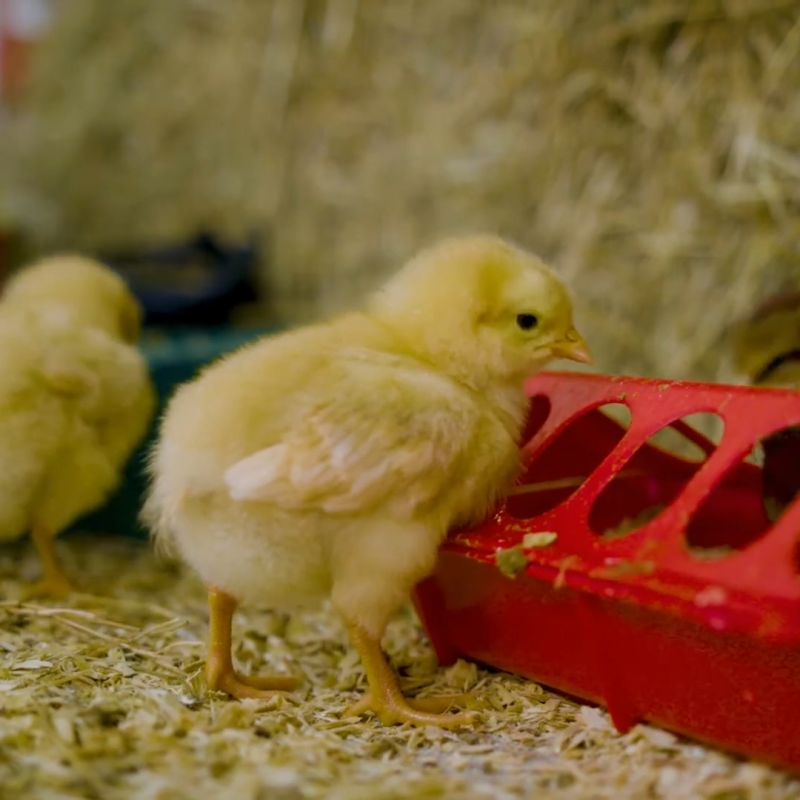
By definition, a sentinel animal is used as an early warning system for hazards or disease, with a canary in a coal mine being the most famous example. Down in Charlotte County, Florida, it’s chickens that are stepping up for the community in what can only be described as the ideal sentinel chicken program.
This program is a vital link between public works and public health, acting as an early warning system for mosquito-borne diseases before they reach the human population (without harming the chickens).
While chickens save the day in Charlotte County, it’s the goats in Greenville, South Carolina that are promoting environmental sustainability and safety. Not to mention they’ve become quite a popular attraction around town and on social media as well. Goats are showing up in Greenville as a true win-win when it comes to promoting sustainability, safety, and cutting down on noise pollution and emissions.
“Goatscaping” is a hit in Greenville, where goats with tons of personality are hired to tackle overgrown areas in difficult spots that would be a safety concern for humans.
We’re joined by three public workers to discuss how animals are being utilized in their communities to benefit just about everyone:
- Beth Kovach is a Biological Specialist with Charlotte County, Florida.
- Jeff Proffitt serves as Operations Supervisor for the Mosquito and Aquatic Weed Control Division with Charlotte County, Florida.
- Staci Schafer is a Parks and Grounds Administrator with the City of Greenville, South Carolina.
Public Works Radio is hosted by Bailey Dickman, Senior Digital Marketing Specialist with APWA. Each episode dives into a wide range of topics designed to educate and inspire, making public works more visible to everyone—from the general public and elected officials to industry peers and the media. If you haven’t already, please subscribe wherever you get your podcasts, rate and review the show, forward it to a friend, and drop us a note at podcast@apwa.org so we can hear your feedback directly!
More Show Notes and Resources
- Charlotte County Mosquito & Aquatic Weed Control
- “Charlotte County Sentinel Chicken Program” YouTube Video
- Greenville Public Works
- “Goat Herds Return to Eat Invasive Plants in Greenville Parks” YouTube video
- “Herd at work: Goats are grazing Greenville park as the city’s latest landscapers” article
Transcript
View transcript >
0:00:00.5 Bailey Dickman: By definition, a sentinel animal is used as an early warning system for hazards or diseases. Think like a canary in a coal mine. As one of the most famous examples down in Charlotte County, Florida, it’s chickens that are stepping up for the community in what can only be described as the ideal sentinel chicken program. Here’s Beth Kovach to explain more. She’s a biological specialist with Charlotte County where she focuses on mosquito and aquatic weed control within the Public Works department.
0:00:26.3 Beth Kovach: We have three primary viruses that we’re looking for which is West Nile virus, Eastern equine encephalitis and St. Louis encephalitis. Chickens actually do not become ill from these viruses. They develop antibodies. That means they cannot pass the virus on. They have decent sized veins for drawing a blood sample from. Obviously they don’t become sick. They make great sentinel animals for those reasons.
0:00:50.2 Bailey Dickman: The sentinel chicken program in Charlotte County is a vital link between public works and public health and acting as an early warning system for mosquito borne diseases before they can reach the human community. Here’s Jeff Proffitt. He’s a colleague with Beth and serves as the operations supervisor for the Mosquito and Aquatic Weed Control division with Charlotte County.
0:01:07.7 Jeff Proffitt: It’s all part of the program that we use to conduct surveillance and determine where their potential diseases may be… We’ve been doing it here quite a while.
0:01:16.6 Bailey Dickman: Beyond their role in public health, the chickens have become a fan favorite for community engagement. And in case you were wondering, yes, their eggs are safe to eat.
0:01:25.3 Beth Kovach: We actually use what we call chicken cooperators, which are citizens who agree to take part in the program. So we provide the chickens, the coop, the food and in exchange they take care of the chickens for us. They get to keep the eggs, they keep an eye on the birds, they get to live as happy chickens.
0:01:43.3 Bailey Dickman: While chickens save the day in Charlotte County, it’s goats in Greenville, South Carolina that are promoting environmental sustainability and safety. Not to mention they’ve also become quite the popular attraction around town and on social media. Goats are showing up in Greenville as a true win win when it comes to promoting sustainability, safety and cutting down on noise, pollution and emissions. There’s even a little public relations benefit mixed in as goats get called in to reach vegetation in hard to reach places that would be a safety concern for their human counterparts. Let’s check in with Staci Schafer to learn more. She’s a parks and grounds administrator with the city of Greenville in South Carolina.
0:02:16.1 Staci Schafer: We have those opportunities for natural methods that are sustainable and that isn’t putting chemicals or non environmental friendly options. I think that’s always a big plus and a big win getting staff into some of these locations to do the removal. You know, we have snakes out here, we have a lot of wasp nests, a lot of bees and things that the staff can encounter that the goats don’t seem to have the same issues with. They have almost no methane, so… And everything that they produce for waste is actually perfect fertilizer for us. So it was literally a win win across the board. Your social media crew, your marketing team, your communications team, they love it. City councils love a photo op. And that’s always going to be a win win too. The return of investment is there. We had so many people come out and they actually had little goat watch parties. They would just come out with their camp chairs, park and sit and watch the goats. And it was amazing.
0:03:22.3 Bailey Dickman: Welcome back to Public Works Radio, the official voice of the American Public Works Association. This week we’re talking grazing goats, chickens as public health heroes, and so much more. It’s really a fun one. So let’s jump in now. Here’s my conversation with Beth, Jeff and Staci. What is a sentinel chicken program?
0:03:40.3 Beth Kovach: So basically they are chickens that are strategically placed around the county and in coops at set locations. And what we do is we draw a small blood sample from them once a week to check for the presence of mosquito borne viruses. So it’s kind of the canary in the coal mine, so to speak.
0:04:00.0 Bailey Dickman: Why chickens?
0:04:01.3 Beth Kovach: So first and foremost, chickens actually do not become ill from these viruses. They develop antibodies. So that’s important because that means they cannot pass the virus on. A lot of these viruses are spread by birds, but a chicken is a dead end host, so the virus stops with them. The reason chickens are used is because they’re very easy to handle. They have decent sized veins for drawing a blood sample from. Obviously they don’t become sick. They make great sentinel animals for those reasons.
0:04:31.6 Bailey Dickman: What specific diseases are y’all monitoring for with these chickens?
0:04:35.3 Beth Kovach: We have three primary viruses that we’re looking for, which is West Nile virus, Eastern equine encephalitis, and St. Louis encephalitis.
0:04:44.0 Bailey Dickman: If you find a higher level of West Nile virus in these chickens than you would expect. What’s next? What does the public works and public health apparatus do after that?
0:04:53.9 Beth Kovach: As soon as a chicken pops positive or shows signs of this disease or the antibodies to it, then we assume that there are mosquitoes in the area that are actively transmitting the virus. So then we make the decision to treat the area before humans or animals get sick from this disease.
0:05:15.8 Bailey Dickman: Do you guys have a specific breed of chicken that you use for this or is it just kind of like whatever chickens are around in Florida?
0:05:22.0 Beth Kovach: We actually order our chickens from a hatchery in Ohio. We prefer to use Americana, otherwise known as Easter Egger chickens. They come in a variety of colors, they lay pretty eggs, they’re very docile and easy to handle. And at the end of the season when we’re finished using our chickens, we give them away and they’re very popular. A lot of people, county citizens love to get free chickens from us.
0:05:49.6 Bailey Dickman: So is that like the retirement for these chickens? Once they’ve done their part, at the end of the season, they get to retire to a nice farm in Charlotte County.
0:06:01.8 Beth Kovach: Yes, exactly.
0:06:04.8 Bailey Dickman: How does Greenville use goats?
0:06:08.3 Staci Schafer: One of the biggest challenges we had was what we call NNIs, non native invasive species here in South Carolina. That’s quite a bit. So that being said, majority of the work required is mechanical by hand. You know, you could spray to a certain extent. However, we have a lot of waterways and rivers and tributaries running through our parks and of course children, we have a lot of children and you know, dogs, four legged, two legged everybody. So we try to be as sustainable and mindful of the ecology as we can. So that being said, going back to the beginning, it was a lot of by hand. We would have all hands of days on Thursdays and spend a lot of time on our hands and knees and yeah, you could imagine. There’s also one of the things I learned moving here, a lot of poison ivy and poison oak. It’s prevalent and it hides under a lot of the invasive species. So being someone who originally is from the Midwest farmland, one of the things I actually learned growing up is sheep, goats, those critters love, love to eat all the invasives and all the things we don’t.
0:07:24.7 Staci Schafer: So I actually started out because I was helping on a project over at the zoo. The Greenville Zoo was part of my department, Parks, Recreation and Tourism at the time. So I had suggested that possibly our little lazy goats over there could come out and work for a living and help us out, which the veterinarian at the zoo very politely explained to me that was not going to happen because there is a possibility of cross contamination and bringing diseases back. And it was his opinion that they should live a life of luxury. So those lazy goats just stayed over there. But that got me thinking and I started looking around. Come to find out there were a handful of goats for hire services out here. So we did our bidding process and got our first herd of goats called the Dairy Queens, basically dairy goats. So they were easy to handle. They were used to people, they weren’t as skittish. We set it up, they come down, they brought in electric fencing that actually, it’s clever fencing. It has lower voltage at the bottom, so kids and dogs don’t really… It’s minimal impact on them. It’s very low, a little bit higher…
0:08:41.5 Staci Schafer: I mean, of course I can tell you, I tested it. It wasn’t horrible or scary. But they bring those in with solar power and then they also have solar powered cameras. So they set up the perimeters. They come in with tarps and create little tent, basically little tent canopy areas with some hay and bowls of water. And they also bring in a little bit of antacid. Yeah. When they eat too much of the… Especially the poison ivy and some of the privets, they get tummy aches. So they bring those in, they set them all up, they come back and check on them every day, let them go. And it was fantastic. It had everything that we wanted. It was low carbon, no maintenance. They basically eat all that there is to eat. They were… They came running out of the chute, chomping and chomping, chomping. It was awesome. The other advantage to it, of course, is they have almost no methane. So and everything that they produce for waste is actually perfect fertilizer for us. So it was literally a win win across the board. Kids loved it, neighbors came out, everybody was coming out to… We had to ask people to stop feeding them french fries. That didn’t go over well. I do know for a fact, because we did have one escapee that Seth had to chase down. I know for a fact they love Fig Newtons. So that’s my little trick when I’m trying to get a goat to come over for the camera crew.
0:10:21.6 Bailey Dickman: What’s been like a low key benefit, something that you didn’t expect to be like a win when you started working with goats?
0:10:30.8 Staci Schafer: Honestly, it’s probably the reaction of the public. I wasn’t sure in, you know, it’s in the city. It’s right in the middle of the city. I was worried about security, about, you know, just not wanting farm animals that close to their dogs or their kids or their families. It was the exact opposite. We had so many people come out and they actually had little goat watch parties. They would just come out with their camp chairs, park and sit and watch the goats. And it was amazing. And I participated in a couple goat watch parties. I’m not gonna lie. I went down there with my Subway sandwich and sat and watched them. And yeah, it’s pretty neat. And because of the ecology here, it’s just… And it turned into a learning experience for the kids. They, you know, the more they’re there talking to especially our staff about, well, what are they eating, what are they not eating and what shouldn’t they, what should they eat? And getting into a lot of the details and the planting, because after the goats are done, a lot of times those areas, they’re related to our tributaries in particular and waterways. So then we would do live staking events or planting events, and it increased our volunteerism. And I think educationally, I think it was a big opportunity, not just for the kids, but for the citizens and visitors too.
0:11:51.5 Bailey Dickman: According to Jeff, chickens have played a role in protecting Florida residents for a long time. And for these birds, it’s all in a day’s work.
0:11:58.3 Jeff Proffitt: It just fits the program. It’s a very important part of it, the surveillance program, one of many that we use to conduct surveillance and determine where their potential diseases may be occurring. So it’s just… It’s all part of the program. But we’ve been doing it a long time. It’s a very common practice, at least within Florida. So I don’t know about other places, how they do it, but we’ve been doing it here quite a while.
0:12:23.7 Bailey Dickman: How do you make sure that the chickens stay safe throughout this entire process?
0:12:28.0 Beth Kovach: So they are in secured coops. We actually use what we call chicken cooperators, which are citizens who agree to take part in the program. So we provide the chickens, the coop, the food, everything that they need, basically. And in exchange, they take care of the chickens for us. They get to keep the eggs. They keep an eye on the birds. They’ll spoil them rotten, honestly. They’ll let them free range. You know, they get to live as happy chickens. We also have some chicken sites at some of our county facilities. So those chickens have usually a 10 by 10 foot dog kennel that they get to free run in. But because of the kennel and the coop we do everything we can to keep them safe from animal predators. If humans are a concern, then we can always lock it. So we haven’t had many issues so far.
0:13:19.4 Bailey Dickman: What’s your experience been working with these goats?
0:13:21.9 Staci Schafer: Everybody who knows me on social media knows that I love goats. I really want goats, I can’t have goats, but baby goats in pajamas are probably the cutest thing on the whole planet. So for me this is just a fantastic win. The only negative is if they find the gap in the fence, they’re going to take it. They’re going to come out, come wandering around because you know they’re trying to get that bit of green grass that the guy next door haven’t got. So they’re a little competitive when it comes to that and they like to eat my sleeve and and buttons. If I spend too much time with them and not watching, they will nibble on my clothes. And I’ve gone home with a few chew marks on my clothing and lost a button or two. But for the most part, the only other thing that actually we, I worried about them a little bit during inclement weather. We’ve had a few storms. We actually had to pull them out the day before the hurricane hit. And they don’t swim, the goats don’t swim, they don’t care for the water.
0:14:18.7 Staci Schafer: We have to kind of keep an eye on the weather. They get a little lazy when it’s too rainy, but for the most part they’re hardy, cool critters and they don’t mind the heat. They don’t complain. They’re pretty happy. And when we have areas that we don’t want them or plants we don’t choose to have them go after, we can either fence those off or they have what’s called brown paint. So basically it’s an organic material that they don’t care for the flavor. So it’s still a win win. We can block them off from whatever areas we want.
0:14:50.0 Bailey Dickman: Is it just like in the summer that you have the goats come out to shape up some landscaping or do you do it nearly year round?
0:14:57.0 Staci Schafer: When we have growing season… So usually two to three times a year, we actually just finished it up. We had two or three areas we kind of went after things… Some of the things went dormant. And here in probably May, I’m going to probably go after one or two more areas and then again in the summer growing season is a lot of it all. You know, whether we get the dormant grass, ivy in particular, it seems to be kind of a year round and similarly privet. A lot of those things that are going to be popping here in the next several weeks we’re going to be targeting but try to wait for it to get a little more mature so that we have good coverage. And when we also in the fall, early fall, when everything starts to pop there too, I try to avoid the extreme heat or the extreme cold… I don’t like them out here when it’s… When we have frost or anything too cold. And I don’t really prefer to have them out in that kind of extreme heat either.
0:15:50.6 Bailey Dickman: If you didn’t use goats for this kind of landscaping, tell me the, like, enormity of the effort, you would have to do that. You don’t have to because there’s goats taking care of it.
0:16:00.6 Staci Schafer: Right now I mean, we’re talking a couple of acres. We usually do like a quarter acre at a time just because of the fencing and the logistics. And a lot of it is areas that are hard to reach. So that’s one of the key factors is the safety of staff, getting staff into some of these locations to do the removal. But it’s weed whipping. It is front loaders, mini ex coming in with heavy equipment. And then of course, all the things we need to do to support the heavy equipment to get it there to make sure that we’re not doing too much damage to the environment as we’re trying to get our equipment down there. Same thing, chainsaws, the noise pollution, the amount of fuel, the amount of staff, the wear and tear on the staff. You know, as we all know, all the physical labor we do is it takes a toll. But when you’re out in the extreme environments, and to be honest… Downtime, having staff out there pulling poison ivy and poison oak, inevitably we’ve got a handful that come back just covered in fabulous rashes. And the other issue is pest control. We have… Now we have snakes out here. We have a lot of wasp nests, a lot of bees and things that the staff can encounter that the goats don’t seem to have the same issues with.
0:17:10.9 Bailey Dickman: What do you wish the public knew about the work that you do?
0:17:14.3 Beth Kovach: Basically, when the public thinks of mosquito control, they think pesticides. Like all we do is we spray pesticide. But there’s a lot of behind the scenes things, including the chickens. And we actually, when we do outreach, we bring a sentinel chicken with us. And that gets the conversation started. Like a lot of our own people within our county have no idea what we do and why we have… They don’t even know we have chickens or have this program. So it’s a great way to get that conversation started and show them that there’s a lot of behind the scenes and science to this to help keep them safe. And we do see presence of these diseases every year. So it’s important to remind them that, yes, West Nile is a very common thing still. It’s still being carried by our mosquitoes, it’s brought in by migratory birds. It’s not something we can eliminate, but it’s definitely something we can watch for.
0:18:03.7 Bailey Dickman: Is there anything like that you wish the community knew about this goats program?
0:18:09.5 Staci Schafer: Careful not to feed them, you know, not to get too close to them. But I think for the most part they’re available for things like this that you… You know, we have those opportunities for natural methods that are sustainable that you can use year round and that isn’t putting chemicals or non environmentally friendly options. I think that’s always a big plus and a big win for anything educational and any future, especially related to parks and landscaping. I think that’s every opportunity we have to explore that and teach that is a win.
0:18:49.8 Bailey Dickman: Are there other animals that can be used as like a sentinel program? Like, are there other, like dead end hosts that could be used beyond chickens?
0:18:59.8 Beth Kovach: There are other dead end hosts, including humans and horses. However, triple E, which is Eastern equine encephalitis, can be deadly to horses if they’re not vaccinated and obviously humans could get sick as well. So chickens are the most effective sentinel animal.
0:19:18.0 Bailey Dickman: What’s the process of drawing blood from a chicken like, is that stressful for the bird?
0:19:24.8 Beth Kovach: No, not really. So I believe firmly in treating the chickens with respect, with care, being calm around them. So we have two people that we use. One person will retrieve the chicken and they lay the chicken basically on a table and hold them by their feet and just, hold them in place and pet them, talk to them if they want to, and the other person gets them ready. So basically the blood is drawn from the wing vein. That’s how we do it. So you stretch the wing out, you prep the site, you take the blood sample and the chickens actually become used to it. You know, they’re really good patients, better than humans probably. So we’ll also give them treats sometimes afterwards as a reward. So we do treat them very kind. That’s another thing that people are concerned about that they think that these… They’re afraid that we just use these as lab animals, test animals, but that couldn’t be further from the truth. They’re… They live a very good life.
0:20:22.9 Bailey Dickman: Do you guys use any other animals in any other ways in, you know, public works in Charlotte County? Or are you firmly chicken people?
0:20:31.8 Jeff Proffitt: Chicken’s the primary, you know, for that part of the program, as I said earlier, the surveillance that really… And what I wanted to add earlier when you said, asked about, you know, what the county, or the community can expect is we’re generally in the community every day anyway conducting different levels of surveillance. So we’re aware of where the mosquito activity is 95% of the time. So when the people call in and ask for service, we generally already know that there’s an issue in that area. The chickens are certainly a big part of it, more so for the disease prevention part. But they also just let us know, you know, what the activity levels are in certain areas of the county. So that allows us to do the daily response plan that we do. There’s really no set schedule. And that’s one of the things that people don’t understand is they haven’t seen us out in the community. They may say, well, when are we on the schedule? And the short answer is there really is no set schedule. It’s all done on a day to day basis based upon the surveillance activity that we see and with the help obviously of the sentinel chickens more specifically looking to prevent diseases.
0:21:44.3 Beth Kovach: I guess also going back to your question, if any other animals are used technically, there’s grass carp, which is part of the aquatic program. So the grass carp will help…
0:21:54.4 Jeff Proffitt: And the mosquito fish as well. The Gambusia, it’s a native fish here to Florida. It’s a small minnow that has adapted to eating mosquito larvae in small stagnant pools or ponds. So that’s another tool that we have to use in the arsenal, so to speak to it to attach, you know, it’s a biological control for mosquito larvae. So that would be fit in that category as well. Mosquito fish are great because they reproduce rapidly. They’re very… They’re adaptable to a lot of different environments. Obviously they’re kind of small, so you don’t want to release them into an area where there’s larger fish and then they become prey. So we do have to evaluate when people do request for mosquito fish. Like I said, it’s typically a small pond or temporary semi permanent body of water or, you know, an abandoned pool maybe. But there really can’t be any other fish in there that would be predators to them.
0:23:00.9 Bailey Dickman: So are you guys also the ones that are introducing those fish into the small bodies of water?
0:23:07.5 Beth Kovach: Yeah, we actually rear these fish. They’re native in the local waterways naturally. So if people have like established ponds and canals, they probably already have the fish. They’re little minnows, basically. But we do raise them ourselves. And if people have any ornamental ponds or rain barrels or if there’s a situation like an area dries back during the dry season and then floods during our rainy season, sometimes we’ll release the fish there as well. And they’re a great bio control.
0:23:40.0 Bailey Dickman: What advice would you give for maybe a parks manager who wants to use goats but just like needs to get some buy in or needs more information before they do? Like, what would you tell some other parks manager who wants to add goats to their arsenal?
0:23:54.5 Staci Schafer: I would say do it first and foremost, find a small herd in your area. Nine times out of 10, they’ve already been doing it for some municipality for… But I mean, I know in California that they… That’s where I was working before I moved here. They had been using it to clear out underbrush for wildfires to mitigate some of the wildfire danger there. So, look around. See what… You know, check around, check with your colleagues, your peers, see who else have been using them and what type of success they’ve had. And that… Honestly, I think the best ways to test it, you can do a small herd. You can get anywhere from two to four, up to 30, 60, you know, just do a… Pick your own test runs and you know, show if you can calculate, you know, if you can use the work order system to calculate how much time and you know, material labor, all that you’re spending now compared to how much per square acre it. I think you’ll be surprised. The return of investment is there and it’s a win win for your social media crew, your marketing team, your communications team, they love it.
0:25:06.3 Staci Schafer: City councils love a photo op and that’s always going to be a win win too. Honestly, it’s really hard to come out with any reason not to do it. I think it’s definitely worth everybody just giving it a try. And I also recommend carrying Fig Newtons in your work truck. And we have lassos too, by the way, and little collars in case they get out.
0:25:30.8 Bailey Dickman: Give me like a fun fact that I can pull out at a party about goats.
0:25:35.2 Staci Schafer: They will eat anything. So that’s not a fun fact. That’s a scary part. That’s the only other thing that I would say is… Kind of walk your area before you bring them in. I did watch one of them eat a plastic bottle one time that was not fun. Trying to stop a goat once they start eating, I don’t recommend that. That wasn’t… That’s a no no. And they climb trees. That’s probably my fun fact. Those little things, I mean, they don’t jump well. I don’t know why I… They’re not mountain goats. I have to be reminded of that because they… It’s nothing graceful about a goat. I can just tell you. There’s no grace involved in what they do. But they can get up in trees, they can stand up on them, climb. They’re pretty creative. And the fact that they have no methane, I didn’t know that. That’s something I learned when we got here. I mean, the way they interact is interesting to me. They definitely have their own social dynamics. You got a little bully, you got the little mean girls, you got, you know, the one ramming the head on everything.
0:26:30.4 Staci Schafer: It’s just I love the dynamics of watching them when they’re out and about. The other thing is they don’t eat wildlife, they don’t eat insects, and they don’t eat bird’s nests. So the habitats are all safe. That’s another piece that I really like because we spent a lot of time trying to conserve the habitat and preserve it. So that’s one of the things they will naturally not do.
0:26:50.6 Bailey Dickman: Programs like this sort of like blur the line between public works and public health. What’s like, so special about working in this specific area that kind of like blends the line, like, why do you like doing this kind of work?
0:27:04.3 Beth Kovach: Mosquito control is such a niche program. Our primary goal is public health, but because we’re within public works, we work under the public works umbrella. So we’re just a part of it. But we work closely with them. Like some of our chicken sites are at public works facilities. And the guys there will help care for the chickens for us. They’ve even poured the concrete pads for us, you know, to make the kennel area. So we’ve definitely worked together a lot on it.
0:27:35.5 Jeff Proffitt: Just it ties in… Well, not so much the public health, but the aquatic weed. We also do aquatic weed work here. And that’s a big part of public works as far as the water conveyance, you know, moving stormwater from point A to point B. As you can imagine in Florida with tropical weather systems, that’s a big part of what we do as well, is keep the water flowing by limiting non native vegetation through a lot of the waterways throughout the county. We’re located on rivers and harbors, so we have a lot of water around us and within the county that we need to keep moving.
0:28:14.5 Bailey Dickman: What’s on the horizon for like a sentinel chicken program. Is there like a next step that you guys are looking at either just in like aquatic weed control in general or like mosquito control in general that you guys are looking forward to?
0:28:30.5 Beth Kovach: I mean, there’s always new and emerging technologies, but as far as using the chickens as we do now, it’s probably going to remain status quo. Yeah, there are other technologies. Like the state of California will actually prick the comb of the chicken and do like a blot sample on a piece of paper that way so they don’t actually draw blood from the wing like we do here in Florida. However, our department of health is set up, their lab is set up to do that serum testing. So that’s the way they want to stay. As far as that goes.
0:29:07.3 Bailey Dickman: Is there anything that I’m not asking that you’re like, this is a cool point that I want people to know about my chickens.
0:29:14.8 Beth Kovach: I mean, we get to keep the eggs. That’s always a bonus.
0:29:17.7 Bailey Dickman: Once the chickens have, you know, West Nile virus or the equine encephalitis, is there any danger to people eating those eggs or…
0:29:26.6 Beth Kovach: Yeah, that’s a really good question. And no. The answer is no. The chickens are totally safe. Once they do test positive, they will always test positive. We have to replace that chicken with a new chicken. So we have like a sterile flock at our facility where we keep all of our… We call them sterile chickens, but basically they’re kept in a large coop that has mosquito screened windows, you know, so they aren’t exposed to the outside mosquito populations. So when we replace a chicken, then she’s known as sterile, and then the other one can retire and live a happy life. The eggs are safe if, unfortunately, if somebody wants to eat the chicken, they can if they decide to do so. But yeah, the virus dies with them.
0:30:09.6 Bailey Dickman: Thank you for listening to Public Works Radio, the official voice of the American Public Works Association. And a special thank you to today’s guests, Beth Kovach, Jeff Proffitt, and Staci Schafer. Please make sure to subscribe wherever you get your favorite podcasts. Rate it, review it, and forward it along to a friend. And don’t be shy about dropping us a note over at podcast@apwa.org so we can hear your feedback directly. We’ll catch you next time.
Related Resources

Proficiency Levels
Introductory
Focuses on a general or broad overview of the topic, awareness of basic factual recall. Limited experience of the subject matter is necessary to understand content areas.
Applied
Focuses on practical implementation of technical steps or strategies, some prior knowledge and experience of the topic is necessary.
Advanced
Mastery of basic concepts associated with an area has been obtained. Focuses on understanding nuances, advanced concepts, and intricacies with implementation within knowledge area. Strong understanding of how the concept impacts other factors or areas of operations.
Program Types
CLL
Click, Listen & Learn (CLL) are interactive educational webinars. Each program is led by top experts in the field who share new ideas, methods, and technologies in a fast-paced two-hour time frame. These programs are available free to APWA members. CLL programs are eligible for continuing education units (CEUs).
Primer
Primers are used to educate policymakers about public works roles and responsibilities in public rights of way, the impact of federal workforce development policies on the industry and workforce, and the importance of resilient infrastructure.
Public Works Radio Podcast
Public Works Radio is the official podcast of the American Public Works Association (APWA), bringing the stories behind our communities to life. This podcast shines a spotlight on the people and projects that keep our cities running—humanizing the work and the professionals who make it happen. Each episode dives into a wide range of topics designed to educate and inspire, making public works more visible to everyone.
PWX
PWX session recordings cover a wide variety of topics, including integrating modes of transportation, traffic and transit, construction management, emergency management, engineering and technology, fleet and facilities, management, parks and grounds, snow and ice control, and stormwater/flood control, as well as solid waste, roads and bridges and water/wastewater. PWX sessions are eligible for continuing education units (CEUs).
Reporter Articles
APWA Reporter articles are written by public works practitioners on subjects such as solid waste management, water resources, municipal engineering, transportation, equipment services, buildings and grounds, snow removal, and other public works-related topics.
Snow
The Snow Conference session recordings feature public works professionals sharing the latest best practices in managing winter/snow operations more successfully, taking advantage of emerging technologies, understanding and preparing for the challenges ahead, and providing better service to their communities. Snow sessions are eligible for continuing education units (CEUs).
Tech Boxes
A tech box is a PDF take-away that provides information in lists, steps, or defined areas specifically focused on trending technologies.
Virtual Program
Virtual programs are live, interactive educational programs led by top experts in the field who provide timely information or address trending topics within an area. Programs often conclude with an open forum for Q&A.