
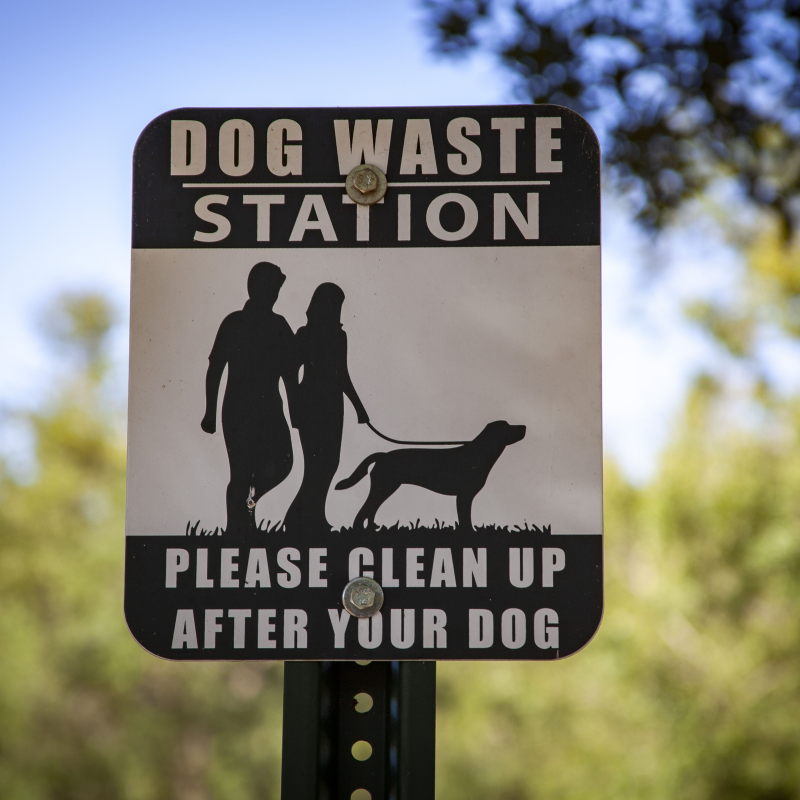
When preventable behavior starts damaging the community’s infrastructure, it’s probably time for public works to step in. That could mean teaming up with stakeholders on an outreach campaign to stop it. But too often, the behavior just doesn’t stop because the message didn’t address the underlying causes of the problematic behavior.
We put a premium on strong communication here at Public Works Radio, so this week on the official voice of the American Public Works Association (APWA), we’re exploring what comes next when traditional, awareness-based outreach falls short.
We landed on community-based social marketing. An approach that uses research on why people actually behave the way they do, including social influences, community norms, and a whole host of other things, and then gets incorporated into designing outreach that’s much more likely to change the behavior, not just raise awareness.
As we learn in this week’s conversation, calling it marketing might be misleading because it’s actually a framework composed of several essential steps, and it has been applied to prominent areas like environmental protection, energy usage, and much more.
In this episode we hear from the following guests:
- Benjamin A. Lucha, ENV SP, is Environmental Programs Manager for the City of Victorville in California.
- Jennifer Tabanico is President of Action Research, a community-based social marketing firm based in Oceanside, California.
Public Works Radio is hosted by Bailey Dickman, Senior Digital Marketing Specialist with APWA. Each episode dives into a wide range of topics designed to educate and inspire, making public works more visible to everyone—from the general public and elected officials to industry peers and the media. If you haven’t already, please subscribe wherever you get your podcasts, rate and review the show, forward it to a friend, and drop us a note at podcast@apwa.org so we can hear your feedback directly!
More Show Notes and Resources
- “Fostering Sustainable Behavior: An Introduction to Community-Based Social Marketing” Book
- About Action Research
- City of Victorville Environmental Programs
- Benjamin Lucha on LinkedIn
- Jennifer Tabanico on LinkedIn
Transcript
View transcript >
0:00:00.4 Bailey Dickman: When preventable behavior starts damaging community infrastructure, it’s probably time for public works to step in. That could mean teaming up with stakeholders on an outreach campaign to stop the behavior. For example, if dog walkers at a local hiking trail don’t pick up after their pets, some signs urging an end to the behavior might be coming next. Maybe the signs even spell out the environmental or public health risks of not picking up after the dog. Perhaps the outreach goes further with billboards or a local TV ad or an ad in the local newspaper. But too often, nothing ends up really changing and the behavior just doesn’t stop.
0:00:33.1 Bailey Dickman: We put a premium on strong communication here at Public Works Radio. So this week we’re exploring what comes next when traditional awareness-based outreach falls short. We landed on community-based social marketing. I know it’s a mouthful, but instead of just putting up a sign or running an ad that says wear your seatbelt or don’t litter, this approach uses research on why people actually behave the way they do, including social influences, community norms, and a whole host of other things. And then that gets incorporated into designing outreach that’s much more likely to change the behavior, not just raise awareness. Let’s revisit this dog example.
0:01:07.3 Jennifer Tabanico: Because we’re coming at it with this framework, we say, well, maybe we don’t know, maybe we’re just making assumptions about what people think. And so we did a survey of residents living around this particular area and we found out that people actually did really care about the water quality and they knew they ought to be picking up after their dog. The primary reason they didn’t pick up is that they would forget a bag and there were not sufficient trash cans along the trail for them to throw it away.
0:01:34.0 Jennifer Tabani co: So knowing about the audience, we were able to develop a campaign that highlighted their already high motivation, their perceived need to be a responsible dog owners. Instead of punishing, we also provided them with bags by providing bag dispensers along the trail and additional trash cans. And just in that short time, we saw an initial drop in 23% of the amount of dog waste piles that were accumulating with a very simple change to the infrastructure and the messaging.
0:02:05.9 Bailey Dickman: That was Jennifer Tabanico. She runs Action Research, a community-based social marketing firm based in Oceanside, California.
0:02:13.2 Jennifer Tabanico: Community-based social marketing is a framework and it emerged out of this recognition that traditional efforts to change behavior on the part of the public were really focused on either increasing knowledge or trying to change people’s attitudes. So they were really focused on pushing information out, hoping that people would suddenly know what to do and jump on board. But a lot of those programs were not getting results. And so community-based social marketing emerged as an alternative to that. And really what it does is go beyond that raising awareness to address underlying barriers that people experience and then also leverage motivations like social motivations and peer influences to drive behavior change.
0:03:01.8 Bailey Dickman: Let’s dive into that last piece a little bit more, that part about peer influences that drive behavior change. Here’s Benjamin Lucha. He’s the environmental programs manager for the city of Victorville, California.
0:03:12.2 Benjamin Lucha: People, when they commit to something, especially when it’s public-facing, they’re more likely to go through with it than people who don’t. And so we decided to test the waters with community-based social marketing. And what we did is we developed some stickers and someone in our staff came up with these great stickers. And not only did she create these great stickers, but she actually made a digital form of those stickers. People can text them to each other or post it on social media, etcetera. And the only way you could get the sticker is if you signed a pledge. And we were surprised to see the response.
0:03:47.5 Benjamin Lucha: First of all, we were surprised that people got so excited over stickers. There were people who took it very seriously where you would see couples looking at each other and saying, “Well, we do that, right?” And the other one’s like, “Yes, we do.” And I remember once there was this young guy and I’m assuming his girlfriend was there, and he signed it and she looked at him and she said, “You signed that?” And his response was, “Yeah, I did.” She’s like, “Well, I better never see you litter again.” And she said it really sternly. She even put her finger, like, in his chest. And he’s like, “Of course not. I signed the pledge.” That is the way to go, especially when you truly want to do behavior change. This is a great approach to do it.
0:04:27.5 Bailey Dickman: But this isn’t just an overnight fix. It’s a long-game commitment. But with patience and buy-in from leadership, the return on investment is there.
0:04:35.6 Benjamin Lucha: A very tough part of community-based social marketing is patience, and public works, we don’t have a whole lot of patience. For lack of better terms, it’s playing the long game. You’re gonna end up saving money later because you’re spending the money where it needs to be spent versus just throwing money and hoping it lands where you want it to go.
0:04:54.4 Bailey Dickman: Welcome back to Public Works Radio, the official voice of the American Public Works Association. This week, we’re talking about community-based social marketing, a broadly applicable framework used to tackle some of the most challenging issues facing the public, like water conservation, energy efficiency, and even human interaction with wildlife. I personally had never heard about this before Benjamin approached us, and I think this is genuinely so interesting. So let’s not waste any more time and let’s dive in. Let’s kick this off with a community-based social marketing success story. Can you give us a best-case scenario for applying it?
0:05:27.2 Jennifer Tabanico: One of my favorite and I think most easily explained examples is a project I worked on several years ago in a city here in Southern California where they were facing what a lot of cities and jurisdictions face, and that is people not picking up after their dogs. So there was a trail running along the river, and people were using that trail to walk their dogs but not picking up. And initially, the agency that I was working with said, “We need to tell people that this is the right thing to do, and we need to tell people that it’s bad for water quality and that picking up after your dogs is the law.”
0:06:03.7 Jennifer Tabanico: And so the hunch of the city was, “Well, people just don’t know and they don’t care,” and they wanted to just develop a program. And because we’re coming at it with this framework, we say, “Well, maybe we don’t know. Maybe we’re just making assumptions about what people think.” And so we did a survey of residents living around this particular area, and we found out that people actually did really care about the water quality and they knew they ought to be picking up after their dog. The primary reason they didn’t pick up is that they would forget a bag when they left their house, and there were not sufficient trash cans along the trail for them to throw it away.
0:06:38.5 Jennifer Tabanico: So knowing about the audience, so that objective information we got from the audience, we were able to develop a campaign that highlighted their already high motivation, their perceived need to be a responsible dog owner. So the campaign was called Do Your Duty. It focused on being a good dog owner, being a good citizen, instead of punishing. But importantly, in addition to that, we also provided them with bags by providing bag dispensers along the trail and additional trash cans. And we wanted to test that because obviously trash cans would cost money to install.
0:07:17.4 Jennifer Tabanico: So we tested it on a small portion of the trail and compared that to an area where we just left everything alone, business as usual. And just in a short time, we saw an initial drop in 23% of the amount of dog waste piles that were accumulating with a very simple change to the infrastructure and the messaging. So that’s one of my favorite examples. But as Ben knows and others that I’ve worked with, it’s been replicated across many things, from getting employees to turn off their computer monitors at the end of the day, to put the right things in the recycling bin, to complying with safety regulations for bicycles, and like I said, everything in between.
0:07:57.6 Bailey Dickman: So, Benjamin, let’s talk about how did you use this to solve a public works problem?
0:08:01.8 Benjamin Lucha: Thanks. Yeah. Well, what’s going on here in Victorville is… Well, first of all, I’ve only been here a little over a year. I’ve been working in the environmental field and for municipalities for over 26 years now, but I’ve only been here about a year. And when I came in, using my experience in the past, I wanted to… I worked with staff and I wanted to try a different approach to doing outreach. Because I say it so often, and Jennifer’s heard me say it several times, that just regular getting the word out doesn’t work. People will hear it over and over again, and it doesn’t mean they’ll change their behaviors.
0:08:42.0 Benjamin Lucha: And sometimes I would have someone tell me, “You gotta do a better job in educating the public.” And I’d respond to them, “I could staple it to their foreheads and there’s still no guarantee they’re gonna read it.” And I’ve been through that so many times where we just put out so much information, but nobody’s reading it. Nobody’s changing their behaviors. When I came here, I introduced the environmental programs staff to this concept of community-based social marketing. And I told them I would like to see if we can possibly do this here so that we can actually change behaviors versus just getting the word out.
0:09:25.4 Benjamin Lucha: And we first dipped our toes in it using more like a principle that came from it. It wasn’t a true community-based social marketing project because, as you’ll learn, you need to pilot it, you need to study your audience, etcetera. But just reading the book Fostering Sustainable Behavior, who Jennifer actually happens to be a co-author of the latest edition of that book, but I was reading through the book and we had an outreach event where we were gonna have a booth and we had to get some kind of giveaway item to bring people to our booth. And so I read a section on commitments, and it was very interesting because it outlines how people, when they commit to something, especially when it’s public-facing, they’re more likely to go through with it than people who don’t.
0:10:22.4 Benjamin Lucha: And so we decided to test the waters with community-based social marketing. And what we did is we developed some stickers, and someone in our staff came up with these great stickers. And not only did she create these great stickers, but she actually made digital forms of those stickers, and they’re animated stickers so that people can text them to each other or post it on social media, etcetera. And the only way you could get the sticker is if you signed a pledge saying that you are going to participate in our organics program and put your organic waste where it belongs, in the green or the organics container. And we were surprised to see the response.
0:11:03.1 Benjamin Lucha: First of all, we were surprised that people got so excited over stickers. As a kid, I liked stickers, but I didn’t think that even adults would be excited over stickers. And you’d be surprised what kind of adults get excited over a sticker. But when we would tell them the way you get the sticker is either you can sign this pledge and you can get an electronic form of it by going online and doing a pledge online, there were people who took it very seriously where you would see couples looking at each other and saying, “Well, we do that, right?” And the other one’s like, “Yes, we do.” So they sign it and they get their sticker.
0:11:38.6 Benjamin Lucha: And I remember once there was this young guy and I’m assuming his girlfriend was there, and he signed it and she looked at him and she said, “You signed that?” And his response was, “Yeah, I did.” She’s like, “Well, I better never see you litter again.” And she said it really sternly. She even put her finger like in his chest, like hitting his chest, like, “I better never see you litter again.” And he’s like, “Of course not. I signed the pledge.” The pledge has nothing to do with littering, but they associated it, and that’s how serious people took those pledges and those commitments. And so we were seeing, yes, actually applying these types of principles could be effective.
0:12:18.8 Bailey Dickman: For your organics program, did that track to having more organics? More people were following through when they got home?
0:12:27.3 Benjamin Lucha: Well, we were told they were. It’s kind of hard, especially when it’s a public event. And that’s something I wanted… I was hoping we were gonna go into too, is to truly do a community-based social marketing project, you really need to test it because it’s not a one-size-fits-all. It’s not, “Hey, everyone do stickers and your programs are gonna go excellent.” And so we actually did more of a true type of one where, well, actually we’re in the process of implementing it right now, where that’s what we’re gonna do is we’re going to try different approaches based on the findings that are outlined in community-based social marketing projects. And we’re gonna test them and we’re gonna see which is the most effective.
0:13:13.8 Benjamin Lucha: And not only which is the most effective, but also we’re gonna determine where it is cost-effective, where maybe the more expensive one is more effective, but when you actually do a calculation of dollar per amount of change, it maybe isn’t as effective as another way. In that way, we’re gonna determine what’s the best way to address a problem we’re having right now that has to do with low participation rates and high contamination of our organics.
0:13:42.0 Bailey Dickman: As we learned from Jennifer, calling it marketing might actually be a bit misleading. It’s more like a framework made out of several important steps that she’s gonna break down.
0:13:49.5 Jennifer Tabanico: One of the things that makes community-based social marketing so broadly applicable is it’s not a marketing tactic. It’s actually a framework that you can just apply. So you don’t have to be a behavioral scientist or an expert marketer in order to be able to kind of guide through the steps. So the first step is, and there’s five of them, the first step is selecting a behavior. And why is that important? Because there are probably thousands of different behaviors in public works that we could be asking people to do. And if we ask people to do all of these different things, it doesn’t mean they’re gonna do more, and in fact they’re likely to do less. They get overwhelmed with all of the choices. There’s different challenges.
0:14:33.3 Jennifer Tabanico: So the first step is really deciding what is the thing that we want people to do. And maybe it’s two or three things, but it’s a very strategically selected set of clear actions. So it’s not gonna be something broad like “recycle,” but it’s going to be something very specific like “put your food scraps in the green organics bin.” Be very specific. And the second reason we focus on selecting behaviors is that barriers, that is the reasons people don’t do it, differ at the level of individual behaviors. So the reason someone doesn’t ride their bike to work is gonna be different than the reason they wouldn’t take the bus to work. And someone might recycle at work but not recycle at home because the challenges are different at the level of those different actions.
0:15:17.5 Jennifer Tabanico: So the second thing we do is take those actions that we want to focus on and ask the audience, “What makes it difficult for you to do this? Why aren’t you participating?” And Ben talked about knowledge and telling people what to do. That’s important, but knowing what to do and having a positive attitude about it are just two of the possible barriers. There are many other things that stop people from participating. They might forget. They might have an established habit of doing the opposite behavior. They might be afraid that they would be perceived as weird or strange if they did the behavior. There might be opposing norms or just misperceptions about what they’re supposed to do, or actual inconveniences or flaws in the program that make it hard for people to participate.
0:16:05.4 Jennifer Tabanico: So at that second step, we have to really uncover what is it that’s preventing people from participating. And then secondly, what do they see as beneficial about participating? In that example I gave you about picking up after dogs, the agency’s primary concern was water quality. Well, the people’s primary concern was looking like a responsible dog owner. And so it’s really important to understand what they perceive as beneficial because that’s how we’re gonna want to orient our messages, around the things that they see as important.
0:16:42.3 Jennifer Tabanico: Once you have that information, it becomes so easy to develop strategies that address the barriers, whether it’s providing bags, changing the infrastructure in some way, or correcting misinformation, or providing messages that align with their values.
0:16:58.0 Benjamin Lucha: I’d like to add that what Jennifer was saying about identifying the behavior is such an important step. Someone like me who’s been working in this industry for a long time, we start making assumptions and we feel that we, for lack of better terms, know it all. And so, like our current project that we’re working on, we thought we knew what was the problem. When it was tested and there were like surveys and people interviewing people, people living in our neighborhoods, we discovered that the problem wasn’t what we thought it was. We thought we had a problem with people seeing their green waste or organics container, we’re in California, so we need to divert organic waste.
0:17:50.2 Benjamin Lucha: We thought that people were just seeing it as an extra trash can. But really what was going on was that there was some confusion and people were making assumptions off of things that we’ve never said. Where, for example, with us, there’s green waste, which is like lawn clippings, leaves, branches, etcetera, and then the organic waste, which is like food waste, etcetera. We were having people bag their food waste, and we have a special piece of machinery that actually tears the bag apart, pulls out the food waste to compost it, and we throw the bags away.
0:18:26.1 Benjamin Lucha: Well, people were making the assumption that they had to get compostable bags to participate in the program. And so a lot of people were saying during their interviews and during the surveys that those bags are expensive or they’re hard to find, and so that’s why they’re not doing it. And so we discovered, oh, so that was a misconception that people were just making this assumption, and we need to fix that misconception.
0:18:53.1 Benjamin Lucha: Another thing is that we were always referring to it as our recyclables or organic waste or green waste or trash. But a lot of people were saying, “Oh, no, I don’t have an organics cart.” And then they’re like, “Well, you have a green cart, right?” They’re like, “Yeah, I have a green cart, but not an organics cart.” Everyone refers to their waste stream by the color and not by the actual items that are going inside the container. So by doing these studies, we were discovering there were issues that we never even knew we had with the participation in our programs.
0:19:31.1 Jennifer Tabanico: I had another example you just reminded me of, Ben, in a different context where this was focused on littering that was happening at skate parks. And the assumption was, “These kids don’t care. They don’t know that their trash is winding up in the ocean, and if they just knew that, they’re not gonna be able to go to the beach and surf.” [laughter] And that was the assumption. And so using this process, we slow it down. Okay, what’s really going on? Where’s the litter coming from? What are they doing and why?
0:20:02.8 Jennifer Tabanico: And so we just did observations, just kind of unobtrusively watched what was going on at these skate parks. And what we found was none of the kids were throwing their trash on the ground. What was happening consistently is that these youth, young boys and girls, like 10 to 12 mostly, were going… They were eating their chips, drinking their water, they’d set their snacks down, they’d go and skate, and then mom or dad would show up to pick them up and they’d run off and forget and leave it behind. So the strategy then became about reminding them to throw their trash away before they leave.
0:20:39.7 Jennifer Tabanico: We also learned through conversations with those skaters that they cared about keeping their park clean, not so that they could surf and keeping trash out of the ocean, but because it was a safety issue. If there’s water bottles and trash in the skate bowl, they could fall. And so all of the materials then were framed around keeping their park clean and that park pride, rather than punitive government authority saying, “Pick up your trash or else, you lazy teens,” which wasn’t going to do anything.
0:21:12.5 Jennifer Tabanico: So I think Ben’s point of really challenging your assumptions and talking to the audience and hearing from their perspective what their challenges are is really just so valuable. And even though it adds a little bit of time, it saves you a ton on the back end because you’re getting directly to the issues, often with a much more lean strategy than just throwing everything at the problem.
0:21:38.1 Bailey Dickman: What are some potential public works uses of community-based social marketing that you would like to see, even if you haven’t seen it before? What’s one that you’re like, “This would be cool if somebody figured out a way to do X, Y, or Z or to inspire X, Y, and Z behavior”?
0:21:54.6 Benjamin Lucha: I know for me, one that I would really love to see in the future, but it’s just gonna take a lot of coordination, is we’re located in the desert, and so we have a lot of open space surrounding our city. And as I’ve learned with a lot of cities that have a lot of open space, you end up having an issue with illegal dumping because there’s ample opportunities to do it. But the problem with illegal dumping is it’s not very centralized. It’s not like, “Oh, okay, everyone living in this area are the ones who are illegally dumping, so let’s focus on them.” It would be more of a regional approach where it would require extensive partnerships outside of your jurisdiction with a lot of people working together to make it happen. And so that’s something I would love to see happen in the near future, where several communities work together to do a very large community-based social marketing approach towards addressing illegal dumping.
0:22:57.6 Jennifer Tabanico: Often we think of the solutions to these behavior change problems being either a technology fix, so we just create a gadget to fix it. So maybe an emergency notification app. So the streetlights are out, you use the app and it reports it, or you see an illegal dump site, you report it. And they create the app and then there you go. Well, using the app is a behavior, and people need to engage in that behavior, and they may or may not for different reasons. What are you already doing where there might be a behavior hiding? And I would say that’s the best fit for community-based social marketing.
0:23:35.6 Bailey Dickman: Somebody listens to this podcast or they read the book or they read about it online and they want to be able to start implementing parts of it at their agency. How do you think the average public worker should go about getting buy-in from leadership or from their team?
0:23:51.3 Benjamin Lucha: I think it’s just presenting case studies. A very tough part of community-based social marketing is you need patience, and in public works, we don’t have a whole lot of patience. It’s get it done and move on to the next thing you need to do. And so it’s, I guess, for lack of better terms, it’s playing the long game versus just getting something done and let’s move on. And I know for me, that was a big hang-up for me where I just wanted to say, “Okay, that’s done. Let’s move on to the next issue.”
0:24:25.6 Benjamin Lucha: So really showing these case studies of how it has been effective, how it is cost-effective. It may sound more expensive now, but you’re gonna end up saving money later because now you’re actually spending the money where it needs to be spent versus just taking a shotgun approach and just throwing money and hoping it lands where you want it to go.
0:24:49.7 Benjamin Lucha: And so by doing these demonstrated proof of how it has helped out with certain issues, I think it’s really convincing that that is the way to go, especially when you truly want to do behavior change. If you’re just looking to be in compliant or if it’s just by law we need to send this information out to every ratepayer or every resident, that probably would not be a good project for community-based social marketing. But if it is, “Hey, we have problem X, how are we gonna solve it?” then this is a great approach to do it.
0:25:31.2 Bailey Dickman: What question am I not asking that you think everybody should know about community-based social marketing in the context of public works?
0:25:39.3 Benjamin Lucha: Something I like to say is it teaches you what not to do as well. It’s kind of like, I think you’ve probably heard this from a lot of the public works professionals you’ve worked with before that there’s no going back once you’re aware of a topic, once you’ve worked on a topic. It’s like, I did a streetlights project and I went on vacation and the first thing I did was stare at the streetlights at that location because I was like, “Oh, okay, I like that, but I don’t like that.” Or I’ve been working in trash and recycling issues for so long, it’s like, yeah, I was on vacation once and there was a sign for a landfill and my wife’s like, “No, keep driving. We’re not gonna go visit a landfill on your vacation.”
[laughter]
0:26:24.9 Benjamin Lucha: And so same thing with community-based social marketing. Sometimes… I’m not gonna throw anyone under the bus, but sometimes you see some outreach methods from other locations and you’ll even cringe because you’re like, “Okay, well, when studying up on this topic, I know that they’re gonna actually get the opposite effect of what they’re looking to do.”
0:26:46.3 Jennifer Tabanico: My family’s so used to me taking pictures of signage everywhere we go. It’s like usually, sometimes they’re good examples, but a lot of times they go into… I have this file of shame on my computer where I put all these bad public education campaigns because when you really know the mechanisms behind it and behind human behavior, you just kind of like, oh my gosh, palm to forehead. And knowing that they could actually be producing a behavior that’s opposite to what they intend. So messages… And I think that’s what for me, one of the things that convinces people to do it because they’re like, “Well, what’s the return on investment?” That’s what they’re used to, right? If you buy a street sweeper, what’s the return on investment? You buy a tangible product, that’s really easy to calculate. You’re gonna do this, it’s gonna pick up this much trash, and that’s how much it’s gonna cost.
0:27:38.2 Jennifer Tabanico: And it’s a product and they can see it. But with community-based social marketing, you kind of don’t know what you’re gonna do until you start. And you don’t know what the messages are gonna be. And maybe you need a sign, but maybe you need to go talk to people, or maybe the message needs to come from a completely different organization. You don’t really know that, and that’s hard for people to grasp. But there’s so many examples of education-only campaigns going back to the ’90s and big major national campaigns that either produced zero effects or produced effects counter to what they intended to produce.
0:28:14.6 Jennifer Tabanico: A lot of the anti-drug campaigns in the ’90s, they later found actually increased drug use. And there’s other examples like that. And those campaigns cost millions of dollars. So what I always ask people is, well, what’s the return on investment of not doing this approach? Because if you’re not changing behavior and you’re spending millions of dollars, your return on investment is zero. And so by spending this little bit of effort up front and being able to test different strategies, you can see on a very small scale before you’ve spent your millions of dollars that you’re going to get a change or not get a change.
0:28:50.5 Jennifer Tabanico: And sometimes you don’t get a big change. Sometimes it’s just a little bit because there’s big barriers you’ve got to address, but at least you know that on a small scale and you end up saving money in the long run by doing that. So I think, like Ben’s suggestion of looking at case studies and looking at agencies that have done this well and what they found can be a really helpful way to convince management or the powers that be that this might be something they want to try.
0:29:17.1 Bailey Dickman: Thank you for listening to Public Works Radio, the official voice of the American Public Works Association. And thank you to our guests Jennifer Tabanico and Benjamin Lucha for joining us today. Make sure to subscribe wherever you get your favorite podcast, rate it, review it, forward us along to a friend, and don’t be shy about dropping us a note over at podcast@apwa.org so we can hear your feedback directly. We’ll catch you next time.

Proficiency Levels
Introductory
Focuses on a general or broad overview of the topic, awareness of basic factual recall. Limited experience of the subject matter is necessary to understand content areas.
Applied
Focuses on practical implementation of technical steps or strategies, some prior knowledge and experience of the topic is necessary.
Advanced
Mastery of basic concepts associated with an area has been obtained. Focuses on understanding nuances, advanced concepts, and intricacies with implementation within knowledge area. Strong understanding of how the concept impacts other factors or areas of operations.
Program Types
CLL
Click, Listen & Learn (CLL) are interactive educational webinars. Each program is led by top experts in the field who share new ideas, methods, and technologies in a fast-paced two-hour time frame. These programs are available free to APWA members. CLL programs are eligible for continuing education units (CEUs).
Primer
Primers are used to educate policymakers about public works roles and responsibilities in public rights of way, the impact of federal workforce development policies on the industry and workforce, and the importance of resilient infrastructure.
Public Works Radio Podcast
Public Works Radio is the official podcast of the American Public Works Association (APWA), bringing the stories behind our communities to life. This podcast shines a spotlight on the people and projects that keep our cities running—humanizing the work and the professionals who make it happen. Each episode dives into a wide range of topics designed to educate and inspire, making public works more visible to everyone.
PWX
PWX session recordings cover a wide variety of topics, including integrating modes of transportation, traffic and transit, construction management, emergency management, engineering and technology, fleet and facilities, management, parks and grounds, snow and ice control, and stormwater/flood control, as well as solid waste, roads and bridges and water/wastewater. PWX sessions are eligible for continuing education units (CEUs).
Reporter Articles
APWA Reporter articles are written by public works practitioners on subjects such as solid waste management, water resources, municipal engineering, transportation, equipment services, buildings and grounds, snow removal, and other public works-related topics.
Snow
The Snow Conference session recordings feature public works professionals sharing the latest best practices in managing winter/snow operations more successfully, taking advantage of emerging technologies, understanding and preparing for the challenges ahead, and providing better service to their communities. Snow sessions are eligible for continuing education units (CEUs).
Tech Boxes
A tech box is a PDF take-away that provides information in lists, steps, or defined areas specifically focused on trending technologies.
Virtual Program
Virtual programs are live, interactive educational programs led by top experts in the field who provide timely information or address trending topics within an area. Programs often conclude with an open forum for Q&A.