
Taking place May 17–23, this year’s National Public Works Week theme is “Rooted in Service, Powered by Community,” and that special time of year will be here before you know it. To get the ball rolling, we’ve invited some of the most inspiring public workers in the country to join our show and share their ideas on how they make this week so special.
From ideas for celebrating with food, trivia, local small businesses, touch-a-truck events, food drives, barbecue competitions, social media campaigns, awards, giveaways, and much more, we hope this episode inspires you. We also hope you find something in the show to bring back to your team and community to make your National Public Works Week truly special.
Join us as we go coast to coast to find some of the most unique ways teams around the country are celebrating.
In this episode we hear from the following guests:
- Petra Beglarian, MPA, Public Works Manager, City of Glendale, California Public Works Department.
- Ryon Bell, CPWP-M, CAPM, Streets and Drainage Manager, City of Sugar Land, Texas.
- Ani Oganesyan, MPA, Community Outreach Associate, City of Glendale, California Public Works Department.
- Thomas Roy, PE, Director of Public Works and Town Engineer, Town of Simsbury, Connecticut.
Public Works Radio is hosted by Bailey Dickman, Senior Digital Marketing Specialist with APWA. Each episode dives into a wide range of topics designed to educate and inspire, making public works more visible to everyone—from the general public and elected officials to industry peers and the media. If you haven’t already, please subscribe wherever you get your podcasts, rate and review the show, forward it to a friend, and drop us a note at podcast@apwa.org so we can hear your feedback directly!
More Show Notes and Links
Your Complete Guide to NPWW 2026
Glendale Public Works on Facebook
Glendale Public Works on Instagram
Glendale Public Works on TikTok
Simsbury, Connecticut Public Works
Sugar Land, Texas Public Works
Transcript
View transcript >
0:00:00.2 Petra Beglarian: I feel like this week really gives us that chance to tell our story and it reminds our employees that their work has a purpose, and it reminds the community that there’s a dedicated team behind the scenes that are working every single day to make sure that they have their quality of life. So I think National Public Works Week is so, so, so important not only for our staff, but for the community as well.
0:00:19.1 Bailey Dickman: That was the voice of Petra Beglarian. She’s the Public Works Manager with the City of Glendale in California. When it comes to National Public Works Week, her team in Glendale isn’t messing around. Here’s her colleague Ani Oganesyan, who serves as a community outreach associate for the City of Glendale with more.
0:00:34.5 Ani Oganesyan: Coordination and creativity are probably the two biggest factors for Public Works Week.
0:00:37.7 Bailey Dickman: Taking place May 17th through the 23rd, this year’s National Public Works Week will be here before you know it. That’s why we’ve invited some of the most inspiring public workers in the country to join our show and share ideas that make this week so special. We hope that you can find something in the show to take to your team and your community to make your National Public Works Week truly special. Here’s Ryon Bell, the streets and drainage manager for the city of Sugar Land in Texas. His team celebrates with food, trivia, local small businesses, and since it’s Texas, you know there’s gonna be a picnic and a rodeo, but not the type of rodeo you’re thinking.
0:01:09.3 Ryon Bell: Camaraderie that you build and you develop in this type of atmosphere, it’s just wonderful. I mean, it’s nothing like that. And then I’m just over the moon seeing that there are like-minded people like me that just want to be in a community and serve.
0:01:22.3 Bailey Dickman: Welcome back to Public Works Radio, the official voice of the American Public Works Association. Each episode dives into a wide range of topics designed to educate and inspire, making public works more visible to everyone. This year’s National Public Works Week theme is “Rooted in Service Powered by Community. And in this episode, we’re going coast to coast to find some of the most unique ways that teams around the country are celebrating. Here’s Thomas Roy, the director of public works and town engineer for Simsbury, Connecticut.
0:01:47.6 Thomas Roy: And all of a sudden you start realizing these people do care about you and the job you do. And everything we do in terms of social media and things like Public Works Week is a chance for us to interact with them, but more importantly, our drivers and our staff start to realize that they are appreciated. And it just really has changed the whole energy of our department.
0:02:07.1 Bailey Dickman: It’s my favorite time of year, so let’s dive in. Here’s my conversation with Petra, Ani, Ryon, and Tom. What does your team do to celebrate National Public Works Week?
0:02:18.0 Petra Beglarian: We’ll set up a whole week’s worth of events. I’ll let Ani go into the description of actually what we do.
0:02:24.1 Ani Oganesyan: Definitely. So starting off, of course, that Tuesday we have a proclamation to our city council where we also prepare about a three-minute video. We work with our graphics department and this highlights all of our accomplishments in the past year, any new… If you got any new EV vehicles, any new projects that were started or completed, it highlights all of those. And then we’d like to start the week off with a coffee and desserts. That’s the first Public Works Week event we have. And then we move on to our annual breakfast and lunch, and if you want to touch upon that one?
0:02:52.1 Petra Beglarian: Yeah. So for our annual breakfast or lunch, that’s the one event throughout the week that’s the big event where all divisions come together in one location at our courtyard and we just pretty much celebrate our staff. We’ll have an awards ceremony there where we will announce our employee of the years, both for the division as a whole and for the department. It’s a bunch of food, games, the awards ceremony.
0:03:23.3 Ani Oganesyan: And a rock climbing wall, which has been really fun.
0:03:25.4 Petra Beglarian: Yeah, we try to make it really fun here in Glendale because at the end of the day, it’s our staff that we’re showing appreciation for and this is the one day in the year we all get to get together and celebrate their accomplishments.
0:03:38.8 Ani Oganesyan: Yeah, and then we also do our annual department and division photos and it’s a nice time to kind of reflect on the last year, maybe some new faces that came and some people that have retired. And we like to end the week off with an after-hours happy hour. So whoever decides to come, maybe at a local, we usually do a like local restaurant.
0:03:56.0 Bailey Dickman: Tell me about two or three things that your team does to celebrate.
0:03:59.6 Ryon Bell: Usually we start with some type of kickoff breakfast on Mondays of that week. Generally, we find a local business, local small business, and we get breakfast tacos or pancakes, whatever, just to kind of incorporate our community here in Sugar Land in what we’re doing. Generally have like some type of a game day on a Tuesday. I think this year we’re gonna do Public Works trivia, something like that. So it’s gonna be awesome. It’s gonna be great. So we’ll do trivia, try to bring in like a Kona Ice truck or something like that generally ’cause, hey, why not? Why not have Kona Ice during National Public Works Week? And then we kind of get prepped for our picnic. So in Southeast Branch Texas, APWA, we have a barbecue competition during that week and of course, the City of Sugar Land Imperial Smokers, we have to be a part of that. And so we’re prepping for that and a couple of our guys on the cook team, me included, are driving out to wherever the location is and we’re prepping and we’re getting ready to cook. And so that Wednesday is the picnic. We’re cooking briskets and chicken and sausage. And it’s a competition, so we’re turning in our competition chicken, our ribs, our brisket, trying to see if we can get first place. Of course, we don’t forget about our staff that has to stay back at Public Works ’cause everybody can’t go to the picnic. We still have things that have to get accomplished and we try to make sure that that group of people are taken care of also, so try to get them a meal, something like that that’s happening. We do a rodeo during that week, like our own internal equipment rodeo with public works, utilities. We get that set up. Everybody gets to participate in that. It’s really a great time.
0:05:57.6 Ryon Bell: We try to implement some sort of a staff recognition for our folks like a community impact award, service award, quiet leader award, problem solver award, different things like that kind of give out to a few of our staff. And then Fridays, we do an ice cream day. So you come in and you get a drumstick or ice cream sandwich or whatever. Just grab and go, eat as much ice cream as you can. It’s the middle of the summer, it’s gonna be hot. So we just try to have a really good time and show our appreciation to our staff as well as the community that we serve.
0:06:33.9 Bailey Dickman: And up in Connecticut, National Public Works Week is a time for a food drive, community involvement, and the ever popular Touch a Truck event.
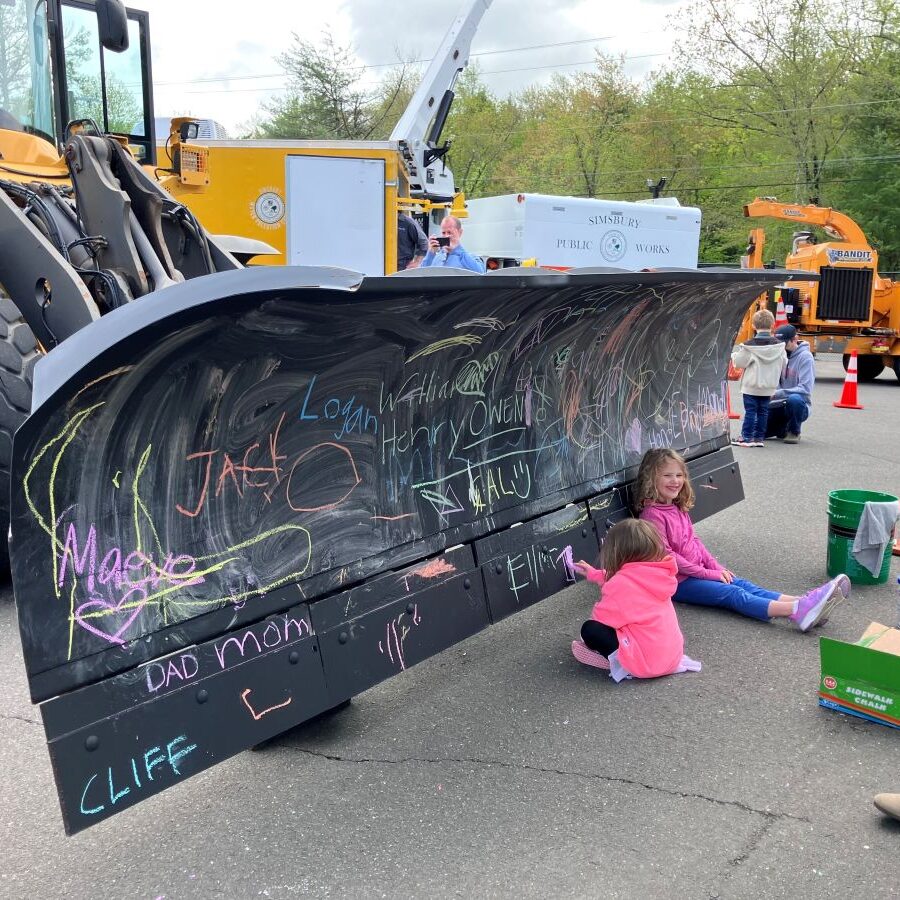
0:06:41.3 Thomas Roy: We’ve done a couple things in Simsbury. We’ve done proclamations from our board of selectmen, which is a nice way of getting at least the discussion at a town meeting, which is broadcast on our local TV channels, and it kind of gets the word out that this thing is coming up. We’ve done Fill a Truck in the past, which is nice. Nothing like parking a dump truck in front of our local grocery store. But our big event that really took years in the making is we have an open house and Touch a Truck at our public works facility. And the big excitement is we actually have the kids go in the dump trucks and the street sweepers that make a lap around the backside of the facility, so they actually get a ride in an actual public works truck. And it took me a couple years in being in this position before I felt comfortable saying, “We are going to pay our staff time and a half to be here on a Saturday to put kids in trucks.” That took a little building up of credibility before I could do that. And we used to do it in conjunction with the library because the library had a connection with all of the young kids in town through their children’s programs.
0:07:42.3 Thomas Roy: And the second year we did it, the weather was awful. And we see it coming in and it’s a storm and we cancel it and what do we do? And we decided to press on and we got some of our pop-up tents and because it was gonna be cold and raw, we got hot chocolate and coffee. And it was just great. Not only did all of a sudden we realized that the families still came out, they still wanted to spend time with us. All of a sudden, it was almost like breaking bread, having the… It was the first time we had snacks for them. And it really, again, it just all of a sudden you’re breaking bread with them, you’re having a cup of coffee with the parents and the grandparents. The amount of grandparents that come out for Touch a Truck is shocking. It’s almost like they’re like, “I’ve been waiting for this, to have grandchildren for years, to get a chance.” When we moved away from our library model and we kind of had enough of our own following, we had Touch a Truck at our public works facility and a lot of the guys asked if they could bring in their teenage kids to help. And it was again, it was just such a great experience where all of a sudden it was interacting, getting to meet people’s families that maybe we didn’t know. And it just… The connection and then to see the kids seeing the world all of a sudden through of how other people view their dads or their moms. Just really great.
0:08:52.5 Bailey Dickman: The ability for them to go into a big truck and drive it, like why do you think that’s so fun for kids?
0:08:57.9 Thomas Roy: Well, I think all kids love construction. All kids seem to love the big trucks and it’s something different, new, and exciting. But it was fun that different than every other Touch a Truck in our region, we actually got to put kids in trucks that were driving and it was very, very carefully planned with our insurance carrier and our safety people. And the way I describe it is it’s essentially a truck-mounted merry-go-round. The trucks are going around counterclockwise. All of the people are entering in from the right side of the vehicle, so there’s never a chance where any children cross the paths. We have barricades and people and we’re very, very careful. But again, it’s a great chance to understand for the parents because honestly, I love the kids, but we’re aiming to get the message to the parents. Look how big this truck is. And we do it with the plows on. Look how big the plow is. Now maybe they can understand why once in a while a mailbox gets hit or once in a while there might be a little bit of grass damage or curb damage. They start to understand the enormity of the operation that we’re working on. And so we’re always fighting for the public to support us during our budget and having these Touch a Truck events. We also do a snowplow ride-along where again, we try to show residents, “This is the value that you’re getting when you invest in public works.”
0:10:12.0 Bailey Dickman: When it comes to National Public Works Week, why do you think it’s important for Public Works to celebrate, to really go all out?
0:10:18.2 Petra Beglarian: In Public Works, I think we really do it all. If it weren’t for Public Works, the streets we maintain, the traffic signals that we control or manage, our sewer systems, our trash, depending on what city you are and what your Public Works department does, we really do it all but in most cases, we’re often invisible when things are working well. And so I feel like this week really gives us that chance to tell our story, and it reminds our employees that their work has a purpose, and it reminds the community that there’s a dedicated team behind the scenes that are working every single day to make sure that they have their quality of life. So I think National Public Works Week is so, so, so important not only for our staff, but for the community as well.
0:11:02.2 Ani Oganesyan: It really is an exciting time and there’s two factors to it. So of course, again, we do try to celebrate our staff and bring them to light. But also in terms of the community, I think it’s a good time to share the bigger story of, yes, we do all of those things. We maintain the roads, we advance sustainability initiatives, we pick up trash but what’s the bigger picture, right? Where does this actually… How does this impact their daily life and how does this improve the quality of life that the residents in Glendale experience? So I think it’s that time to… It’s a time to spotlight our dedicated staff that respond to these everyday calls, but they’re kind of our unsung heroes.
0:11:35.7 Ryon Bell: We’re out there first and we’re leaving last. And it’s important that everybody in Public Works, it’s important that everybody that does what it is that we do understand how important it is of everything that we do and how it’s a privilege of what we do and how it’s a great thing that we do to serve our community. And National Public Works Week is just a way for us to give back to ourselves, give back to our staff, give back to our community just to say, “Hey, we’re here. This is our week.” Every week is our week, but this is the one that we celebrate. This allows our guys to have a good time and our staff to have a good time.
0:12:12.6 Bailey Dickman: Why do you think it’s important for Public Works to really show up, show out for a week like National Public Works Week?
0:12:20.1 Thomas Roy: I think there is so much more love for our staff than they ever believe. When I started here, I rode in the big trucks with each of our guys. The first winter I was here, I wanted to spend a little time with each of them one-on-one. And I said, “Why don’t you wave to these people as you’re going by?” He goes, “Well, they all hate us.” I’m like, “Why do you think that?” “Oh, they all hate us.” And that was honestly what they thought. They thought that, “Oh, they put snow in people’s driveways,” and everything else. And we started small things like, honestly, just wave. And all of a sudden you start realizing these people do care about you and the job you do. And everything we do in terms of social media and things like Public Works Week is a chance for us to interact with them, but more importantly, our drivers and our staff start to realize that they are appreciated. And it just really has changed the whole energy of our department.
0:13:06.4 Bailey Dickman: This year’s National Public Works Week theme is Rooted in Service, Powered by Community. What does it mean for you to serve in your role?
0:13:15.9 Ryon Bell: Working in Public Works is a privilege. For me, it’s not a job, it’s not just a career, it’s a privilege. It’s a privilege to be chosen and called in order to serve. What we do impacts everybody every day. It’s not anything that Public Works does not touch and does not assist to help our community in. And that’s the reason why we do it. We’re here in service of the community. We’re here in service of our residents. I can always help in some way, even if the answer is no, and that’s just an explanation to one of our residents of why it’s a no, as well as a suggestion on, “Okay, so I can’t do this for you, but this is how you go about getting this accomplished. Let me direct you to the right person. Let me show you the way.” And so I just love it. I just love it. Even when I get the phone calls and it’s tough and they’re ready to fire at you. I mean, and anybody in Public Works understands, sometimes you get some spirited residents and they’re upset and they have these things going on.
0:14:29.1 Ryon Bell: I love it when I’m the one that can hear it out and say, “Well, hey, guess what? Today you got the right person. So I understand that’s what you’re going through, but let me tell you what, you won’t be going through that next week because I have a solution for you.” And that’s why I’m here. There are no problems, just solutions, just ways to fix it, and we can usually get that done. That’s what that means to me. Like, we’re rooted, we’re planted here in our community. We’re here serving our residents. We’re here to provide the best service levels and the best resources for them that we can and exceed their expectations. And that’s what we do. That’s what we do in Public Works.
0:15:09.3 Thomas Roy: The more I do this, the more I realize it’s really an altruistic profession. I’m here not because I make the most money being in this job, because I really am committed to helping people. And it’s really the thing that resonates with me that there’s other cash opportunities out there for us. But as you get up in the organization, you start realizing, my day, as I explain it to people, is I go in with a plan every day. The phone rings, something happens, and I have a chance to change a resident’s day. And it may be something incredibly small, like, “The stop sign’s down, can you fix it?” “You know what? That’s gonna be done in the next hour.” And people are so impressed. But it’s a safety issue. Or it’s, “Water’s gonna leak down my driveway into my basement,” and we can fix that. Little stuff makes a big difference. And I don’t think there’s any other job or any other career where you can make such a difference in people’s lives so quickly.
0:16:00.0 Bailey Dickman: In Glendale, California, serving the community also means engaging with them on social media, a chance to reveal a fun, more playful side of Public Works.
0:16:08.0 Petra Beglarian: As a Public Works manager, being rooted in service means understanding that everything we do impacts everybody’s daily life. And it’s not just about our infrastructure, it’s about the trust that we have with the community. We are powered by the community, what their desires are, what their priorities are, and that really shapes what our progress is throughout the year. Essentially, it’s a duality between the two, the residents and what we do at Public Works. They tell us what we need, we do things for them, and it works back and forth and they are what shape what we do throughout the year.
0:16:39.3 Ani Oganesyan: For me, it really starts with the people, especially my job when it comes to outreach, it’s about informing, but also listening just as much as it is about informing and bringing in those… Making sure the community and residents feel that their concerns or questions are heard and bringing that back to the department. We bridge the gap between residents and our department. For me, I definitely spend a lot of time connecting residents to resources and translating those complex projects for us. And again, that week, I think, is a good time for us to kind of put it all in like a short clip of, “Hey, this is everything we’ve done for the past year. You guys may not have seen or heard of all of it, but these are our accomplishments, so come and celebrate with us.” And I think our bigger thing is we want to celebrate as a department but also get the community involved and a lot of that we do through our social media efforts, which is really fun and exciting for us.
0:17:29.9 Bailey Dickman: Let’s dive into that social media effort a little bit more because I don’t know if it’s hard to get Public Works folks to buy into being silly on social media for a week, but it is kind of difficult because public workers are by and large humble people who just like to get their job done. How do you get the team to buy into that? How do you get them to ease into being less serious on social media for a little bit?
0:17:54.1 Petra Beglarian: I think it did take us some time. Our people were a little hesitant when we first started our social media experience. But for us, what we like to do, we like to show them some examples. We get our inspiration from online, things that are trendy, things that are fun, and then we try to flip them so that they match what our department does. And so what we do is we like to show them what our examples are, like it’s not that bad. You have to say one word, like it’s not that bad. Like let’s just have fun here and at the end of the day, we are trying to promote you and your work. This has nothing to do with us. This is all about you. And so I think gradually that story that we’re telling and the idea that we’re trying to get across, we’ve been able to win them over with that.
0:18:43.6 Ani Oganesyan: I like to say that it’s a lot of asking really nicely with a hint of persuasion because a lot of our guys aren’t used to being behind the camera. Again, a lot of the work they do is in the background. So for us, what’s really helped is building those connections out in the field. Petra and I are in a unique position with our roles where we are able to go out into the field and step away from the office and go and see what job sites they’re working on, what projects, how the projects are going. Film them doing a pothole repair, film them doing the hydro-jetting in our city sewer mains. And when we go out there, we’re not just standing in a corner taking a video or taking a photo, we’re having conversations with them. We’re asking about their processes. We’re checking in. We’re learning. And through that, we build these great connections and it’s come full circle where now some people actually will tell us, “Hey, when’s the next video? When are we gonna…” They actually want to volunteer to get into that clip. “I was in that video. Why aren’t I in it?”
0:19:45.5 Ani Oganesyan: Yeah. And from the beginning, I would say it was definitely harder to get it started in the beginning but once that ball started rolling and people kind of saw the momentum and the positive attention it was getting from the community, from our department leaders, they kind of wanted to be a part of that movement as well. Once they kind of saw, “Hey, you know what? This is actually doing something. People are actually seeing the work that we’re doing. We’re getting more credit and recognition for it.” Of course, they’re doing the work that they should be getting recognition for. So I’d say it was harder in the beginning, but now we have some people who like to be the star of the show, as we call it. But we try to do a good job of also including everyone. If someone’s been on camera before, we’ll try to get a new face that hasn’t. And some people are shy. We don’t push, if they say no and it’s a hard no. But some people, you can tell they just need a little bit of a nudge. They’re shy, They’ve never done this before. We give them a script sometimes if needed. So I would say our relationship has really helped us get those yeses, but it’s taken years.
0:20:40.5 Petra Beglarian: I will say for us, our director and our upper managers really give us the support that we need, not just for us to film, but for our staff as well to be in the clips. So them and their upper managers provide a lot of support for this. And our employees don’t do this work for attention. They don’t do any of it to be in the spotlight. So when they do see themselves highlighted on our page, there’s this quiet sense of pride that they have, and we build on that and we expand on that, and the buy-in just grows.
0:21:12.3 Ani Oganesyan: Yes. I would add to that management ’cause of course, sometimes we might need to do a few takes there on a job site, so things might get pushed back for a few minutes. But I’d say leadership definitely understands that there’s a bigger picture to this and although they might be taking a few minutes out to do this video, at the end of the day, this is gonna be published and the public will see the work that they’re doing, and those few minutes, they’re okay with giving us.
0:21:33.3 Petra Beglarian: Yeah. And I think it goes back to the theme of this year about being rooted in community because the community’s needs shape our priorities and then their support fuels our progress. So once they get an idea of really what we do and why our work is so important, we can get their buy-in to do some of the projects, some of the revamps that we have, some of the rebuilds, and I think that’s really important. My favorite memory is our very first National Public Works video that we tried to film with our staff. They were so skeptical. They were like, “Why do I have to do this?” And it was a trendy video that we’d seen online. It was for grand openings, and we wanted it to be sort of like a grand opening of Public Works Week, so that was our connection between the two. And we showed them the video and we’re like, “You have to be really serious when you’re doing this.” And they came in, they were so serious. They were some of our field guys. But we had confetti and we had cupcakes and they had to blow out a candle.
0:22:29.2 Petra Beglarian: And the guys got in there and they were so reluctant to start it, but once they were in the process, they couldn’t stop laughing. And we’re like, “You have to be serious. We picked you because you’re so serious.” And they were laughing the whole time and afterwards, they had such a good time. They saw it go live on our Instagram page, and every time there were more views, they were like, “Oh, I saw that that had more views. Like oh, look how many views we got.” And they were so excited about it. And I think that one stuck with me because it was really when we started revamping our social media and our outreach for our department, and it really just showed us how far such a little thing could go with our staff and that moment just stuck with me.
0:23:06.8 Ani Oganesyan: We always try to have some kind of educational aspect of it, but sometimes they are just fun. I know we were trying to do maybe like a fun video and then more of an informative one, kind of balance it out so our viewers aren’t, I don’t want to say bored, but are engaged still with our content and it’s not just, “Hey, how do you do this? Where do you call for this?” It’s…
0:23:26.0 Petra Beglarian: I think that’s the hard part about social media is that it is supposed to be fun, but we are trying to build in an educational and informative platform at the same time. So it’s all about balance. I think for us, we do like to put in some of the fun ones, and I think Public Works Week is a perfect time to do that. But we do try to frame things in a way where we’re still trying to teach them things.
0:23:49.0 Bailey Dickman: Do you have like a personal favorite National Public Works Week memory?
0:23:53.8 Ryon Bell: My favorite would have to be 12 years ago when I started my career in public works. And it was because I had never seen anything like this in my life. And so you’re here, you’re working for a city, you’re starting your career at the city, and then all of a sudden there’s this thing, National Public Works Week. Okay, so what is that? And then, of course, that’s when I was introduced to the cook-off. And so we drive out to the location that year for the cook-off, and there’s just all of these people. Everybody’s in uniform, similar to me. We all have similar stories. And then I’m just over the moon seeing that there are like-minded people like me that just want to be in a community and serve. And that’s really my fondest memory of it. And I also won a cooler that year. So that was pretty cool. And I still have that cooler to this day. It was great. It was a great time. I really found out and understood at that time that I was a part of something a lot larger than myself.
0:25:05.9 Bailey Dickman: When it comes to, I guess, involving your community, what do you do to try and involve them year-round? Not just during National Public Works Week, but what do you try and do year-round to get the community involved with you?
0:25:21.1 Thomas Roy: The only social media I do is here at work, and it’s for the sole purpose of putting out our message of all the things we’re doing, we’re doing to help you. And that means that, yes, we had to detour you around Riverside Road on Tuesday. That’s because we were putting in a new culvert to help and make sure we don’t have flooding. And we had to close a portion of the road because we were tree trimming. Why? Because if we don’t trim the trees, we’re gonna have trees falling in the road. And just really trying to make sure we get the message out before, unfortunately, on social media there’s a lot of naysayers. Get the chance to paint their picture on it. And it’s just really great to tell our story because so much of what we do, and we do it well, is invisible. I often joke, never does the phone ring and somebody says, “You know, I drove to work today, I didn’t hit a single pothole.” That’s not the calls we get. And part of being in the job, you have to understand our job is about fixing problems and when we do our job well, the phone doesn’t ring. And you just gotta take pride in that.
0:26:19.0 Bailey Dickman: Why do you think it’s important for public works to show that, yes, we can show up and we can fix your problem, but we’re also fun people who can do dance challenges on Instagram or TikTok?
0:26:31.4 Ryon Bell: Well, I think it’s because it makes that person on the other side of the phone or that person on the other side of the email very real to our community. Like hey, these are real people. They’re doing everything they can for us, but I tell you, they can have a really great time also. And I think it’s important just to show that lighter side of people just to let them know that, hey, we’re all one community and so we work for the city, we know our residents, you live in this city. But community is more than just owning a property in the city. Community is everybody in that city that’s working together trying to move forward and trying to reach that goal. And our goal in Sugar Land is to be the best city in America. And we can’t reach that goal without having great residents, and we can’t reach that goal without having the very best staff and very best support system. And so we like to show that. And we like to show that, hey, we can keep it light sometimes. We can have a good time and we can do that too. And so it’s great. And especially when a resident can look online and look at the name and like, “Hey, that’s Ryon? I spoke to Ryon a couple of weeks ago. I talked to him on the phone.” Or, “Who is that? Oh, that’s Cindy. Well, I got an email from Cindy.” And so it’s a way to link the community together from residents to those of us that work for the community and create that bond with each other.
0:28:13.5 Bailey Dickman: Do you guys have any final thoughts about National Public Works Week that we didn’t maybe cover here?
0:28:18.6 Ani Oganesyan: I want to say it sneaks up on us every year.
0:28:21.1 Petra Beglarian: It does sneak up on us every year.
0:28:23.5 Ani Oganesyan: It’s because for us we put in so much time into it on the back end. Like, on top of the actual week’s long events, Petra and I are working on the back of planning out our content for that entire week. And we’ll have stories, we’ll have reels, we’ll have posts. So a lot of work goes into that. And of course, creating that video for City Council as well. We’re working on that script, we’re working on putting together videos, getting our camera crews out there sometimes with us to get those professional videos.
0:28:49.2 Petra Beglarian: But it’s also coordinating, I think, with the entire department ’cause National Public Works Week, we really try to get everyone involved and we have a lot of different things. Last year we did the one with the drone where we had our staff step out and make a P and a W, and then we went in with the drone overhead. But it’s also coordinating that effort. We also every year right before Public Works Week, we do our department photo. So we do a large department photo and then we do smaller divisional photos, and then they get to keep those throughout the years like “This is where we’ve progressed. These are our staff members.” And just even coordinating that is so difficult. So it really requires a team. Yeah.
0:29:30.9 Ani Oganesyan: And creativity. Coordination and creativity are probably the two biggest factors for Public Works Week.
0:29:36.5 Bailey Dickman: Thank you for listening to Public Works Radio, the official voice of the American Public Works Association. And a special thank you to today’s guests, Petra Beglarian, Ani Oganesyan, Ryon Bell, and Tom Roy. Make sure to subscribe wherever you get your favorite podcasts. Rate it, review it, and forward us along to a friend. And don’t be shy about dropping us a note over at podcast@apwa.org so we can hear your feedback directly. We’ll catch you next time.

Proficiency Levels
Introductory
Focuses on a general or broad overview of the topic, awareness of basic factual recall. Limited experience of the subject matter is necessary to understand content areas.
Applied
Focuses on practical implementation of technical steps or strategies, some prior knowledge and experience of the topic is necessary.
Advanced
Mastery of basic concepts associated with an area has been obtained. Focuses on understanding nuances, advanced concepts, and intricacies with implementation within knowledge area. Strong understanding of how the concept impacts other factors or areas of operations.
Program Types
CLL
Click, Listen & Learn (CLL) are interactive educational webinars. Each program is led by top experts in the field who share new ideas, methods, and technologies in a fast-paced two-hour time frame. These programs are available free to APWA members. CLL programs are eligible for continuing education units (CEUs).
Primer
Primers are used to educate policymakers about public works roles and responsibilities in public rights of way, the impact of federal workforce development policies on the industry and workforce, and the importance of resilient infrastructure.
Public Works Radio Podcast
Public Works Radio is the official podcast of the American Public Works Association (APWA), bringing the stories behind our communities to life. This podcast shines a spotlight on the people and projects that keep our cities running—humanizing the work and the professionals who make it happen. Each episode dives into a wide range of topics designed to educate and inspire, making public works more visible to everyone.
PWX
PWX session recordings cover a wide variety of topics, including integrating modes of transportation, traffic and transit, construction management, emergency management, engineering and technology, fleet and facilities, management, parks and grounds, snow and ice control, and stormwater/flood control, as well as solid waste, roads and bridges and water/wastewater. PWX sessions are eligible for continuing education units (CEUs).
Reporter Articles
APWA Reporter articles are written by public works practitioners on subjects such as solid waste management, water resources, municipal engineering, transportation, equipment services, buildings and grounds, snow removal, and other public works-related topics.
Snow
The Snow Conference session recordings feature public works professionals sharing the latest best practices in managing winter/snow operations more successfully, taking advantage of emerging technologies, understanding and preparing for the challenges ahead, and providing better service to their communities. Snow sessions are eligible for continuing education units (CEUs).
Tech Boxes
A tech box is a PDF take-away that provides information in lists, steps, or defined areas specifically focused on trending technologies.
Virtual Program
Virtual programs are live, interactive educational programs led by top experts in the field who provide timely information or address trending topics within an area. Programs often conclude with an open forum for Q&A.