
Welcome back to Public Works Radio and while we will be fully back in August with brand new episodes, we’re returning this week with a second and final bonus episode.

We’re talking about the power of community. Leaning on your peers when times get challenging to fight imposter syndrome, burnout, or feelings of being stuck in your career.

As evidenced by the stories you will soon hear, when you equip yourself with a genuine sense of curiosity and an open mind, the relationships you build might just take you places you never dreamed of.

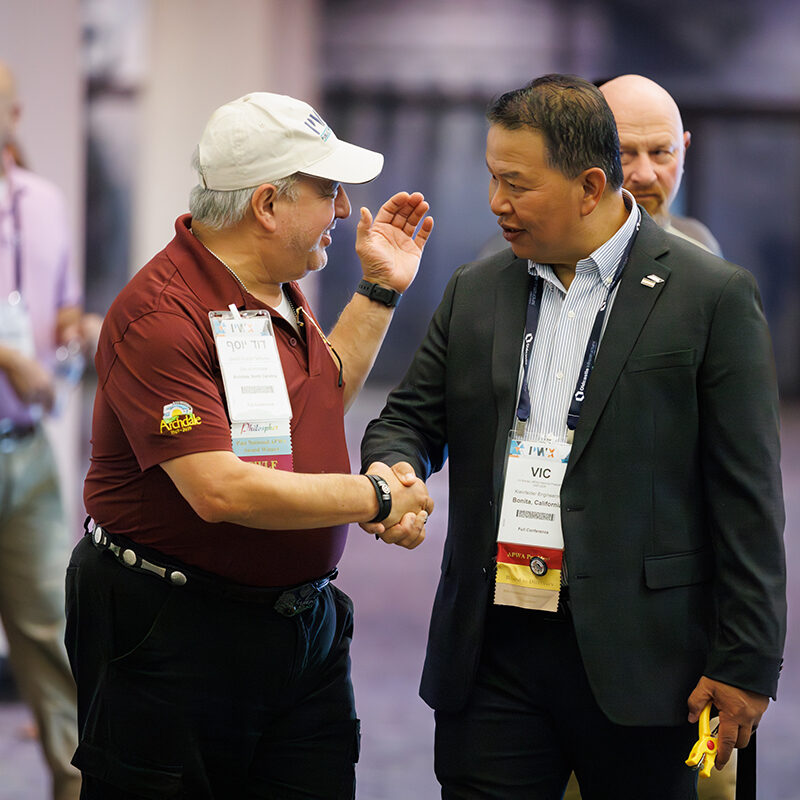
We’re taking a deep dive on relationships, networking, and making that extra effort to attend conferences and get involved outside of business hours.

The overarching theme you’ll hear from all of these folks is that stepping out of your comfort zone, being vulnerable, and asking for help won’t guarantee you anything, but it’s something you will never regret.

Public Works Radio is hosted by Bailey Dickman, Senior Digital Marketing Specialist with APWA. Each episode dives into a wide range of topics designed to educate and inspire, making public works more visible to everyone—from the general public and elected officials to industry peers and the media. If you haven’t already, please subscribe wherever you get your podcasts, rate and review the show, forward it to a friend, and drop us a note at podcast@apwa.org so we can hear your feedback directly!

In this bonus episode we hear from:

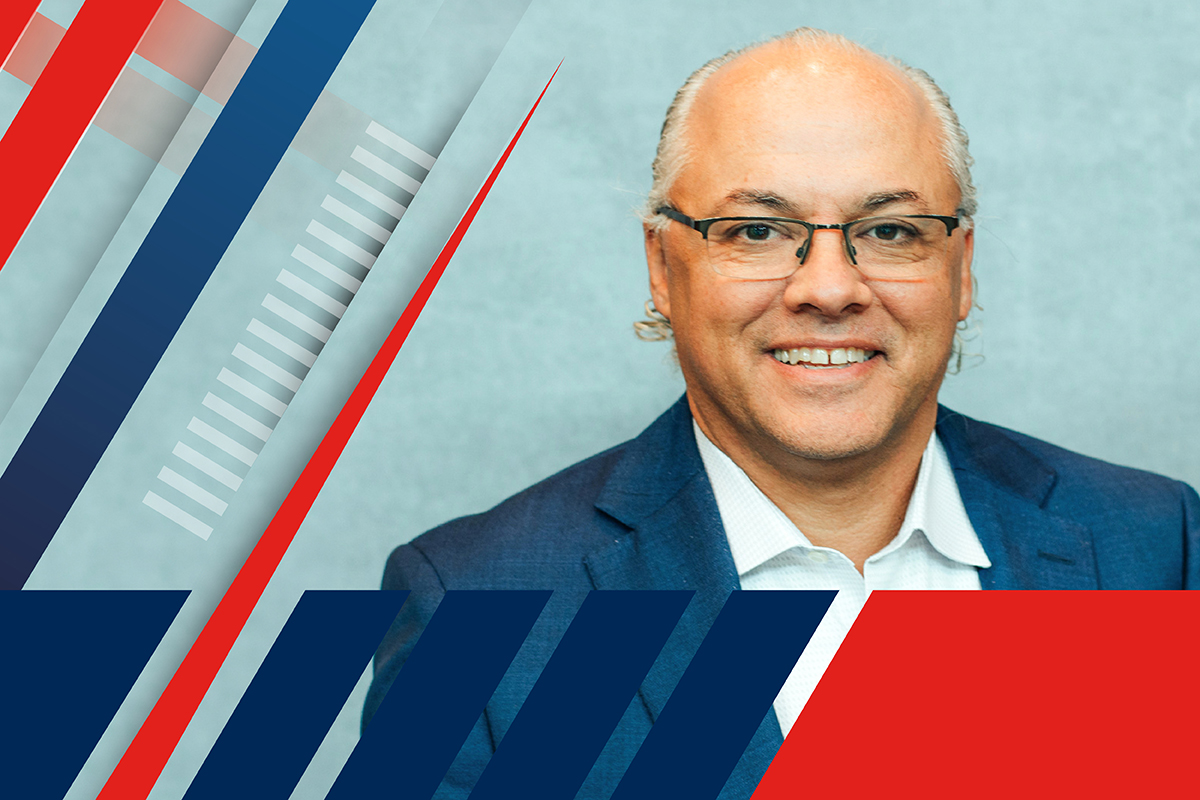
  • Vic Bianes, PE, APWA President (2025-2026). Vic has nearly four decades of experience in public works administration, management, project management, planning, design, fiscal management, operations-maintenance, and construction.
  • Margaret Medellin, PE, MPA. Margaret is an Associate Vice President with Hazen and Sawyer. She is a strategic executive leader with a proven track record in the utility, water management, and public works sectors.
  • Kürt Blomquist. Kurt retired in 2023 from the City of Keene, New Hampshire, where he served as Public Works Director, Assistant City Manager, and Emergency Management Director.
  • Vincent Olsen, CPFP, Director of Equipment and Fleet Management for the City of Dallas, Texas.
  • Scott McIver, CPFP, CAFS. Scott serves as Fleet Manager for the City of Greenville, South Carolina.
  • Aaron Bergeson is a public transit professional in Southern California with extensive public works project management experience, and recent ELA graduate (Class of 2025).
  • Susan Hann is Deputy Superintendent of Facilities Services at Brevard Public Schools, with 45 years of experience in the public works profession. Sue has served as an ELA instructor from the program’s beginnings.
  • Chad Oxton is a current ELA instructor, past graduate, and a career public works professional specializing in leadership and management based in the Hampton Roads region of Virginia.

More Show Notes and Resources

Transcript

View transcript >

0:00:00.2 Bailey Dickman: Welcome back to Public Works Radio. I’m your host, Bailey Dickman and I promise we will be fully back in August with brand new episodes. We have one more little bonus episode here for you this summer. We’re talking about the power of community and leaning on your peers when times get challenging, as evidenced by the stories you will soon hear and the stories you’ve already heard on this podcast. When you equip yourself with a genuine sense of curiosity and an open mind, the relationships that you build might just take you places that you never dreamed possible. For Aaron Bergeson, the audacity to reach out to APWA President Vic Bianes inspired a career pitch pivot that brought him back to his work in transit.

0:00:34.2 Aaron Bergeson: I was able to have a one-on-one conversation with APWA President Vic Bianes and get some mentorship from him and that mentorship really drove me to pursue my passion, which is public transit.

0:00:51.8 Bailey Dickman: Whether it’s getting on a plane to attend a conference or sipping coffee with someone down the street, networking might just be the closest thing we have to a magic bullet in this profession. Here’s Kürt Blomquist.

0:01:01.7 Kürt Blomquist: Those initial relationships, and it’s local. It’s always local. If a public works director doesn’t know the police chief, or as I like to say, doesn’t know what he takes in his coffee, that’s a problem.

0:01:13.8 Bailey Dickman: Welcome back to Public Works Radio, the official voice of the American Public Works Association. Today we’re talking about a deep dive on relationships, networking, and making that extra effort outside of traditional business hours. In addition to hearing from Aaron, Vic and Kürt, we’re checking in with Margaret Medean, Vincent Olsen, Scott McIver, Sue Hann, and Chad Oxton. The overarching theme of all these episodes is that stepping out of your comfort zone, being vulnerable and asking for help won’t guarantee you anything. But it’s not something that you’re ever gonna regret. Let’s dive in. Throwing it back to our very first episode on leadership, APWA President Vic Bianes explained what he considers the keys to a successful public works career with networking chief among them.

0:01:55.0 Vic Bianes: You are the one that is in charge of your career. It’s not your boss, it’s not your employer. And if they’re not supportive of you, maybe it’s time for you to maybe look around. The second piece is networking. Networking is extremely important down the road as you come across issues or challenges, having a strong network of peers for you to call in on. Because believe it or not, we in all of Public Works, we face the same challenges dealing with money issues, dealing with the public, dealing with elected officials, challenges with similar projects, there’s a good chance somebody else had the same problem and either worked through it or solved it in a particular way.

0:02:50.7 Bailey Dickman: Also from that episode, Margaret Medellin put it about as cleanly as anyone I’ve talked to on the season about why reaching out to others is so critical.

0:02:58.9 Margaret Medellin: I think a strong leader is going to lead with curiosity rather than ego. I think really when you encounter someone that has a real curiosity for how things are working, how the team’s working, how they can support the team rather than coming in and starting to dictate, I definitely think having that curiosity is really an important component. Being a team player, you know, how does someone interact and collaborate with others and the work we do, it’s… There’s nothing in public works that we do alone like being able to work on a crew, on a team, interacting with the community, you know, that’s, that’s really important. Someone who wants to put in that extra effort.

0:03:47.6 Bailey Dickman: Episode four was all about public works as first responders and Kürt Bloomquist told us why the relationships that matter most aren’t always the ones inside your own department and why something as simple as knowing what someone else takes in their coffee can make all of the difference.

0:04:00.4 Kürt Blomquist: It goes back to telling our story. It also is us making sure we are there in offering our assistance to our emergency services folks. And again, in the example I get, I was very fortunate. Over my time I had some really good police and fire chief and we earned their trust. And how did I earn their trust? Well, hey, when they would have a major accident, I would go and say, hey, what help do you need again? Do you really need to have a police officer standing there with cars blocking the roads? I’ve got good sized trucks and oh, by the way, on a day to day basis, what do we do in public works? We move traffic around because we’re doing construction, etcetera. So it’s really about those initial relationships. And it’s local. It’s always local. If a public works director doesn’t know the police chief or as I like to say doesn’t know what he takes in his coffee, that’s a problem because we have resources and things that can be used to support them. We had light carts. So if again fire department or police department had an incident, as you move towards light, they wanted to have area lighting, hey, I was there, I called my folks in to have them go and pull things down, set them up for them.

0:05:15.2 Kürt Blomquist: So I think that’s part of the process is starting that sort of local connecting with your fire, police and working with them on a day to day basis as they’re going about doing their job. At the same time, it’s also then talking to your select board, your city council, as you’re doing just your budget again, reminding them as you’re talking about again, budget for water or sewer, highways that oh by the way, part of our job is to get… Respond to this. And oh, by the way, last year we had six water main breaks and we responded to those an extra period of time to bring water back on. So again it is back to really kind of marketing yourself. It really is about being there when you’re needed and not just say, well hey, we’re first responders. No, it is, hey, what do you need help Chief, what do you need for help? Can I take care of that traffic control for you can do. What do you need? I got this. Not just, I said not just… Not just doing it. And it means knowing their names. I’ve always been surprised how many public works directors don’t know who their emergency management director is.

0:06:27.7 Kürt Blomquist: You should know who that person is. And again, I joke about the coffee cup conversations. I spent years going at least every about once a month visiting my fire chief and police chief at their offices. And I always brought coffee because I made sure I learned, hey, yeah, the chief’s black, the fire chief likes cream and sugar. So it’s just again, it’s relationship building too. That’s part of how we get into it. We do the job. That’s the important aspect.

0:06:56.3 Bailey Dickman: In episode six, we talked about fleet preparedness and the challenges brought on by extreme weather like ice storms or Hurricane Helene. Vincent Olsen of the city of Dallas gave me one of the most direct endorsements of peer networks.

0:07:07.0 Vincent Olsen: It really helps when you have a group and I’m not, you know, APWA, I’ve been in for a number of years, but having that reference material that talks about those things from professional organizations. So have that alliance, you know, you need to attend these snow conferences. You need to attend and that’s just not about snow. But about anything, whether it’s, you know, the APWA conference, I can’t talk enough about that because having this network of these fleet professionals, you know, sometimes you can borrow their experiences to help drive a point home, but be involved in fleet, you know, it helps. I started as a technician, you know, I had 26 ASEs. And so I’ve kind of come from the bottom up. I didn’t get my degree till a little bit later in life, and, you know, and I worked really hard for it, so kind of to get to this level and have those firsthand experiences, a good network of peers whose experiences you can talk about. And then when you get to those… The seat say, yes, I’ve lived this, I’ve done this, I’ve seen it, and this is what we’re after. And so it helps give you that credibility.

0:08:17.7 Bailey Dickman: And don’t forget that Scott McIver also joined us in that same episode to talk about the aftermath of Helene, and he had a lot to say about the power of making connections regionally.

0:08:26.1 Scott McIver: And reach out, join your local committees like here in the Southeast. We have the Southeast Government Fleet Managers Association, which I’m a part of. And you can draw on their resources and their knowledge, their preparedness for what have they done of… and it’s… A lot better when you do it regionally, because in the region, you have more things in common. I could be with… And of course, I’m definitely part of APWA, but being as part of the national part, California’s got something totally different than South Carolina. Washington’s got totally different than Florida. So being more towards the regional area, you can gain a lot of that knowledge from the other team members that are there in those areas that’ll be, you know, I’ve got access now to people who have hurricane… More hurricane awareness than I do still down in Florida because, you know, now I, you know, communicate with them better. So I would say, yeah, definitely, join your regional areas.

0:09:30.2 Bailey Dickman: When I sat down with Aaron Bergeson to talk about the Emerging Leaders Academy for episode seven, he got real with us about the feeling of isolation that you can experience in public works sometimes and how ELA changed that for him.

0:09:41.1 Aaron Bergeson: The retreat was truly amazing to make such strong connections so fast with such a big group of people, it’s hard to explain, like, how impactful that is, particularly in a field that I think can feel isolated. And I’m proud of being able to be as vulnerable as I was in the retreat and to open up to a whole new group of strangers. I think that you can be proud of being vulnerable, and I’m proud of what I was able to take with me from the Emerging Leaders Academy. And now I’m able to share that, you know, with my colleagues, with my friends, with the connections I’ve been able to pass along to my spouse, who’s getting her MBA at UCLA now. Working on a project, coming up with solutions for local governments and being able to connect her with other individuals that I met at ELA. So I’m proud of what I did, but I’m also proud of being able to kind of take that with me and let it go out into the world.

0:10:54.3 Bailey Dickman: And of course the episode about ELA wouldn’t be complete if we didn’t mention Chad O. One of my favorite moments in the entire season.

0:11:01.2 Chad Oxton: At the end of it all this was pre-Uber. It probably was for sure it was pre apps. So I had called for a taxi or for a, I don’t know, a trolley back to the airport in Kansas City and I was out curbside waiting and here comes Sue bright and early, 3:30 in the morning. Right, okay. And she said, you’re heading where I’m heading. You want to jump in with me? So I jumped in with Sue and again, it’s flattering. I’m not used to in that position and you know, due to some past careers, like some people were exalted in their status and you know, Sue held that exalted level in my eyes. And the 45 minute or 40-minute ride from the hotel to the airport with Sue, the one on one time, that access to a one on one mentor and being felt welcome and being felt seen by somebody that I immediately had great respect for. I mean it leapfrogged my career, it leapfrogged my inner thinking, you know, some of my inner processes. And so, you know, of all of the memorable experiences and there are a lot of them that is top of them and I… Not only do I not forget it, but when I interact with students in the Emerging Leaders Academy, I want to make sure that they feel exactly the same way.

0:12:26.7 Bailey Dickman: And speaking of Sue, she never dreamed that ELA would evolve into something that she would carry with her for the rest of her life. But here we are, nearly 20 years later.

0:12:34.8 Susan Hann: Like it’s unexpected when you go to something that you think is going to be a class, that you actually end up with lifelong friends that you depend on. When you have a situation going on in your life that’s challenging, right? You have a whole network of people that can help you with that. And I just really feel like it has been a gift for me to be involved with the Emerging Leaders Academy because it’s just been so amazing on so many levels and has made my life so much better.

0:13:09.2 Bailey Dickman: Back to Aaron and something that I really thought was an underrated observation about the ELA application process.

0:13:16.1 Aaron Bergeson: The process of trying to apply is also valuable because not only are you attempting to get into this program, but you need to force yourself to kind of interact with people that you work with closely and ask them for letters of recommendation. And I think that there’s a lot of value in the application process.

0:13:38.1 Bailey Dickman: Chad O helps us remember that networking and mentorship are not a one way street. That when you find yourself on the other side of the equation, giving back matters just as much.

0:13:47.9 Chad Oxton: Instructing people, I think is giving gifts to people like this… And the more leadership gifts, the more love you give, the more inspiration you give. It doesn’t take anything away from you as a person. You know, it only builds. So this isn’t giving away something that’s tangible. It’s giving away something intangible. Causing growth. Causing growth from Maine to California, from Texas to Canada.

0:14:14.1 Bailey Dickman: And don’t worry, Aaron’s story has a great ending. Leaning on a mentor helped him return to his passion for public transit. And at the time we recorded that conversation, he was just about to step into a new role with Long Beach Transit.

0:14:25.6 Aaron Bergeson: You know, fast forward to the very end of the program. I was able to have a one-on-one conversation with APWA President Vic Bianes and get some mentorship from him. And that mentorship really drove me to pursue my passion, which is public transit. So the role that I’m about to step into, so the impact is far and wide.

0:14:52.8 Bailey Dickman: Thank you for listening to this bonus episode of Public Works Radio, the official voice of the American Public Works Association. I want to again thank Aaron Bergeson, Chad Oxton, Sue Hann, Vincent Olsen, Scott McIver, Kürt Blomquist, Vic Bianes, and Margaret Medellin for sharing their time and insights with us all throughout the first half of season one. We will be fully back in August, so make sure to subscribe wherever you get your favorite podcast. Rate us, review us, and forward us along to a friend. And don’t be shy about dropping us a note over at podcast@apwa.org so we can hear your feedback directly. We’ll catch you next time.