
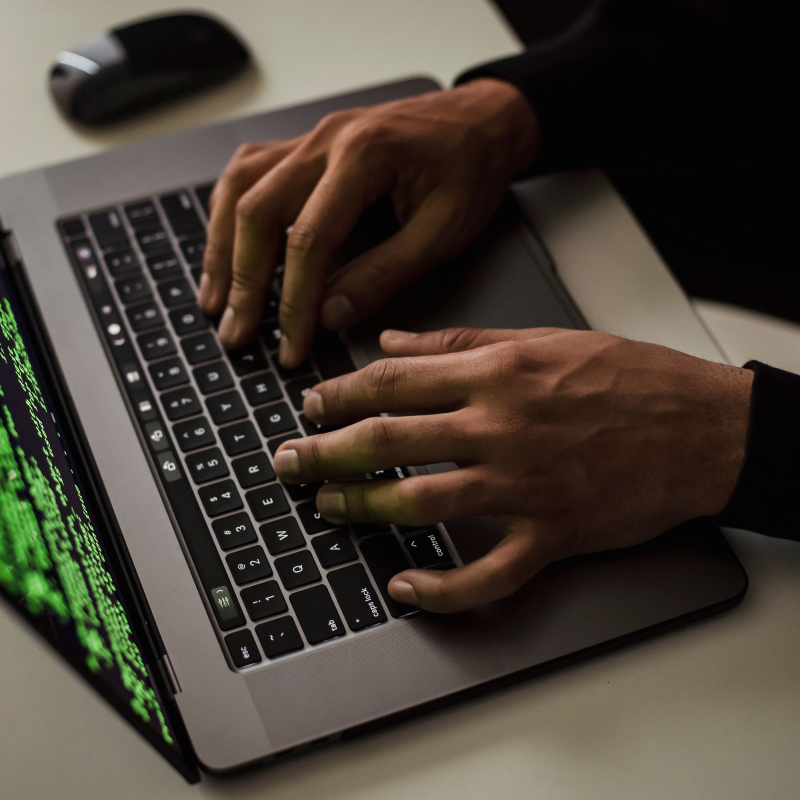
Soon after a series of cyberattacks on water systems this past July in Minnesota, public officials in the affected communities reassured residents that the drinking water was uncompromised. While a collective sigh of relief could be felt with the impact limited to operational disruptions and temporary plant outages, the lessons learned led to a ramp-up in cyber defense among communities nationwide.
In a nearby municipality to where these attacks took place is the City of Minnetonka, and in this episode, we’re visiting with Will Manchester, the Public Works Director for the City of Minnetonka; Jeff Dulac, the I.T. Manager for the City of Minnetonka; and Chuck Allen, the Utility Superintendent for the City of Minnetonka.
The three are on the front lines of protecting the community’s most critical infrastructure. They joined us to share their reflections on the July cyberattacks and what they learned from those harrowing days this past summer.
As we learn in this discussion, one of the most frustrating elements for those that defend our critical infrastructure is the human element involved in these digital attacks. It can be really complicated to guard against. And in this age of automation, Will makes sure his team never loses sight of how to run systems manually in a worst-case scenario.
Cyber threats are a reality for everyone in this digital-first world. What matters most is being ready. November is Critical Infrastructure Security and Resilience Month, and with recent high-profile network disruptions and outages, the timing couldn’t be more perfect for this discussion.
Public Works Radio is hosted by Bailey Dickman, Senior Digital Marketing Specialist with APWA. Each episode dives into a wide range of topics designed to educate and inspire, making public works more visible to everyone, from the general public and elected officials to industry peers and the media. If you haven’t already, please subscribe wherever you get your podcasts, rate and review the show, forward it to a friend, and drop us a note at podcast@apwa.org so we can hear your feedback directly!
Did you know? Public Works is now award winning! You can check out (or revisit) our Platinum MarCom Award winning episode “Why Did the Chicken Cross the Road? To Serve Our Communities”
More Show Notes and Resources
- Public Works Leaders Talk Cybersecurity on PWX TV
- Cybersecurity and Infrastructure Security Agency (CISA)
- Critical Infrastructure Security and Resilience Month Toolkit
- Minnetonka Public Works
Transcript
View transcript >
0:00:00.4 Bailey Dickman Soon after a series of cyber attacks on water systems were reported this past July in Minnesota, public officials in the affected communities reassured residents that the drinking water was uncompromised. While a collective sigh of relief could be felt, with the impact limited to operational disruptions and temporary plant outages, the lessons learned led to a ramp up in cyber defense among communities nationwide. And nearby to where these attacks took place is the city of Minnetonka.
0:00:23.6 Will Manchester: It’s a suburb of the Twin Cities, Minneapolis, St. Paul area. We’ve got about 55,000 people.
0:00:29.1 Bailey Dickman You just heard from Will Manchester, the public works director for the city of Minnetonka. Here he is again, reflecting on those July events.
0:00:35.3 Will Manchester: Yeah, we work with our neighbors really closely in a number of cities across the metro where we are, statewide too. We reached out to them to see how we could help if they need anything, but it’s eye-opening.
0:00:46.5 Bailey Dickman Jeff Dulac is the IT manager for the city of Minnetonka. He told us the attack surfaces for where cybercriminals abuse systems can be greatly reduced with some basic blocking and tackling, like keeping these systems up to date.
0:00:57.9 Jeff Dulac: Patching your software, that’s really important. You want to make sure that those stay up to date and patched. That’s how the attackers get in. That’s the easiest way for them to get in is the software that is not patched.
0:01:07.8 Bailey Dickman And in this episode of Public Works Radio, we’ll also hear from Chuck Allen. He’s the utility superintendent for the city of Minnetonka.
0:01:14.6 Chuck Allen: So it’s just that it’s a constant kind of reminder of, hey, everything’s very vulnerable. See something, say something right away.
0:01:22.2 Bailey Dickman One of the most frustrating elements for those that defend our critical infrastructure is the human element. It can be really complicated to guard against.
0:01:29.6 Jeff Dulac: The human element of cybersecurity in an organization is tough, right? Someone can click on a phishing message and it can take everything down.
0:01:37.7 Bailey Dickman And in this age of automation, Will makes sure that his team never loses sight of how to run systems manually in a worst-case scenario.
0:01:44.5 Chuck Allen: And not letting go of that basic aspect of knowing how you run a system without the computer being on. We hope that never happens, but we always need to be ready for it.
0:01:56.2 Bailey Dickman Tabletop exercises, where teams walk through a mock emergency without touching any real systems, have also been central to keeping Minnetonka ready and resilient.
0:02:03.7 Jeff Dulac: The outcome of that, a tabletop exercise was great. Everyone collaborated. We were able to identify that there was a threat after three different scenarios or three injects, as we call them. And once we got to that, then we could start remediating what the issue was.
0:02:19.9 Bailey Dickman Cyber threats are a reality for everyone in this digital age. What matters most is being ready.
0:02:25.1 Jeff Dulac: Ultimately, you’re going to have some form of attack. So it’s putting yourself in a position, if you have the funding for it, to add those additional layers of protection into your network or into your infrastructure.
0:02:37.1 Bailey Dickman Welcome back to Public Works Radio, the official voice of the American Public Works Association. November is Critical Infrastructure Security and Resilience Month. And on this week’s episode, we’re headed to the land of 10,000 lakes for a total exploration of what building a culture that’s ready for today’s most frightening digital threats looks like. What is the public works side of cybersecurity?
0:02:57.5 Will Manchester: People think of public works – generally, they don’t until something happens. And so we always think at public works, we affect every minute of everybody’s life. I mean, you’re turning on the water, you’re using the restroom, your streets are getting plowed if you’re in a northern climate. There’s all kinds of things that we’re doing. And the cybersecurity piece, we have a lot of technology here, and so the way we serve our essential functions of public works everyday operations is through technology. And so cybersecurity to us is essentially protecting those essential operations that we have every day.
0:03:30.5 Bailey Dickman What areas of public works use the most technology or need the most cybersecurity help?
0:03:37.6 Will Manchester: I mean, a lot of the stuff that Chuck does is operating pumps, chemical feeds, all kinds of different things. And so those are essentially run by technology. And so our sewer and water operations, we also have AVL, which is on our fleet vehicles, just to make sure we know speeds and locations and different things of where we’re working on that. Our natural resources division, we use a lot of GIS components. Chuck uses a lot of mapping as well related to GIS. Our engineering folks were constantly in communications with different GIS applications. So all those things essentially help us run efficiently every day. And so that’s kind of how we operate. Without that, we go back to the paper copies, and it definitely slows us down.
0:04:24.0 Bailey Dickman How has the cybersecurity landscape for public works changed within the last five to 10 years?
0:04:30.9 Jeff Dulac: Yeah, there’s been a big change there. I was thinking back about 10 years ago, we really had more virus issues. So my good example here would be the Anna Kournikova virus. So if you were to put a computer online, you would immediately get a virus on your computer unless you had some form of antivirus on it. So antivirus was important back 10 years ago, and then with the advent of more ransomware attacks, you had to adjust and adapt to a new type of antivirus software that’s more whitelist-based. So you put software out there that’s trusted or pre-approved, and then you wouldn’t get any form of that ransomware or malware on your computer. If you fast forward to now, we’re more of using something what’s called endpoint detection and response, or EDR for short. And what that software does is it just continuously monitors and collects data on your device and then it responds to the threats in real time. And what’s really cool about the EDR is that it also… It ties into a dashboard, gives you alerts automatically. So there’s been a big change in the way you protect your computer over the last 10 years.
0:05:34.5 Bailey Dickman And so when it comes to public works, are there a lot of devices that are just connected to the internet or is it more like an internal network?
0:05:42.7 Jeff Dulac: Yeah, they’re all connected to the internet. You can get a public IP address on there, but they’re still protected by firewalls, various different softwares there in the background. The remote mobile force staff uses iPads, so they’re making a tunnel, what’s called a tunneled connection or a VPN connection back to the network. So they’re constantly talking on the internet.
0:06:04.2 Bailey Dickman How do you train or talk to field crews, operators, maintenance staff who might not work at a desk every day, but still need to be part of this cybersecurity conversation?
0:06:15.7 Jeff Dulac: Yeah, it all goes down to training and buy-in from our leadership team first and foremost. And then doing that training, whether it’s phishing attempts, and we’re all used to doing that, right, in the corporate areas of doing that either monthly or bi-monthly phishing tests. And then it’s providing the right training for staff. So when we onboard anyone, we actually give them an hour training that they sit through and go through the various different types of cybersecurity things to look for and provide some paper documents as well so they can continuously reference that in the future.
0:06:54.9 Chuck Allen: I try to remind myself to just refresh my staff in utilities to always be looking when they’re using the iPads on SCADA or anything. If they see anything that looks suspicious, say something immediately. And I always talk to Jeff as soon as I can and say, hey, is any of your staff on our system? I see something different. Nobody’s logged in and they see the mouse moving or something doesn’t look right. So it’s just that it’s a constant kind of reminder of, hey, everything’s very vulnerable. See something, say something right away.
0:07:32.5 Will Manchester: Yeah. And we’re pretty… From Jeff’s and Chuck’s perspective, we’re pretty locked down on… Our folks aren’t able to change softwares or other things. It all goes through Jeff as our IT manager. So there’s no opportunities. People aren’t installing and uninstalling. There’s not a lot of activity outside of what Jeff and Chuck find is appropriate.
0:07:53.9 Bailey Dickman What should public works departments have in place before something happens?
0:07:58.3 Jeff Dulac: First and foremost, it’s having the right protection on the computer. So as I referenced earlier, the EDR or the endpoint protection, and using the whitelisting type of software so things can’t get into the computer. Doing more of a vulnerability scan of your network so you can see real time if there’s an attack. Patching your software, that’s really important. We all use Microsoft, we all use Adobe products. You want to make sure that those stay up to date and patched. That’s how the attackers get in. That’s the easiest way for them to get in is the software that is not patched. Doing that training with staff is really important and then just paying attention to what’s going on in the state. So we have different cybersecurity advisories that you can subscribe to from the MS-ISAC. That’s the Multi-State Information Sharing and Analysis Center. Your different colleagues around the different cities. And then the state has some listservs as well in Microsoft Teams.
0:08:53.8 Will Manchester: Yeah. And we just did a full citywide training. Do you want to talk about that, Jeff, a little bit? Jeff pretty much put together all city departments. It wasn’t just public works. And we looked at how we all work together on different things and ran through specific scenarios. It was kind of when everything happened right around that time.
0:09:12.4 Jeff Dulac: Yeah. So we’re trying to do a tabletop exercise with cybersecurity in mind. And so we just completed that. That was most of the leadership team and some of our managers as well. And the subject of that was an attack on our water systems. That was really important for everyone to see. The outcome of that, a tabletop exercise was great. Everyone collaborated. We were able to kind of identify that there was a threat after three different scenarios or three injects, as we call them. And once we got to that, then we could start remediating what the issue was and go forward. So it was actually a really good tabletop exercise.
0:09:47.9 Chuck Allen: I’ll say my team’s part, knowing and understanding how we can run our system manually to keep operations running if automation fails is super important. So when we come in here every day and everything’s running mostly correctly all the time. And you just can’t take it for granted that, okay, when a tower gets to this level, you may need to be at a treatment plant and turning a pump on manually and then knowing when to shut it off and having staff stationed at the tower and monitoring it and everything is super important to understand and not kind of letting go of that basic aspect of knowing how you run a system without the computer being on. So we hope that never happens, but we always need to be ready for it.
0:10:42.4 Bailey Dickman In July of 2026, Minnesota widespread came under a lot of cyber attacks targeting municipal water systems. What did that do for you all?
0:10:53.2 Will Manchester: Yeah, I mean, it’s really eye-opening. I mean, we’re always thinking about that stuff, and so it’s always on the top of our mind. But, I mean, to have it actually happen… I mean, our neighbors were affected. Yeah, we work with our neighbors really closely, and a number of cities across the metro where we are, statewide too. We reached out to them to see how we could help if they need anything. But it’s eye-opening. Like Chuck was saying, he’s always keeping stuff top of mind to be able to run our systems without the technology. So we feel like we could still support things here without it. But it’s definitely something that brings some more awareness. And we certainly look at more trainings and other things that we may not have before.
0:11:31.2 Bailey Dickman I want to talk a little bit about regional, state, federal partnerships that help local governments address cybersecurities. Are there any really good regional, state, federal partnerships that you guys want to shout out that maybe other public works professionals could look at in their areas?
0:11:45.9 Will Manchester: Yeah, I can jump in. I mean, we work closely with all of our partners here. I mean, we have local Minnesota chapters and groups here and then we have federal as well. We work closely with the EPA, the Department of Health. I mean, those were big. We had a number of meetings with those. We have good relationships with all our city partners, county, everybody around us that operates similar type of systems. And so, yeah, I mean, everyone did a great job coming together when everything came about recently and kind of talked through and we looked at ways we could help each other and prevent stuff in the future if it were to come up again.
0:12:24.3 Bailey Dickman Did you guys make any changes to your systems to ensure that it wouldn’t come up again? What changes did you all make?
0:12:31.0 Jeff Dulac: There really wasn’t any changes we needed to make. We stay on top of equipment replacement and that’s key in your water system to replace those old internet devices that are out there, making sure they’re up to date and things like that. And then leveraging the tools that we have on our network as well to scan for those types of things are really important as well.
0:12:52.2 Chuck Allen: I think when something like this happens, it strengthens your partnerships with state and federal levels. And from us as a city aspect, all of our neighbors, we’re all connected. If something like that happens, we get in touch with each other, we can help. Staff-wise, we can open valves and provide water to a different community. I think it just… It’s unfortunate that it happens, but when it does, we all come together pretty quickly. And I appreciate it as soon as somebody sees something, there’s a trickle-down effect pretty immediately. And all those different levels are working together to identify what’s going on and who’s affected and how we can help each other.
0:13:42.6 Bailey Dickman There is a really interesting dimension to public works cybersecurity because we have all of these systems that are automated, but they have manual overrides. How do you all train for those moments where you might need to pull the manual override?
0:13:58.6 Chuck Allen: Well, Jeff spoke about the tabletop exercise. Those are really important because it gets everybody thinking ahead and figuring things out ahead of time. I think when you go to those, it triggers different thoughts of like, oh, I never thought about that. And then how do you address that? And those are really great. Operators, it’s you come into work one day and you shut the computer off and you see what happens. You pull the plug and you look around and see what they know and what they don’t know, and addressing what they don’t know. Having them actually do these things and asking the questions like, what level should that tower be at to have this much PSI in the system so we don’t have to call boil order? And just making sure that that is on their mind and they know those things. Just those exercises like that and having a team that’s dedicated to those water treatment plants and lift stations that they know the ins and outs of them to keep those things running. Without those, I don’t think the public a lot of times understands how critical they are. The faucet turns on and it turns off and the wastewater goes away, and that’s kind of all they realize. And they don’t understand how much goes into those simple things that we are fortunate to have.
0:15:26.2 Bailey Dickman What keeps you all up at night about cybersecurity and public works?
0:15:32.0 Will Manchester: Just kind of the incident that happened. I mean, we could be in a real situation pretty quickly, so… But we know we’ve got really great people here. I mean, Chuck knows the system, he can operate it without technology. I mean, Jeff, you can call Jeff at 3:30 in the morning, and he’ll probably pick up on the first ring. So, I mean, everybody works really well together here. So it definitely helps us sleep at night much better with our relationships with each other.
0:16:02.2 Jeff Dulac: The human element of cybersecurity in an organization is tough, right? Someone can click on a phishing message and it can take everything down, right? So I worry about that at night. I worry about AI and how that’s going to play in in our future here very shortly. Things are just moving at a very fast pace for that. And us being a 24/7 operation both in water and public safety, there’s a lot going on when we’re sleeping. The other part of that too is just going back to one of our tools. We actually have staff that are monitoring our network overnight. They’re called cyber heroes, and it’s a service that we subscribe to as part of our EDR solution. So, I can sleep a little better with having the cyber heroes there, and they will call me at 3:30 in the morning if needed, but yeah, definitely the human element is the toughest part.
0:16:53.6 Chuck Allen: Our team, we have somebody on call 24/7 for utilities. When you go home for the day and you leave here, it’s not like your job stops. If something happens, somebody’s gonna call and we have to react. And I’ve got a really good team of folks here that respond quickly and let me know and I support them any way I can. If I call Jeff after 5:00 at night, he goes, uh-oh. What’s going on? And vice versa. We back each other up, we try to support each other as best we can, and just having that good relationship really helps kind of calm those nerves after you leave here, ’cause we can’t be here every single hour of the day and be watching the system. And so, just having that good support and that team really, really helps, really helps that.
0:17:51.2 Bailey Dickman What would y’all recommend for public works professionals who are maybe scared of the jargon of cybersecurity or don’t have the best relationship with their city’s IT department? How would you recommend that they go about making sure that they can keep their systems secure?
0:18:06.1 Jeff Dulac: I would say start with your integrator and see what they have to offer. Talk to other cities and see what they’ve put in place. If you don’t have the backing of your IT department, there’s still things you can do with the system to protect it. So, yeah, start with the integrator first and see what their thoughts are.
0:18:22.8 Chuck Allen: I’d say it’s really hard for some of these smaller communities. Some of them don’t have an actual IT department and they contract it out. And it’s really hard to convey to a city council, we need to spend a large amount of money on protecting a utility system. And it’s not something that you can see or the public can use or touch or do, but when something like that cybersecurity incident happens, it wakes people up and nobody wants it to ever happen, but sometimes it almost helps progress and we need to look at this, we need to update this, we need to put money into this. It’s not a nice shiny park that’s where you can play in, but it matters.
0:19:10.0 Bailey Dickman How do you go about getting buy-in, either from your community or your city council with cybersecurity initiatives?
0:19:17.3 Will Manchester: Yeah, I mean, I think we have a good relationship with our council. Our city’s led by our city manager, and then all of us work together through him to our council. I think over the years, we’ve just spent a lot of time on trying to help everybody understand the systems in general, how big they are, what it takes to operate them, and then how we work together. I mean, Minnetonka is lucky because financially we have the means to do a lot of the stuff that we do, so there’s certainly that, but it takes a lot of time. Every project we take to our council, we have capital improvement projects, our budgeting, every time we meet with them, we make an attempt to kind of explain things. Andrew, who’s with us today from our communications, we work with him and his team closely too, to get out to the public and just kind of talk about the importance of some of this stuff and the systems and why it’s important to do things. So a lot of education as much as we can. We use our website when we have projects, we have meetings to talk about it. We just try to incorporate everything that goes with it.
0:20:20.8 Bailey Dickman What’s the cybersecurity public works question that I’m not asking?
0:20:24.0 Jeff Dulac: Ultimately, you’re going to have some form of attack. So it’s putting yourself in a position, if you have the funding for it, to add those additional layers of protection into your network or into your infrastructure. The one that I think I forgot earlier was cybersecurity insurance. So when something does happen, make sure you have some form of cybersecurity insurance. Our city carries a $5 million binder that also includes different services with that binder. So when we do have an attack, you get the media relations, you get the legal side of that, and you get assistance from subject matter experts as well. So I think that’s really important for cities to take a look at. The cost roughly is like $50,000 annually, but it’ll pay for itself in the long run.
0:21:14.1 Will Manchester: We all kind of mentioned it before, but having all the relationships now and even the insurance that Jeff’s talking about, having that now ahead of time is just super valuable. I know Chuck talked a lot about it too, but then you’re ready if something does happen. You know where to go, you know where you can get assistance, and you’re certainly not alone.
0:21:36.2 Chuck Allen: I don’t think the general public probably doesn’t realize how connected all of their city services are to a system that could be broken into and manipulated or anything like that. So when these things happen, we get a ton of phone calls of people asking like, hey, is the water safe to drink? Or I heard this on the news, and it creates a lot of just public unrest. And that’s when they realize, oh, when that faucet turns on and off, that is connected somehow to the internet and automation, and it’s vulnerable. So just putting that public awareness out there, I think, helps a lot make people realize we gotta keep on our toes and pay attention to everything that’s going on around us.
0:22:40.1 Bailey Dickman Thank you for listening to Public Works Radio, the official voice of the American Public Works Association. We’re super grateful for today’s guests: Will Manchester, Jeff Dulac, and Chuck Allen. And hey, if you made it this far, I really hope you’re a subscriber. That way you get notifications every time a new episode drops. This podcast is actually award-winning. That’s right, Public Works Radio took home a Platinum MarCom Award for our episode, why Did the Chicken Cross the Road? You can go back and listen to that episode now, it’s one of my favorites. By the way, don’t hesitate to rate and review the show, forward us along to a friend, or drop us a note over at podcast@apwa.org so we can hear your feedback directly. We’ll catch you next time.
Related Resources

Proficiency Levels
Introductory
Focuses on a general or broad overview of the topic, awareness of basic factual recall. Limited experience of the subject matter is necessary to understand content areas.
Applied
Focuses on practical implementation of technical steps or strategies, some prior knowledge and experience of the topic is necessary.
Advanced
Mastery of basic concepts associated with an area has been obtained. Focuses on understanding nuances, advanced concepts, and intricacies with implementation within knowledge area. Strong understanding of how the concept impacts other factors or areas of operations.
Program Types
CLL
Click, Listen & Learn (CLL) are interactive educational webinars. Each program is led by top experts in the field who share new ideas, methods, and technologies in a fast-paced two-hour time frame. These programs are available free to APWA members. CLL programs are eligible for continuing education units (CEUs).
Primer
Primers are used to educate policymakers about public works roles and responsibilities in public rights of way, the impact of federal workforce development policies on the industry and workforce, and the importance of resilient infrastructure.
Public Works Radio Podcast
Public Works Radio is the official podcast of the American Public Works Association (APWA), bringing the stories behind our communities to life. This podcast shines a spotlight on the people and projects that keep our cities running—humanizing the work and the professionals who make it happen. Each episode dives into a wide range of topics designed to educate and inspire, making public works more visible to everyone.
PWX
PWX session recordings cover a wide variety of topics, including integrating modes of transportation, traffic and transit, construction management, emergency management, engineering and technology, fleet and facilities, management, parks and grounds, snow and ice control, and stormwater/flood control, as well as solid waste, roads and bridges and water/wastewater. PWX sessions are eligible for continuing education units (CEUs).
Reporter Articles
APWA Reporter articles are written by public works practitioners on subjects such as solid waste management, water resources, municipal engineering, transportation, equipment services, buildings and grounds, snow removal, and other public works-related topics.
Snow
The Snow Conference session recordings feature public works professionals sharing the latest best practices in managing winter/snow operations more successfully, taking advantage of emerging technologies, understanding and preparing for the challenges ahead, and providing better service to their communities. Snow sessions are eligible for continuing education units (CEUs).
Tech Boxes
A tech box is a PDF take-away that provides information in lists, steps, or defined areas specifically focused on trending technologies.
Virtual Program
Virtual programs are live, interactive educational programs led by top experts in the field who provide timely information or address trending topics within an area. Programs often conclude with an open forum for Q&A.