
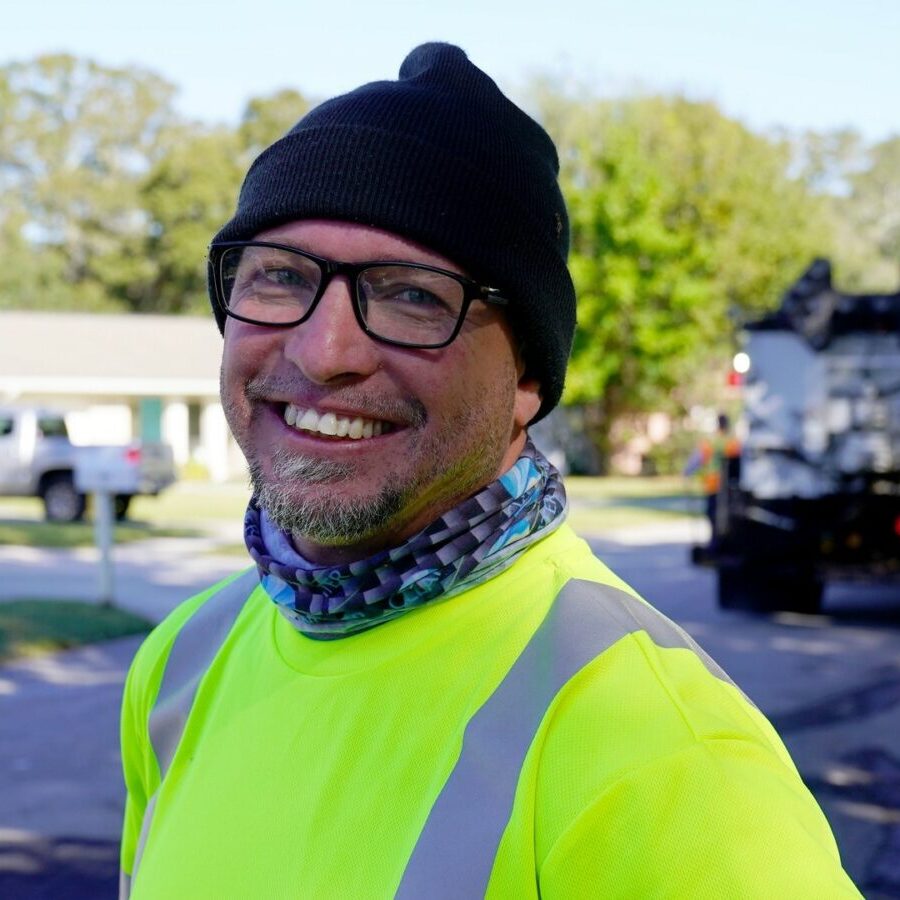
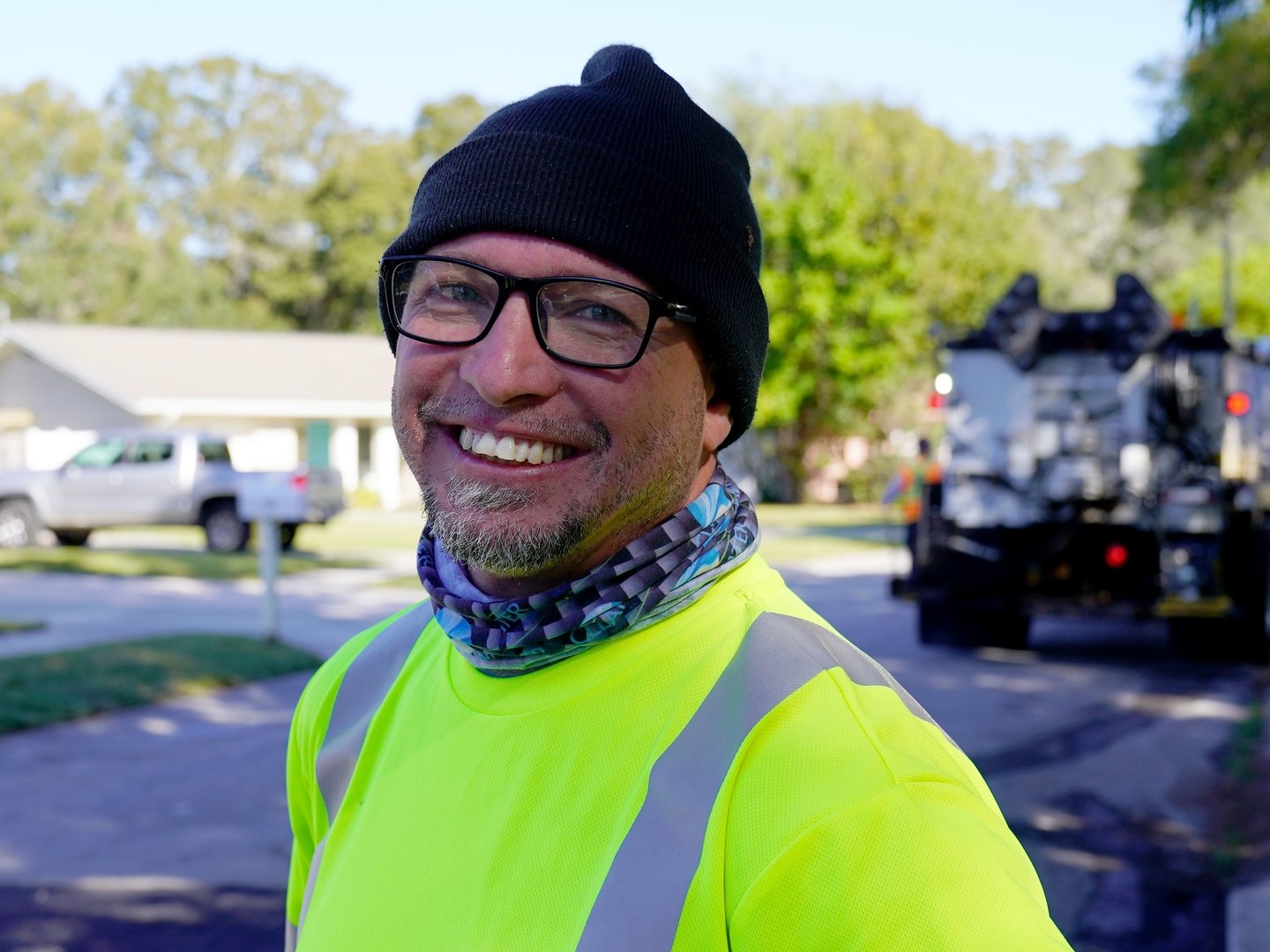
In honor of National Public Works Week, and this year’s theme “Rooted in Service, Powered by Community,” which acknowledges that the roots of service run deep in public works, we’re hitting the road for some face-to-face sidewalk interviews. We want to hear what public works means to everyday people in the community, with a little public works trivia thrown in for good measure.
National Public Works Week celebrates the connection between service to the community and the people it supports, and we thought this would be a great way to wrap the first half of our very first season of Public Works Radio for our mid-season finale.
Equipped with a podcast microphone and a smile, Public Works Radio host Bailey Dickman, showed up at the local farmers’ market in Kansas City, just a stone’s throw away from APWA headquarters, ready to ask strangers about public works.
Their answers are honest and likely a strong representation of what most people think public works means to their community. And of course, potholes couldn’t be left out of the conversation. We also secured a completely by-chance interview with a public works professional right there at the farmers’ market.
Afterward, we sat down with Mary Joyce Ivers. She is the Deputy Public Works Director for the City of Ventura, California and a past APWA President. We played Mary Joyce some of the public’s responses to get her reaction, then asked what public works means to her.
Public Works Radio is hosted by Bailey Dickman, Senior Digital Marketing Specialist with APWA. Each episode dives into a wide range of topics designed to educate and inspire, making public works more visible to everyone, from the general public and elected officials to industry peers and the media. If you haven’t already, please subscribe wherever you get your podcasts, rate and review the show, forward it to a friend, and drop us a note so we can hear your feedback directly!
More Show Notes and Resources
Transcript
View transcript >
0:00:00.1 Bailey Dickman: Hello and welcome to Public Works Radio. I’m your host, Bailey Dickman. Today’s episode is going to be a little different, and I’m really, really excited about it. In honor of National Public Works Week and this year’s theme of Rooted in Service, Powered by Community, we’re hitting the road for some face-to-face interviews with the communities that you serve. We want to hear what public works means to everyday people in the community, and with a little bit of trivia thrown in there for good measure. So, equipped with a podcast microphone and a dream, I just showed up at the local farmers market here in Kansas City, like a stone’s throw away from APWA headquarters, ready to ask some questions to strangers. There’s nothing really intentional or scientific about who I selected to talk to. I just approached people on the street and asked if they would answer some questions for me, and a lot of people said no. I got rejected. I got shot down a bunch here. I want you all to know.
0:00:54.3 Bailey Dickman: National Public Works Week celebrates the connection between service to the community and the people it supports. And we thought this would be a great way to wrap up the first half of our very first season of Public Works Radio. A little mid-season finale, if you will. Also, side note, if you all have any ideas that you want us to cover in the back half of season one or in season two and beyond, please send us a note over at podcast@apwa.org. We want to hear from you guys, what you guys want us to cover. So, I went out and I asked strangers what they thought about public works, and I’m gonna be honest, I think some of the answers are really, really funny.
0:01:27.1 Bailey Dickman: It’s actually all of them. I’m sorry. It’s one of those. I’m sorry.
0:01:30.1 Sidewalk Interviewee: This is rage bait, actually.
0:01:32.2 Bailey Dickman: And mostly, though, they’re honest. And it’s a strong representation of what people think public works means in their community.
0:01:38.7 Sidewalk Interviewee: Where I live, all the new parks, there’s new spaces for people to gather, there’s new things for people that live in this city. And that makes me feel good about that. That my taxes are going for something that I’m gonna enjoy.
0:01:53.1 Bailey Dickman: And of course, we mentioned potholes a few times. When’s the last time that a public works service impacted you, that you realized it was around in your community?
0:02:01.5 Sidewalk Interviewee: Like literally every day. Driving here on the road, the potholes that ruin my tires, yes, everything.
0:02:08.0 Bailey Dickman: Then we sat down with Mary Joyce Ivers. You may know her as a past president of APWA. She’s also the deputy public works director for the city of Ventura, California. We played Mary Joyce some of the public’s responses to get her reaction, and then we asked what public works means to her.
0:02:22.6 Mary Joyce Ivers: Public works are dedicated people that like to make our community better. Whether we’re building, maintaining, designing, or supporting our community to provide the quality of life that’s so important to all of us, it’s a very diverse career.
0:02:38.8 Bailey Dickman: Also, I swear I’m not making this up, but I did randomly interview a public works professional at this farmers market completely by chance. Hey, Samantha, thank you so much for taking your time to speak with me. What does public works all entail?
0:02:53.1 Sidewalk Interviewee: The backbone of every city.
0:02:54.6 Bailey Dickman: But more on that later. Welcome back to Public Works Radio, the official voice of the American Public Works Association. As I hope you know by now, each episode is gonna dive into a wide range of topics designed to educate and inspire, making public works more visible to everyone. Now, let’s jump into some of these sidewalk interviews and trivia. My first question obviously cut right to the chase. What does public works mean to you and how would you describe what it does?
0:03:18.6 Sidewalk Interviewee: I would assume working out in the public, kind of helping those in need.
0:03:24.5 Bailey Dickman: Okay, okay. So what do you… What are examples of a service that you think public works does?
0:03:32.0 Sidewalk Interviewee: Donating food, clothes, things of need to those who are less fortunate.
0:03:37.4 Bailey Dickman: What do you think public works is? Do you have any idea what that is?
0:03:40.4 Sidewalk Interviewee: Not really. You could… If I’d say it, it’d probably be wrong, so what do you got?
0:03:43.3 Bailey Dickman: No, say it.
0:03:46.3 Sidewalk Interviewee: Just taking care of the water and stuff like that.
0:03:49.3 Bailey Dickman: You’re right, actually. You’re not wrong.
0:03:52.2 Sidewalk Interviewee: Public works?
0:03:53.5 Bailey Dickman: Mm-hmm.
0:03:54.7 Sidewalk Interviewee: I would assume it’s an outreach or a charity type of thing.
0:03:56.6 Bailey Dickman: Okay, okay. What do you think public works, expand on that, what do you think public works does?
0:04:25.0 Sidewalk Interviewee: Serves the public, maybe help with transportation issues or resources.
0:04:25.7 Sidewalk Interviewee: To me, public works means things that are done for the city, for the public, as far as road work and the infrastructure of the city.
0:04:26.4 Bailey Dickman: Okay, yeah. You’re the first person all day who’s gotten that pretty much right on the first try. Well, hey, that’s what I’m here for. What do you think public works is?
0:04:27.1 Sidewalk Interviewee: All the utilities, so water, electricity sometimes, trash, those sorts of things.
0:04:33.4 Bailey Dickman: Okay, honestly, she nailed it. Two in a row, I think we’re on a roll. Alrighty. So have you ever heard of public works? Like, what do you think public works is?
0:04:37.3 Sidewalk Interviewee: I don’t know.
0:04:41.1 Bailey Dickman: You just don’t know? Okay.
0:04:44.9 Sidewalk Interviewee: I’m not from here, if that’s helpful.
0:04:47.6 Bailey Dickman: Well, they have public works in a lot of places, but yeah, it’s a little hard to know not in your home community.
0:04:52.5 Sidewalk Interviewee: Isn’t it like the utilities, streets, and yeah, waterworks, all that stuff?
0:04:57.6 Bailey Dickman: Yeah, alright, you got it.
0:04:57.8 Sidewalk Interviewee: Like the plumbing, and like water? Water department.
0:04:58.2 Bailey Dickman: Yeah, yeah. Okay. Have you ever heard of public works before? Like, when I say that, what do you think it is?
0:05:09.3 Sidewalk Interviewee: City government. Yeah, yeah.
0:05:10.4 Bailey Dickman: Okay, okay. What do you think within the city government they do?
0:05:16.2 Sidewalk Interviewee: I think they help with water fountains and parks or making things more accessible for people or things for the community.
0:05:28.8 Bailey Dickman: Alrighty.
0:05:31.6 Sidewalk Interviewee: Public works, is it just in regards to the community?
0:05:34.4 Bailey Dickman: Okay, sure.
0:05:37.0 Sidewalk Interviewee: Yeah, it’s just working on behalf of the public. That’s my…
0:05:39.8 Bailey Dickman: There you go. Okay.
0:05:41.6 Sidewalk Interviewee: Like the city department of public works?
0:05:42.5 Bailey Dickman: Sure.
0:05:42.8 Sidewalk Interviewee: Yeah, I’ve heard of them. I used to run a tow truck, so I towed some of their vehicles back in the day.
0:05:46.1 Bailey Dickman: Okay, okay. So you probably know more than most people.
0:05:50.1 Sidewalk Interviewee: I have heard of public works, but I don’t really know what all it entails.
0:05:53.8 Bailey Dickman: Have you ever heard about public works before?
0:05:56.9 Sidewalk Interviewee: Is that that company? Or I don’t know, actually.
0:06:01.0 Sidewalk Interviewee: There is a company called Public Works.
0:06:03.9 Sidewalk Interviewee: Yeah, I thought that was a company, but I don’t know.
0:06:04.3 Sidewalk Interviewee: Public works is what the city does. Take care of the bus line, sewers, that stuff, right?
0:06:10.9 Bailey Dickman: Yeah, yeah, you got it. First try.
0:06:13.7 Sidewalk Interviewee: Making sure that, yeah.
0:06:15.3 Bailey Dickman: Have you ever heard of public works? Like, what do you think that is?
0:06:20.0 Sidewalk Interviewee: It’s like the city giving back to the community.
0:06:24.4 Bailey Dickman: Okay. So what do you think services they provide are?
0:06:27.2 Sidewalk Interviewee: I don’t know what they’re specifically entitled to do.
0:06:32.3 Bailey Dickman: Okay.
0:06:34.0 Sidewalk Interviewee: It just kind of sounds like something that city or local governments do to appease people and help out a little bit, maybe.
0:06:43.9 Bailey Dickman: Okay. What do you think, you’re on the right track, what do you think the services that public works provides are?
0:06:47.2 Sidewalk Interviewee: Probably road work and public parks and things like that.
0:06:53.6 Bailey Dickman: Now, let’s hear from Mary Joyce for a definition of public works that I absolutely love.
0:06:58.1 Mary Joyce Ivers: Public works are dedicated people that like to make our community better. Whether we’re building, maintaining, designing, or supporting our community to provide the quality of life that’s so important to all of us. It’s a very diverse career because we take care of water, sewer, storm drains, streets, traffic, environmental sustainability, our fleet facilities. It’s all so important to our community to provide safe, livable, working environments. And I think public works, we work. We’re there as emergency responders with our first responders. And our communities and our residents could not live without us. So we are a heartbeat of our community, I think.
0:07:43.4 Bailey Dickman: Next, I maybe was a little mean and asked a trick question. So I’m gonna name four public services and you tell me which ones you think public works handles, okay?
0:07:52.0 Sidewalk Interviewee: Okay.
0:07:52.6 Bailey Dickman: So, sewage, road signs, public parks, and utilities.
0:07:57.8 Sidewalk Interviewee: Sewage, utilities maybe? Not road signs, I wouldn’t think. I wouldn’t think road signs, but maybe they do. What was the other one?
0:08:08.8 Bailey Dickman: Public parks.
0:08:09.2 Sidewalk Interviewee: Yeah.
0:08:12.5 Bailey Dickman: Yeah? Okay. Well, it was a trick question. It’s all of them, actually.
0:08:15.7 Sidewalk Interviewee: Really? I wouldn’t have thought road signs. I thought that would be more like for… Oh, I can’t even say it.
0:08:22.9 Bailey Dickman: Like Department of Transportation kind of thing.
0:08:23.6 Sidewalk Interviewee: Yes, yes, yes.
0:08:24.0 Bailey Dickman: That actually falls under the Public Works umbrella.
0:08:25.5 Sidewalk Interviewee: Yeah. Oh, really?
0:08:27.4 Bailey Dickman: Yeah.
0:08:29.3 Sidewalk Interviewee: The second one.
0:08:31.2 Bailey Dickman: Second one, road signs?
0:08:31.9 Sidewalk Interviewee: Yeah.
0:08:32.7 Bailey Dickman: Alright, well you’re partially right. Actually, Public Works handles all of those. Can you tell me which of these that you think Public Works handles?
0:08:39.9 Sidewalk Interviewee: I would say road signs.
0:08:42.2 Bailey Dickman: Good one. It’s actually all of them. I’m sorry. It’s one of those. I’m sorry.
0:08:45.9 Sidewalk Interviewee: This is rage bait, actually.
0:08:48.3 Bailey Dickman: Exactly. And that’s what I do it for, actually, in the end.
0:08:52.3 Sidewalk Interviewee: I would say sewers. I don’t know for sure, but that’s my guess.
0:08:56.4 Bailey Dickman: Alright, it’s a tricky one. It was actually all of them. I’m sorry. It was option E, all of the above.
0:09:01.8 Sidewalk Interviewee: All of the above.
0:09:05.2 Bailey Dickman: There you go. You got my good question. Sewage, road signs, public parks, or utilities?
0:09:13.8 Sidewalk Interviewee: Probably sewage and utilities.
0:09:19.2 Bailey Dickman: Okay, sewage and utilities is your final answer?
0:09:20.2 Sidewalk Interviewee: Yes. Sure.
0:09:21.3 Bailey Dickman: Alright. It’s actually a trick question. It’s all of them. Public Works is kind of everything that makes a city run. All the boring infrastructure stuff.
0:09:27.2 Sidewalk Interviewee: Okay. I know, I was like, maybe the parks? I don’t know.
0:09:30.4 Bailey Dickman: That kind of thing, yeah.
0:09:32.3 Sidewalk Interviewee: It kind of seems like all of them. I don’t know.
0:09:34.5 Bailey Dickman: You’ve answered my trick question correctly. I’ll take it.
0:09:37.9 Sidewalk Interviewee: I would think all of them.
0:09:39.2 Sidewalk Interviewee: Yeah, all of them?
0:09:40.4 Bailey Dickman: Okay, well you beat my little question. My little tricky one. It is actually all of them.
0:09:46.4 Sidewalk Interviewee: There you go
0:09:48.4 Sidewalk Interviewee: I’m gonna guess road signs.
0:09:49.6 Bailey Dickman: Okay, okay. It’s actually all of them. Public Works is the agency that handles all of this.
0:09:53.9 Sidewalk Interviewee: I would say sewage and utilities?
0:09:56.4 Bailey Dickman: Okay. It’s a trick question. It’s actually all of them.
0:09:58.2 Sidewalk Interviewee: Okay.
0:10:00.1 Sidewalk Interviewee: Everything except utilities.
0:10:01.9 Bailey Dickman: Okay, is that what you think too?
0:10:03.5 Sidewalk Interviewee: Yeah, probably, yeah.
0:10:05.1 Bailey Dickman: It’s actually a trick question. It’s actually all of the above.
0:10:07.0 Sidewalk Interviewee: Well, but the utility companies are, they’re owned separately.
0:10:10.5 Bailey Dickman: Correct, but…
0:10:12.1 Sidewalk Interviewee: Yes, but the city maintains stuff for them…
0:10:13.2 Bailey Dickman: The city permits them to dig in the ground.
0:10:15.2 Sidewalk Interviewee: Yeah, so it’s kind of… So that’s why…
0:10:17.3 Bailey Dickman: It’s a trick question.
0:10:17.9 Sidewalk Interviewee: It’s a trick question.
0:10:19.6 Bailey Dickman: That’s what it’s for.
0:10:21.0 Sidewalk Interviewee: Parks?
0:10:22.4 Bailey Dickman: Okay. Any of the other ones that you think Public Works does?
0:10:27.6 Sidewalk Interviewee: Road signs.
0:10:32.8 Bailey Dickman: Okay. It’s actually a trick question. It’s actually all of them that Public Works does.
0:10:37.9 Sidewalk Interviewee: I’ll say all of those. I don’t know about utilities, but I do the other ones.
0:10:43.1 Bailey Dickman: You cracked my riddle. You cracked my… Next up, I was curious to hear about the last time they thought about a public works service and how it impacted their life, and also whether they had ever heard of National Public Works Week. Have you ever heard of something called National Public Works Week?
0:10:48.3 Sidewalk Interviewee: No.
0:10:53.5 Bailey Dickman: No? Okay. Well, it’s the third week in May. It’s a week celebrating, obviously, public works. I’m trying to raise awareness for it.
0:11:00.9 Sidewalk Interviewee: Okay.
0:11:01.4 Bailey Dickman: Have you ever heard of something called National Public Works Week?
0:11:02.6 Sidewalk Interviewee: I have not.
0:11:03.7 Bailey Dickman: Alright. Have you ever heard of National Public Works Week before?
0:11:05.8 Sidewalk Interviewee: Yes.
0:11:07.8 Bailey Dickman: Yes?
0:11:09.9 Sidewalk Interviewee: I actually have, yes.
0:11:11.6 Bailey Dickman: How so?
0:11:13.2 Sidewalk Interviewee: I don’t know. I think it was either social media or just out and about in the world.
0:11:16.2 Bailey Dickman: Okay. As somebody who works on the social media for National Public Works Week, that’s good to hear. When’s the last time that a public works service impacted you, that you realized it was around in your community?
0:11:27.7 Sidewalk Interviewee: Like literally every day. Like driving here on the road. The potholes that ruin my tires. Yes. Everything.
0:11:34.9 Bailey Dickman: When’s the last time that you can think of that one of those services impacted your life? Like, you realized that it was there?
0:11:43.3 Sidewalk Interviewee: I guess utilities. I think about those frequently, how we can save monthly, but I don’t think about it a ton.
0:11:51.9 Sidewalk Interviewee: But it does come up every day in your life, so I guess inadvertently thinking about it every day without realizing it.
0:11:59.0 Sidewalk Interviewee: Yeah, so it’s hard.
0:12:00.1 Sidewalk Interviewee: I think where I live, all the new parks. There’s new spaces for people to gather, there’s new things for people that live in this city, and that makes me feel good about that. That my taxes are going for something that I’m going to enjoy. And everybody is.
0:12:16.2 Sidewalk Interviewee: Yeah, completely.
0:12:18.4 Sidewalk Interviewee: Man, I mean, I know I use it all the time, but thinking about what actually goes into it, I don’t really think about it that often.
0:12:24.7 Bailey Dickman: Okay. When’s the last time that you thought about the fact, I guess, thought about the fact that somebody had to make all of this infrastructure for you? Or the last time it came top of mind for you?
0:12:36.9 Sidewalk Interviewee: I don’t know. It’s been a while.
0:12:40.9 Bailey Dickman: When’s the last time you genuinely thought about it?
0:12:41.8 Sidewalk Interviewee: Well, to be honest, actually, since I moved into the house I live at, one of the roads has been under work and it’s been… I’ve been seeing the progress of it. So I mean, I guess honestly about once a day I look at roadwork.
0:12:42.7 Bailey Dickman: You look out your window and you’re like, “There it is.” Then I decided to toss in a trivia question that really wasn’t a trick. Does anyone here know when the snowplow was invented? Here’s my tricky question, it’s a bonus one. When do you think the snowplow was invented?
0:13:10.3 Sidewalk Interviewee: Oh goodness. I would say early 1900s?
0:13:14.3 Bailey Dickman: Early 1900s? What’s your guess?
0:13:18.4 Sidewalk Interviewee: I don’t know. Probably when there was horse-drawn things.
0:13:22.3 Sidewalk Interviewee: Yeah.
0:13:23.6 Bailey Dickman: You’re on the right track. It was about the 1840s.
0:13:24.0 Sidewalk Interviewee: Really? Okay.
0:13:25.7 Bailey Dickman: We have patents going back that far.
0:13:27.6 Sidewalk Interviewee: I was thinking when cars, so yeah.
0:13:29.4 Sidewalk Interviewee: No, I was…
0:13:30.3 Sidewalk Interviewee: You were thinking when horses. Okay.
0:13:31.9 Bailey Dickman: Horses also need to get through the snow. I get it.
0:13:33.9 Sidewalk Interviewee: The snowplow?
0:13:35.9 Bailey Dickman: The snowplow. Or a version of what would later become the snowplow.
0:13:41.6 Sidewalk Interviewee: Okay. The first tool to push snow out of my way?
0:13:45.8 Bailey Dickman: Attached to a car and or carriage or truck or whatever.
0:13:49.8 Sidewalk Interviewee: I don’t know. I’m gonna say probably way earlier than you would expect. I’m gonna say in the 1500s.
0:13:56.7 Bailey Dickman: Oh, you’re going way early. It’s actually the first patented one that we have is from 1840. It was horse-drawn, but it was what would eventually become a snowplow.
0:14:06.1 Sidewalk Interviewee: Okay.
0:14:07.4 Bailey Dickman: And to absolutely no one’s surprise, Mary Joyce absolutely nailed it.
0:14:11.2 Mary Joyce Ivers: 1850s, I’m guessing?
0:14:15.0 Bailey Dickman: Hey, you’re pretty close, actually. There were patents from the 1840s. You were maybe the closest anybody’s ever been to that one.
0:14:25.2 Mary Joyce Ivers: Wow, that’s great.
0:14:27.4 Bailey Dickman: And for somebody who doesn’t even deal with snow in California.
0:14:31.2 Mary Joyce Ivers: That’s right. Well, I did see some of the National Public Works Week events where they’ve got their snowplow blades and they’ve had children come up and color on it or sign it or they’ve used it to promote public works with some really great murals on it. So those are fun things, too, to let the community show that we work hard, but we want to have fun, too.
0:14:52.7 Bailey Dickman: Just as I was about to leave, I found an actual public works professional at the farmer’s market. It’s a crazy coincidence, and yes, it is amazing. Thank you again, Samantha. Well, just so I can have somebody to give me a better explanation on this podcast episode, what do you think public works is? What does public works all entail?
0:15:11.0 Sidewalk Interviewee: The backbone of every city.
0:15:13.0 Bailey Dickman: Okay. Thanks for giving me a good quotable one. When’s the last time that you, I guess outside of work, when’s the last time that you thought about a public works service? Not while you’re on the clock, but…
0:15:25.7 Sidewalk Interviewee: Oh, I mean, every single day. I mean, you’re still a homeowner that has to deal with the infrastructure, the streets that you drive on every day. Every time you flush the toilet, start the water at the sink, it doesn’t matter. It’s a part of you, no matter whether it’s your job or not.
0:15:41.7 Bailey Dickman: When do you think the snowplow was invented? This is my curveball question for everybody.
0:15:49.4 Sidewalk Interviewee: Definitely not at the first snow, because it’d be really cool. You want a year?
0:15:59.5 Bailey Dickman: Just a decade, maybe?
0:16:00.8 Sidewalk Interviewee: Maybe a decade? 1935.
0:16:05.4 Bailey Dickman: Okay, okay. It’s actually 1840 is when we had the first patents…
0:16:10.3 Sidewalk Interviewee: Oh, I was a whole hundred years over, okay.
0:16:13.7 Bailey Dickman: Yeah, we have patents from like 1840 for like horse-drawn snow plows in a way, which I just think is fun. Have you ever heard of National Public Works Week before?
0:16:25.2 Sidewalk Interviewee: Yeah, I definitely have.
0:16:30.8 Bailey Dickman: What are you guys doing to celebrate National Public Works Week?
0:16:34.7 Sidewalk Interviewee: Let’s see, I’ve been in Fleet for almost a decade now and ever since I went to Fleet they’ve always celebrated it. So the whole week it’s each day is something different. So like our streets department will bring in someone for breakfast one morning and then we always have an entire Public Works picnic one afternoon and then we usually do like a group outing on that Friday. So there’s always something each day of that week.
0:17:04.0 Bailey Dickman: Yeah, awesome. Now let’s check back in with Mary Joyce and hear her thoughts about these responses and what she wishes the community knew more about when it comes to public works.
0:17:11.5 Mary Joyce Ivers: I think when the average person on the street probably doesn’t think about public works very often until unfortunately if they hit that one pothole or they’re having plumbing problems at home and we’re having water or sewer issues. They might think of us more during a wildfire, but I wish they knew that we really… Everybody that works in public works is here to serve. We are public servants and I think a lot of us are so passionate about what we do. We really do care. None of us can be perfect all the time, but we do try to make it better when we’re aware of issues. And we’re planners and want to plan for the future and we also are looking for a lot of the future public works vocational people as well. So we do a lot of professional development and training. So I think public works is very important and I wish the community knew how much we do care about them and their quality of life.
0:18:11.2 Bailey Dickman: I know I personally was a little bit surprised at how often people thought it was a charity thing, like helping give rides to seniors or distributing clothing. I know that personally surprised me quite a bit.
0:18:21.2 Mary Joyce Ivers: Yeah, that is interesting. My first thought, Bailey, was we have to do a lot more outreach and making us more visible, but we do it every day and we try really hard for that. Some people had it right and they reminded us of how important our parks and recreations are. Yes, it was kind of funny, “I don’t know,” and here they are standing on the street. And I thought the one person, she was really great about defining what we do, so I was glad to hear that a couple really knew what we do. So it’s fun. That was great. But yes, I think a lot more outreach and really promoting all the things we do. I think in New England they say we’re the silent arm of the community, so really people don’t know a lot about what we do unless they need us or during the wintertime when the snow plows are out, then maybe they know who we are more often.
0:19:17.8 Bailey Dickman: How do you think public works should get the word out more about what they do?
0:19:24.6 Mary Joyce Ivers: Well, with social media and technology, I think it is a lot easier now for us to really reach a broader audience of letting people know what we’re doing. I know every agency, as well as our partners with consulting, they do a lot of outreach and sharing their projects of the year, what they’ve accomplished to make the community better, redoing a bridge or roadways or rebuilding a recyclable water plant. I mean, those are great things if there’s awards there as well as the day-to-day of letting the communities and the agencies share what they’re doing. I know with National Public Works Week, it’s a great opportunity to really focus, whether we do a touch-a-truck or like we’re having a pancake breakfast where the managers are cooking pancakes for our public works employees and our other coworkers, which has always been a lot of fun that we’ve done. But some of the things too are really seeing those fun social media little quick little videos.
0:20:27.0 Mary Joyce Ivers: I’ve seen other agencies where you’ve got the streets and field staff in their protective equipment with their hard hats and their orange vests and they’re dancing to some fun song, so it makes it fun and exciting to see, okay, we do have a sense of humor and we do have fun, but we really do work hard. I did like the conversation about the parks because they are recognizing what we try to do to improve our communities. She’d be a great spokesperson for Public Works, I think. So, but yes, it’s the same for a lot of communities, the same challenges, just different what’s happening in your community. We don’t have snow, but we have sand at our beach, so different challenges, but it’s great that some people do recognize what they’re doing and I think they take it for granted until they hit that pothole or we are redoing the street, but it was great to see the gentleman say that he appreciated the street being redone, which we get that here when we’re able to redo some of our roads.
0:21:28.5 Bailey Dickman: Why should Public Works build those community ties? And why should they do outreach all year instead of just during one week of the year that’s named after them?
0:21:36.8 Mary Joyce Ivers: It should be every day ’cause every day we’re out there doing what we can to provide the services that are critical for life and living. I think it’s very important. It also, the other side of things is really sharing to our community what their tax dollars or what funding and grants, what they’re doing for them. We’re trying to do the best we can with the funding available. And I know another important thing is with legislation and working within our local communities with our governments as well as at the federal government of really letting the federal government know what Public Works does and how critical it is to protect our infrastructure and make it better. And yes, it’s challenging to share all, to compete for the same dollars, but it is really critical and important because if we don’t have safe roads or we don’t have safe drinking water, it would not be good.
0:22:35.1 Bailey Dickman: What keeps public workers up at night? Like, what’s the challenge with Public Works that keeps you up at 3:00 in the morning because your brain just won’t stop moving on it?
0:22:43.1 Mary Joyce Ivers: I think the challenges, number one, of somebody in the middle of the night, our great teams getting the on-call call to say, “Hey, we’ve got… Our power is down,” or “We’ve got pumps overflowing,” or we’ve unfortunately have a sewage spill, or we’ve recently had a hazardous material gas line spill. So I think those are the worries that we would have is if we are going to have some unforeseen failures. But we prepare for that. I’ve always said we can do so much training and do the safety training, which is critical. But when we’re called out to support and to respond, we’re out there as the first responders as well with police and fire. And I think the challenges with our deferred maintenance, the aging infrastructure, and competing for those dollars, I think that’s what keeps us up at night. But we do everything we can with preventive maintenance and inspection and forward-thinking and planning the next technologies to make our lives better and easier and to be more efficient to protect our environment. Those are the lot of things that Public Works, we think about every day.
0:23:51.8 Bailey Dickman: If you could give one message to all the Public Works agencies that are celebrating National Public Works Week this week, what would you say? What would you tell them?
0:23:58.8 Mary Joyce Ivers: Have a wonderful celebration. Appreciate all of your team members ’cause we are one important team. And it’s great as much as you can to connect with the community and really be proud of all the work you do every day. Every day we do so much to improve our communities and we care so much. So I congratulate every Public Works agency and all our partners and consultants with our equipment suppliers and our sponsors and our engineers and our technicians and inspectors and our field teams maintaining our parks and just I really congratulate you and I hope you have a wonderful National Public Works Week. We need to be proud of what we do because we are here to serve our community. I think, yes, we are the silent heroes out there. And I think in Public Works, I think a lot of us get our reward and satisfaction of knowing we’ve done the best job we can. And we do, we’re passionate about being public servitude and serving our communities. And I think that’s what a lot of us feel good about. So it’s not always needing those awards or recognition, but that helps.
0:25:17.1 Bailey Dickman: It was a beautiful day at the farmers market and you might have noticed some birds singing in the background. Here’s Mary Joyce Ivers about that.
0:25:28.8 Mary Joyce Ivers: I loved hearing the birds in the background because it brought that natural nature because we are here to live together and protect our environment and our wildlife, the animals too. So, in fact, I have a story real quick. So we have owls in the trees and so our parks department put fencing around the tree. We have killdeer which nest on the ground in the park. So the killdeer bird, we have fencing around it. So we’re there to protect not only the people and our visitors and residents, but also the wildlife within our community because we need that natural balance. And we do look at, with our environmental, protecting it when we do projects. We are very cognizant of the waterways and the endangered species. So Public Works does a lot of that as well to protect the entire environment.
0:26:23.8 Bailey Dickman: Thank you for listening to Public Works Radio, the official voice of the American Public Works Association. And thank you to the 15 or so incredibly brave farmers market shoppers who graciously answered my questions. And of course to our friend Mary Joyce Ivers. Make sure to subscribe wherever you get your favorite podcast. Rate us, review us, forward it along to a friend. And don’t be shy about dropping us a note over at podcast@apwa.org so we can hear your feedback directly. We’ll catch you next time.

Proficiency Levels
Introductory
Focuses on a general or broad overview of the topic, awareness of basic factual recall. Limited experience of the subject matter is necessary to understand content areas.
Applied
Focuses on practical implementation of technical steps or strategies, some prior knowledge and experience of the topic is necessary.
Advanced
Mastery of basic concepts associated with an area has been obtained. Focuses on understanding nuances, advanced concepts, and intricacies with implementation within knowledge area. Strong understanding of how the concept impacts other factors or areas of operations.
Program Types
CLL
Click, Listen & Learn (CLL) are interactive educational webinars. Each program is led by top experts in the field who share new ideas, methods, and technologies in a fast-paced two-hour time frame. These programs are available free to APWA members. CLL programs are eligible for continuing education units (CEUs).
Primer
Primers are used to educate policymakers about public works roles and responsibilities in public rights of way, the impact of federal workforce development policies on the industry and workforce, and the importance of resilient infrastructure.
Public Works Radio Podcast
Public Works Radio is the official podcast of the American Public Works Association (APWA), bringing the stories behind our communities to life. This podcast shines a spotlight on the people and projects that keep our cities running—humanizing the work and the professionals who make it happen. Each episode dives into a wide range of topics designed to educate and inspire, making public works more visible to everyone.
PWX
PWX session recordings cover a wide variety of topics, including integrating modes of transportation, traffic and transit, construction management, emergency management, engineering and technology, fleet and facilities, management, parks and grounds, snow and ice control, and stormwater/flood control, as well as solid waste, roads and bridges and water/wastewater. PWX sessions are eligible for continuing education units (CEUs).
Reporter Articles
APWA Reporter articles are written by public works practitioners on subjects such as solid waste management, water resources, municipal engineering, transportation, equipment services, buildings and grounds, snow removal, and other public works-related topics.
Snow
The Snow Conference session recordings feature public works professionals sharing the latest best practices in managing winter/snow operations more successfully, taking advantage of emerging technologies, understanding and preparing for the challenges ahead, and providing better service to their communities. Snow sessions are eligible for continuing education units (CEUs).
Tech Boxes
A tech box is a PDF take-away that provides information in lists, steps, or defined areas specifically focused on trending technologies.
Virtual Program
Virtual programs are live, interactive educational programs led by top experts in the field who provide timely information or address trending topics within an area. Programs often conclude with an open forum for Q&A.