
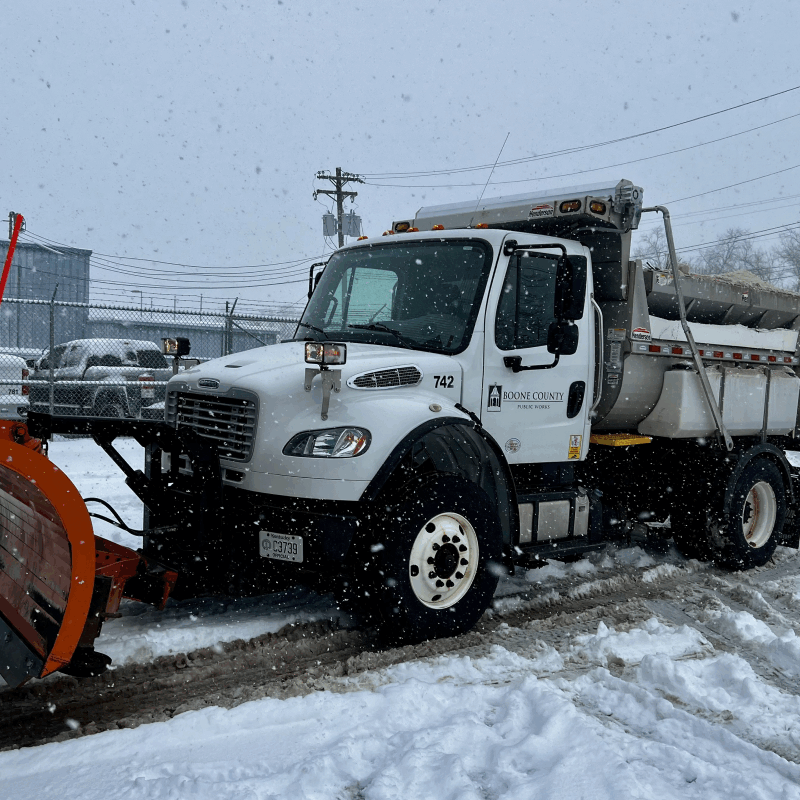
Just last week we wrapped up APWA’s annual North American Snow Conference in Cleveland. While nearly all of us in North America are out of the winter threat and will be for quite some time, it’s no coincidence that this event takes place in the middle of spring. As we learn from four passionate experts in today’s episode, snow and ice planning is a year-round endeavor—and with summer quickly approaching, right now is actually the perfect time to start the process of ensuring next year’s winter prep is a success.
The spring and summer months give public workers a chance to take a step back. Catch their breath. Look back on what worked and what didn’t. It’s a time to prep equipment, complete inventory and stockpile checks, review contracts, training schedules, route plans, and so much more. Because when snow removal is done right, it can be the defining characteristic of your agency.
In this episode we hear from the following guests:
- Diana Clonch is a consultant specializing in winter operations. Before consulting, she spent a 30-year career in government and public works in central Ohio.
- Shane Mark is the Assistant Director of Public Works in the town of Needham, Massachusetts, a suburb of Boston.
- Matt Morreim is the Public Works Director for the city of Shorewood, Minnesota, and previously managed winter operations for the city of St. Paul, Minnesota.
- Daniel Schacher is the Chief of Maintenance at Fairbanks International Airport.
Public Works Radio is hosted by Bailey Dickman, Senior Digital Marketing Specialist with APWA. Each episode dives into a wide range of topics designed to educate and inspire, making public works more visible to everyone—from the general public and elected officials to industry peers and the media. If you haven’t already, please subscribe wherever you get your podcasts, rate and review the show, forward it to a friend, and drop us a note at podcast@apwa.org so we can hear your feedback directly!
More Show Notes and Resources
- APWA Winter Maintenance Supervisor Certificate
- APWA Winter Maintenance Resources
- 2027 APWA North American Snow Conference
- Diana Clonch’s Consultancy
- Shorewood Minnesota’s Public Works & Engineering
- Needham’s Massachusetts Department of Public Works
- Fairbanks International Airport
Transcript
View transcript >
0:00:00.7 Bailey Dickman: Just last week, we wrapped up APWA’s annual North American Snow Conference in Cleveland. While nearly all of us in North America are out of the winter threat and will be for quite some time, it’s no coincidence that this event takes place in the middle of spring. As we learned from four passionate winter experts in today’s episode, snow and ice planning is a year-round endeavor. And with summer quickly approaching, right now is actually the perfect time to start the process of ensuring that next year’s winter is a success.
0:00:26.7 Shane Mark: Winter planning is a year-round process. It never stops and it should never stop. There’s not a day goes by that I don’t talk about snow somehow, some way, some form.
0:00:37.0 Bailey Dickman: That was Shane Mark. He’s the assistant director of Public Works in the town of Needham, Massachusetts, a suburb of Boston. The spring and summer months give public workers a chance to step back, catch their breath, look back on what worked and what didn’t. It’s a time to prep equipment, issue inventory and stockpile checks, review contracts, training schedules, route plans, and so much more. Diana Clonch is a consultant specializing in winter operations who has spent three decades in public service. She told us, when snow removal is done right, it can be the defining characteristic of your agency.
0:01:06.5 Diana Clonch: I always refer to snow and ice control. It is a signature event of the agency. It is typically a collective event of the entire agency. It certainly reflects on the entire agency.
0:01:19.7 Bailey Dickman: While it’s true that winter preparation should be a year-round endeavor, it’s even more true in areas like Minnesota or Alaska for obvious reasons. Here’s Matt Morreim, public works director for the city of Shorewood, Minnesota, just outside of Minneapolis.
0:01:33.7 Matt Morreim: You have those sometimes difficult conversations of, hey, what went well, what went bad? How can we work together to change these things? So having those conversations fairly soon after the season is best.
0:01:47.7 Bailey Dickman: When you have to ensure that airways are clean, you go to somebody like Dan Schacher, the chief of maintenance at Fairbanks International Airport for the Alaska DOT.
0:01:55.6 Daniel Schacher: This time of year, here we are not thinking about winter again, hopefully for a little bit, but you need to be able to look at your equipment and identify the issues that you had over the winter. What were some common problems that we continued to have?
0:02:08.4 Bailey Dickman: Welcome back to Public Works Radio, the official voice of the American Public Works Association. It’s hard to think about snow in July. Getting into a winter mindset when it’s sweltering hot outside just doesn’t seem natural. But there’s a core group of public workers throughout North America that do just that. And in this episode of Public Works Radio, we’re telling their story. What should an agency be thinking about in spring and summer for winter ops preparation?
0:02:34.3 Diana Clonch: Well, that’s a very good question because a lot of times people think winter operations is only winter, don’t they? For those of us who work in snow and ice control, we know that that’s anything but the truth. There’s a lot to think about, both short-term and long-term when we’re looking at winter operations. Winter operations as a program is no different than any other major project that an agency or an entity would undertake. So it should be the same way with winter operations. And absolutely, it is a year-round project. As we come out of the winter, it’s extremely important to look back on what took place, what worked as well as what did not work. And then as we go into planning, there are definitely things that we will be doing throughout each season, up to and including into the next winter season. I always like to refer to it as if you haven’t done this, do this, create yourself a calendar, just a list of what has to be done, who’s going to do it, and when is it going to be completed. And I say this because as simple as it seems, if you don’t do it, things are going to fall through the cracks.
0:03:45.0 Matt Morreim: Regardless of where you are, winter operations is a 12-month operation. Spring, summer are super important for doing seasonal debriefs. Fixing equipment issues is probably one of the most important parts, and along with that, purchasing replacement parts, getting your inventory and salt stockpiles up, renewing salt contracts. At least for Minnesota, we’re already… We’ve already gone through the process of renewal. That actually happens towards the end of the winter for the next winter. So it’s a little tricky, but there’s a lot of things that are going on, a lot of moving parts. But as long as you can stay ahead of that as much as possible, everything should be fairly reasonable once you get to the fall and everybody’s job is super busy. And then updating, lastly, I would just say updating winter operation routes and plans and all the staffing that goes along with that. Shorewood, we’re not growing much, but there’s a lot of cities that are growing, and so adding in new routes, new streets.
0:04:50.9 Shane Mark: We typically as a public works department, and I think this holds true for most agencies in the US, is we go from one extreme to the other. We go from winter extreme to construction extreme, back to winter extreme, and it seems oftentimes there are no in-between. As we’re wrapping things up and most of the country now is out of the winter threat, we’re out of the winter, we’re putting the equipment away, is making sure that we take time to stop and put the equipment away correctly, making sure that we’re doing a top-to-bottom analysis of that equipment, washing it, getting all the salt off it by using salt neutralizer, writing all those things up so that our mechanics have a shot to fix it before winter comes again. And it was funny because I said that it seems like every storm, the first two hours of the storm in a shop is filled with wiper blades and broken plow blades. And those things are very easily avoidable. We just have to take time to prep our equipment. So I would say first thing an agency needs to make sure they’re doing is putting their equipment away properly.
0:05:51.7 Shane Mark: Second thing I would advise agencies to do is take some time before you move into your construction mode and do a winter debrief and really be honest with each other during that debrief. And I would encourage you to involve your operators as part of this process because truly the most valuable person in your operation is the man or woman behind that plow blade, behind that plow truck. They’re the ones that really see everything that happens because they’re living it. So pull those operators in and get the feedback on what went right, what didn’t go correctly, and make sure that you’re sustaining the things that went correctly by enhancing those. And then the things that didn’t go right, is being able to put your ego aside and making it an environment that creates psychological safety so that your operators can truly speak their minds and say what the problems were and know that they’re going to be heard and that those problems are going to be addressed.
0:07:07.8 Shane Mark: Or if they can’t be addressed, at least they’re going to be explained why they can’t be addressed. I think oftentimes as managers and as leaders, we forget that component and we need to be able to explain it to them. Try to get to yes within reason, but if we can’t, we can explain why we can’t do things. But I’ve realized that my ego is not my amigo and I can’t try to defend my actions when someone comes back and says something that I may not agree with. I need to take a time to stop, take some deep breaths, and really get to the root of what they’re trying to say. Because oftentimes when our employees say something to us or the public says something about what we’re doing wrong, they want to be heard and there’s a nugget of truth in there that we got to extract. So I would say do those debriefs, write all those things up and then make a plan that through this summer you can work towards achieving those goals and improving those areas that are deficient or that didn’t go so well in the winter.
0:08:18.2 Bailey Dickman: And how do you collect feedback from your fleet managers, from the people in the plows? How do you go through that feedback or look-back process?
0:08:28.6 Daniel Schacher: So your relationship with your fleet folks has to be strong. They are a key partner in this winter maintenance field. So without them you don’t succeed. So conversations, whether it’s through emails and getting things in writing or checking write-ups together or kicking tires together, walking around, making those… Sure those relationships are solid all throughout the year, but especially this time of year. Here we are not thinking about winter again, hopefully for a little bit. But you need to be able to look at your equipment and identify the issues that you had over the winter. What were some common problems that we continue to have and what repairs need to be made before you get ready for next year? Because oftentimes we’re taking equipment apart and putting in summer configuration, but when we go to put it back in service for the winter, it needs to be ready to go too. Because oftentimes you’ll get an early storm that might catch you by surprise. You need to be able to get out there and respond quickly. So looking at things now is a key component of that.
0:09:32.8 Daniel Schacher: And speaking with your fleet people and the mechanics and getting them involved in the discussions, especially as a winter maintenance committee, we’re pushing calibration and that’s more or less a joint effort between fleet and the operators. So you gotta bring those folks into the discussion.
0:09:49.7 Diana Clonch: In my own experience when I was running operations, I was an advocate of having meetings. I would have pre-event meetings, right? So that we’re checking off, there’s our little list, we’re checking that off to make sure that things are in place. And then I would have post-event meetings and those were very, very helpful in identifying both what went right as well as what went wrong, and identifying where we needed to maybe put some extra effort or pay some extra attention. And then there’s a part of documenting that information and keeping good records of what goes on. And then as we come out of winter, it’s doing a post-season report-out. A review of the information, a review of what took place and then sharing that communication. But you have so many people that are involved in snow and ice control. I always refer to snow and ice control. It is a signature event of the agency, not just a task that’s left to maybe the highway department or the street department, right? But it is typically a collective event of the entire agency. It certainly reflects on the entire agency, right? And so if it’s going to be important, then let’s have it be important. And so that really elevates the need for that open communication protocol across all of these different divisions within any given agency.
0:11:21.3 Matt Morreim: And you have those sometimes difficult conversations of, “Hey, what went well? What went bad? How can we work together to change these things?” So having those conversations fairly soon after the season is best, but ensuring that you have it. I would also state that throughout the winter when you have… If you have bigger events, having those debriefs is super helpful as well. Not waiting till the end of the season, maybe you can make those in-season changes or improvements to help with what you have going on with your operations.
0:12:00.0 Shane Mark: So we do after-action reviews. The first after-action review we do is with our management team. And so we’ll pull in the key what we call spotters or snow chasers. So those are the people that chase the routes and have the different roles and responsibilities from hand crew to the public buildings to on-street routes. So we’ll pull them in and we’ll have a meeting with them and we’ll do the exact same thing that we just spoke about, where we’ll ask them what went right, what didn’t go so well. And what we try to do is if someone says something didn’t go well, we want to know how we can improve it. So let’s not just bring a problem, but bring a proposed solution. And then our fleet management team is also part of that process. And then from there, we will have some meetings with the key staff of the plows. Our organization’s very tough to get everybody together at once, just like every other public works department. So what we’ll try to do is find those strategic employees that will provide us some honest feedback and have some meetings with them. I really rely a lot on our work foremen, our frontline leaders that run those crews, because they’re the ones that are out there giving those work directions each day. So we’ll pull them in and get their honest feedback.
0:13:32.6 Bailey Dickman: It’s always a little hard to ask somebody, “What are other agencies doing wrong?” But what’s a mistake that you see from an agency that will put them behind for next season?
0:13:44.2 Matt Morreim: Yeah, again, everybody is busy. So public works, we’re not just winter operations. We’re year-round. Many of them, including us, we manage utilities year-round. So I think just proper planning, proper planning for the resources that you need. We talked about materials and just being able to do all of that in a timely fashion. I don’t maybe see it as a mistake, but I think it’s just something we have a challenge with. And so sometimes we’re kind of behind the eight ball and like, “Oh, I need to do this,” or, “What can we put aside so that we get all these things done?” And sometimes maybe training or sometimes maintenance of equipment gets put off a little too late to where that first winter event you’re going, “Oh man, I didn’t do this.” So I think it’s just planning our time and our resources is a big one because everybody’s busy in public works. We never will have enough staff. Expectations are increasing every year that goes by. So I think that would be kind of the biggest one that I see. And that’s not unique to small agencies or large agencies from my standpoint, from what I’ve seen.
0:15:01.0 Shane Mark: I think what I would say most mistakes that put them behind is, again, not putting your equipment away correctly and not making your plan for the upcoming season. Winter planning is a year-round process. It never stops and it should never stop. I joke a lot that there’s not a day goes by that I don’t talk about snow somehow, some way, some form. And so I think agencies that make mistakes or that tend to make mistakes are the agencies that say, “Hey, we’re out of winter, let’s go straight to construction,” and they’re not planning ahead and they’re not thinking about winter until October, November timeframe. And by that time, it’s too late. So I think that what we should do, and I know that we need to get better, at this here we do a good job, but is really planning it out, sitting down and placing those placeholders on the calendar and coming up with a chart with your milestones of what needs to be done by each date so that as winter shuts down, you move through spring, summer, fall, you’re hitting your milestones so that when winter hits, you’re ready to go and you’re not rushed. And you’re not putting that undue pressure on your workforce and on your staff to get things done.
0:16:24.1 Daniel Schacher: The biggest mistake that I see even from our own organization is we try to over-promise. We’re saying we could do things we really are not capable of doing, and then people expect that. Especially, you’re budgeted for an average winter, right? You’re not budgeted for the extreme events. And we’re seeing more and more extreme events, and they happen more frequently and regularly throughout the country and throughout North America. So that’s when people need to understand that you aren’t able to deliver that level of service that they expect when you have an extreme event. So telling that story ahead of time is really something that I think you need to get out there and get ahead of and work with your public information folks to get that out there. And oftentimes just having to sit down with people that you’re serving, with me right now, it was with our airliners. How did we do with the airlines? Were they happy with what we did in this new job? So in the past, we would go out and meet with the public before we went into fall and say, “Hey, what did we do last year that you didn’t like?” “What did we do that you did like?” So having that public outreach, having that discussion will oftentimes lead to things that you might not have thought of that are good points for you to consider in your putting together your snow plan.
0:17:44.5 Bailey Dickman: How do you approach training for winter when it might be hot outside and these staff are getting pulled away from their regular jobs, their desk jobs, their phone jobs? How do you approach for training?
0:17:56.7 Diana Clonch: I think that the training is one of the most important things that we can do not only for our staff, but for our own selves, right? And for the safety and well-being and productivity of our program. And it is true that it’s tough to get in the winter mode when it’s July. It’s tough, but it is doable. And then I think, well, that begs attention to the fact of what kind of training are we doing. So we want to make sure that we pay attention to that, that the training program has a great deal of relevance to the very work, the nature of the work that’s being done. And so what does that mean? Well, that means it gives something of value to the person who’s doing the work. Right? It is something that can help them with their jobs. Work is hard enough, so if we can give them something that they can see value in, I think that you can see an increased appreciation for that training regardless of when it takes place.
0:18:56.7 Matt Morreim: Gone are the days of throwing keys to a new hire and having them figure everything out. We continually hear stories from probably 20, 25-year veterans, maybe even less, of, “Here you go. Here’s your route. Have fun.” Those days are gone. Staff are put into quarter-million-dollar plow trucks with technology. They need to be trained. They need to be properly trained. They need to be safe while they’re out there because what they do matters, whether it’s the maintenance that they’re performing or, God forbid, anybody would ever get into a situation where there’s an accident. They need to know how their equipment works so that they can minimize those times where they could be in those situations, unsafe situations.
0:19:44.3 Daniel Schacher: Even people that have been here 20 years have to go through the training. We make sure we do that. So try to get everybody on the same page. But training is a tough one. With budget reductions training is… I hate to say this, but training is a lot of times the first thing that people cut. And I think that’s a disservice to not only the operators but also the public.
0:20:07.0 Bailey Dickman: So given rising material costs, scarcity of materials, rising lead times for equipment, are there any alternatives that your agency is looking at for next season or anything you’re doing now to make sure that you aren’t caught on the back foot in next season?
0:20:23.6 Matt Morreim: I’d say the biggest thing in thinking about this is ensuring that you have the most efficient operations as possible, which comes with good staff, training, all those things. We’re looking at expanding our liquids program. Before three winters ago, we did not have liquids. My staff developed kind of a cheap way to do liquids until we could expand our program, which will be happening over this next year. So having an expanded liquids program or a liquids program can help you with reducing some of those chloride usage. Looking at staffing and having better response to events can also kind of reduce your material costs, material usage.
0:21:17.2 Shane Mark: What was interesting this winter, and I think we saw this all over the country, was I don’t want to… I don’t necessarily want to say a salt shortage, but I would say a delay in deliveries of salt. Our agency, every storm when we use salt, we know on average how much salt we’re going to use per storm. So what we’ll do is we’ll get on the phone or email and order that amount as soon as we know a storm’s going to happen. So for example, if we know we’re going to use 2,000 tons this event, we’re going to order 2,000 tons so that at the end of the event we have it on order and it will come in. What we saw this year, especially January, February timeframe, is up to three to four weeks delivery time from the time that you ordered the salt to the time it was delivered. And lucky for us, we have a… We’re at an advantage where we have a large barn and we have a large salt capacity. So we weren’t too worried about it, but as the season progressed and we received all these frequent small storms. And what’s interesting about these small storms is they take just as much salt as the larger storms do, and even more salt when they’re the mixed precipitation or the freezing rain events.
0:22:24.0 Shane Mark: It seems like the last couple of winters that snow is coming on the back end of the season as opposed to the front end of the season. And it’s interesting for us because this was really the first winter in the last five or six years that we had a true New England winter. And so the question always is now, is this going to be the norm? Like is this going to… Are we back to regular winters here in New England, or are we going to continue to see this unpredictability where one season you have an above-average winter, the next season you may not have any snow at all? So I think the way that we just continue to plan for this is immersing ourselves on the equipment floor when we go to PWX, when we go to the snow conference, big plug for the snow conference and for PWX, but immersing ourselves on that equipment floor, talking to the vendors, and programming the tools into our toolbox, such as road weather information systems, grip sensors, the combination spreaders, getting more aggressive with our liquids. So to have a toolbox that has many tools in it so that you could reach in and use the appropriate tool for the appropriate storm.
0:24:06.6 Bailey Dickman: What’s one key thing you’re thinking about for next season?
0:24:12.3 Diana Clonch: Again, the key thing is planning, planning like we have just been talking about and all those different elements, and looking at issues and problems from last year, looking at the current state of affairs and moving forward, and trying to figure out ways to address these issues before they actually become issues.
0:24:34.6 Bailey Dickman: Say an agency is looking to overhaul the way they do their pre-season, their pre-winter work. What’s one piece of advice you would give to an agency who’s looking to step up their game in the off-winter season?
0:24:49.0 Daniel Schacher: The best piece of advice I can say is if you’re going to make changes to your operation, make sure that your elected officials buy into it. You do not want to surprise them with a change that they did not know about and they have to answer to the public for. So once you get that policy change written that you want to change, make sure they have seen it, they buy into it, they agree with it, and then you roll that out. I know that our director for the international airport system wants to know when we make changes to our operations in the airfield or in the terminal. I’m over the terminal as well, so anything that we change… And I know her hot-button topic a lot of times is the escalators. The escalators go down, she wants to know about it. So I text her immediately if we have issues. So just keeping those folks involved so that they can support you and make sure that they know we’re all on the same page.
0:25:44.1 Bailey Dickman: How do you create your communication plan alongside your operational plan? Do you do pre-season communications to help the public understand winter operations ahead of time, or is the public memory too short? You’d have to start it during October, otherwise they’ll forget it already. Like, what’s your plan?
0:26:05.1 Shane Mark: Yeah, all of the above. We really focus more in the fall just for the fact that what we found is, again, that analogy of going straight from winter to construction, no one’s thinking about winter when it’s warm out, especially as April, May roll around and it’s beautiful weather, you’re not thinking about snow. So we don’t do a lot of communication about snow during spring, summer. We’ll start to target that in the fall. And so we have a variety of ways we do it. We use, of course, Facebook, Instagram. We’d like to branch more into the Instagram, TikTok side of the house and do some videos. We’re not great at the video components, but we’ll post on social media, do a lot of those postings. One thing that our director and I do is in fall, usually October, first part of November, we’ll get on our Select Board’s agenda and we’ll go in and we’ll talk snow to the Select Board. We just remind the Select Board of our priorities and how we execute snow, and we remind them of our snow plan, provide the data, provide the communication in such a way that is digestible and understandable to the public.
0:27:22.6 Bailey Dickman: So last thing, is there a question I should have asked? If we’re talking inside baseball, winter maintenance, is there something I should have asked but I didn’t?
0:27:31.5 Shane Mark: I don’t think there’s a question that you should have asked that you didn’t. What I would like to see is maybe, perhaps what the public could ask is, “What is your biggest challenge as a snowplow operator?” and maybe some understanding from the public. Because, for example, a windrow, when you’re plowing, all the snow comes off the edge of the plow blade and it goes to the right because you want to plow from the center out. You always want to start in the center of the roadway and push it to the berm or to the gutter line. And you do that intentionally because you want to open up your catch basin so the water can drain, or if you don’t have drainage and you have ditches or berms, it can drain into there. That said, the way that we do this, as we’re plowing, we leave those windrows because we are pushing curb-to-curb, and residents will get quite upset because they go out there and they clean their driveways, they clean their aprons, only to have the plow come along and deposit a 2-foot by 2-foot bank of snow there. And so I’m sure that many people listening to this podcast have had the same incidents where we’ve been given the one-finger salutes, or the snow shovels are thrown against the side of your equipment, or the resident will throw things out there to try to block your pathway.
0:29:01.5 Shane Mark: So what I would say is just, I would love if residents could maybe give us some grace, and in turn, we give grace to the resident as well. We’re not putting the snow there intentionally. We’re not doing it to try to tick them off or to be mean or anything. It’s just a process of the snow and ice removal. And so if they could give us some grace and some leniency and realize we’re just trying to do our jobs and provide a level of safety. But then I also challenge us to do the same things as public works professionals is that when we do encounter an angry or an upset resident is to give them grace as well. Because we never know what we’re going through as humans and what’s going on or what may have happened in their life. So just giving each other grace and realizing that we’re all going through this muddy mess of life together and that we’re all trying to figure it out and just being kind with each other. And if we can just be kind with each other and try to understand each other from their point of view, I think that will make our jobs much easier and it’ll make our work more enjoyable and happy as well.
0:30:22.5 Bailey Dickman: Thank you for listening to Public Works Radio, the official voice of the American Public Works Association. And thanks to today’s guests, Diana Clonch, Shane Mark, Matt Morreim, and Dan Schacher. Make sure to subscribe wherever you get your favorite podcasts. Rate us, review us, and forward it along to a friend. And don’t be shy about dropping us a note over at podcast@apwa.org so we can hear your feedback directly. We’ll catch you next time.
Related Resources
Proficiency Levels
Introductory
Focuses on a general or broad overview of the topic, awareness of basic factual recall. Limited experience of the subject matter is necessary to understand content areas.
Applied
Focuses on practical implementation of technical steps or strategies, some prior knowledge and experience of the topic is necessary.
Advanced
Mastery of basic concepts associated with an area has been obtained. Focuses on understanding nuances, advanced concepts, and intricacies with implementation within knowledge area. Strong understanding of how the concept impacts other factors or areas of operations.
Program Types
CLL
Click, Listen & Learn (CLL) are interactive educational webinars. Each program is led by top experts in the field who share new ideas, methods, and technologies in a fast-paced two-hour time frame. These programs are available free to APWA members. CLL programs are eligible for continuing education units (CEUs).
Primer
Primers are used to educate policymakers about public works roles and responsibilities in public rights of way, the impact of federal workforce development policies on the industry and workforce, and the importance of resilient infrastructure.
Public Works Radio Podcast
Public Works Radio is the official podcast of the American Public Works Association (APWA), bringing the stories behind our communities to life. This podcast shines a spotlight on the people and projects that keep our cities running—humanizing the work and the professionals who make it happen. Each episode dives into a wide range of topics designed to educate and inspire, making public works more visible to everyone.
PWX
PWX session recordings cover a wide variety of topics, including integrating modes of transportation, traffic and transit, construction management, emergency management, engineering and technology, fleet and facilities, management, parks and grounds, snow and ice control, and stormwater/flood control, as well as solid waste, roads and bridges and water/wastewater. PWX sessions are eligible for continuing education units (CEUs).
Reporter Articles
APWA Reporter articles are written by public works practitioners on subjects such as solid waste management, water resources, municipal engineering, transportation, equipment services, buildings and grounds, snow removal, and other public works-related topics.
Snow
The Snow Conference session recordings feature public works professionals sharing the latest best practices in managing winter/snow operations more successfully, taking advantage of emerging technologies, understanding and preparing for the challenges ahead, and providing better service to their communities. Snow sessions are eligible for continuing education units (CEUs).
Tech Boxes
A tech box is a PDF take-away that provides information in lists, steps, or defined areas specifically focused on trending technologies.
Virtual Program
Virtual programs are live, interactive educational programs led by top experts in the field who provide timely information or address trending topics within an area. Programs often conclude with an open forum for Q&A.