

What happens when a forgotten piece of public infrastructure gets a second life?
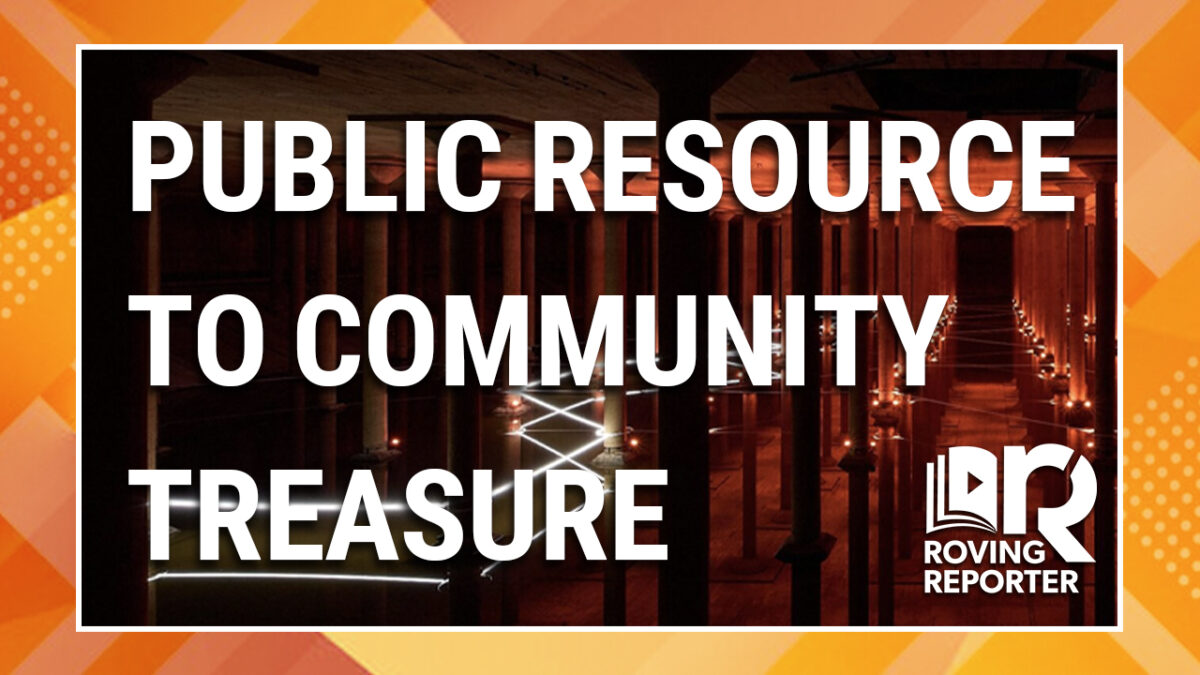
Deep beneath Houston, Texas, sits the Buffalo Bayou Park Cistern, a remarkable piece of the city’s history that once served as a municipal drinking-water reservoir. Constructed in 1926, this massive underground structure held up to 15 million gallons of water before eventually being taken out of service.
Rather than letting this piece of infrastructure fade into history, Caitlin Ferrell, director of marketing and communications for the Buffalo Bayou Partnership, explains how they helped transform it into something entirely different: a one-of-a-kind public destination where history, architecture, and art come together.
In this episode of APWA’s Roving Reporter, we explore how an aging public resource was reimagined into a community treasure. From preserving historic infrastructure to creating new cultural experiences, the Cistern offers an inspiring example of how sustainability can mean looking at what we already have and imagining what it could become.
Sometimes, the best way forward is to give something from the past a new purpose.
To learn more about the Buffalo Bayou Cistern, read our corresponding article in the APWA Reporter magazine.
Learn more about the Buffalo Bayou Partnership here.
Click the image below or the “Use this Resource” button to watch the video.

Proficiency Levels
Introductory
Focuses on a general or broad overview of the topic, awareness of basic factual recall. Limited experience of the subject matter is necessary to understand content areas.
Applied
Focuses on practical implementation of technical steps or strategies, some prior knowledge and experience of the topic is necessary.
Advanced
Mastery of basic concepts associated with an area has been obtained. Focuses on understanding nuances, advanced concepts, and intricacies with implementation within knowledge area. Strong understanding of how the concept impacts other factors or areas of operations.
Program Types
CLL
Click, Listen & Learn (CLL) are interactive educational webinars. Each program is led by top experts in the field who share new ideas, methods, and technologies in a fast-paced two-hour time frame. These programs are available free to APWA members. CLL programs are eligible for continuing education units (CEUs).
Primer
Primers are used to educate policymakers about public works roles and responsibilities in public rights of way, the impact of federal workforce development policies on the industry and workforce, and the importance of resilient infrastructure.
Public Works Radio Podcast
Public Works Radio is the official podcast of the American Public Works Association (APWA), bringing the stories behind our communities to life. This podcast shines a spotlight on the people and projects that keep our cities running—humanizing the work and the professionals who make it happen. Each episode dives into a wide range of topics designed to educate and inspire, making public works more visible to everyone.
PWX
PWX session recordings cover a wide variety of topics, including integrating modes of transportation, traffic and transit, construction management, emergency management, engineering and technology, fleet and facilities, management, parks and grounds, snow and ice control, and stormwater/flood control, as well as solid waste, roads and bridges and water/wastewater. PWX sessions are eligible for continuing education units (CEUs).
Reporter Articles
APWA Reporter articles are written by public works practitioners on subjects such as solid waste management, water resources, municipal engineering, transportation, equipment services, buildings and grounds, snow removal, and other public works-related topics.
Snow
The Snow Conference session recordings feature public works professionals sharing the latest best practices in managing winter/snow operations more successfully, taking advantage of emerging technologies, understanding and preparing for the challenges ahead, and providing better service to their communities. Snow sessions are eligible for continuing education units (CEUs).
Tech Boxes
A tech box is a PDF take-away that provides information in lists, steps, or defined areas specifically focused on trending technologies.
Virtual Program
Virtual programs are live, interactive educational programs led by top experts in the field who provide timely information or address trending topics within an area. Programs often conclude with an open forum for Q&A.