
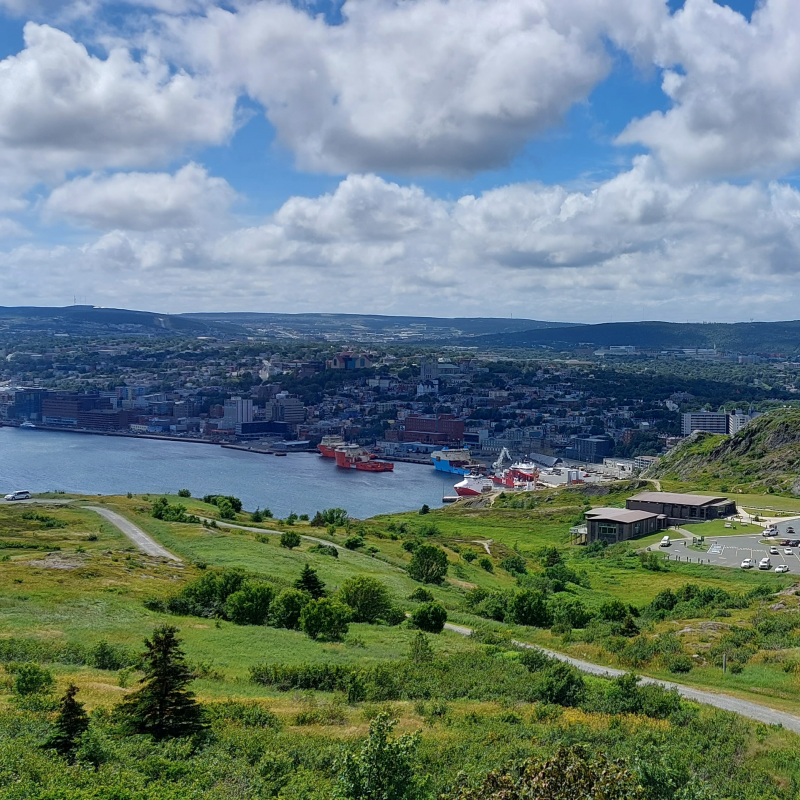
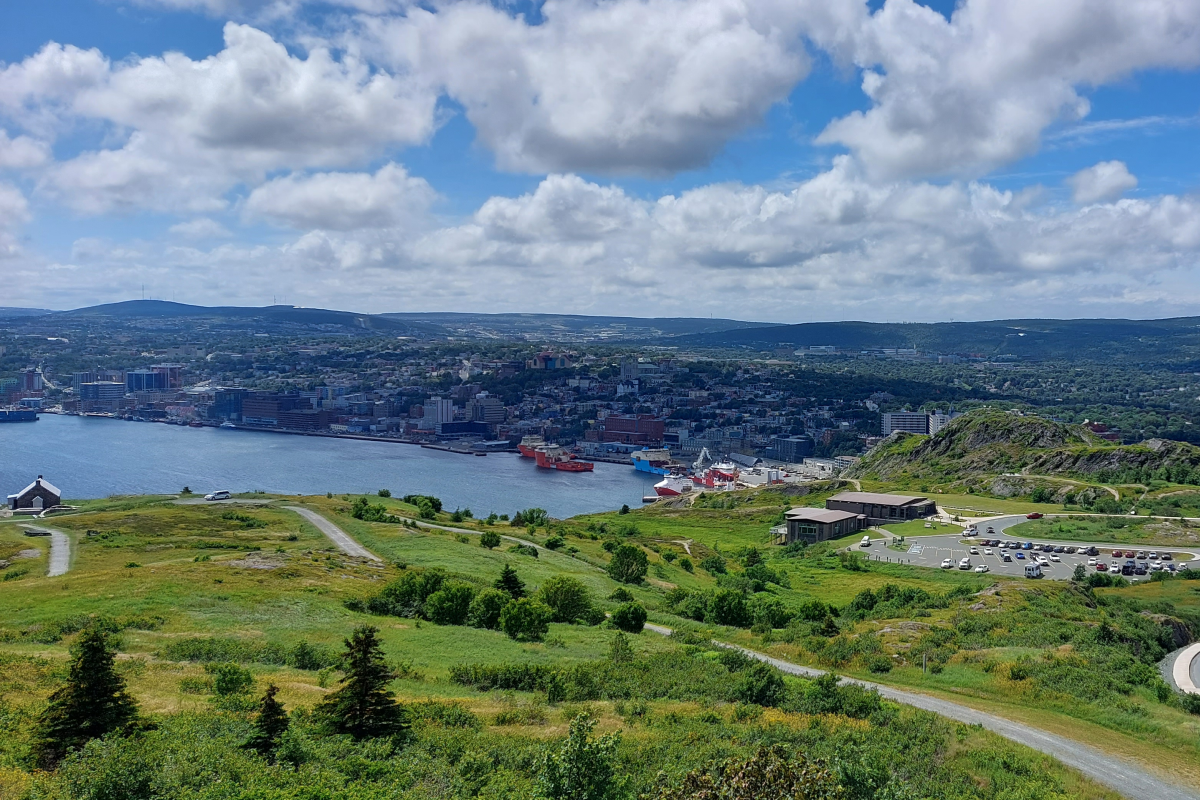
Newfoundland, known locally as The Rock, is a large, incredibly beautiful and remote island about the size of Virginia within the Canadian province of Newfoundland and Labrador. And as we explore in this week’s episode of Public Works Radio, the challenges for public works professionals on this island are just about everywhere, like unpredictable weather, some of the continent’s heaviest snow, workforce challenges given the sparse population, and logistical hurdles of getting vital assets shipped there.
Joining us this week to walk us through managing public works on an island are Jennifer Norris, the Director of Public Works & Engineering in the Town of Conception Bay South, who also serves as President of the Canadian Public Works Association (CPWA), and Steve Chippett, the Public Works Director for the Town of Bishop’s Falls, both located in Newfoundland and Labrador, Canada.
Through every challenge, one theme keeps surfacing as the glue that holds it all together: a community of public works professionals.
Public Works Radio is hosted by Bailey Dickman, Senior Digital Marketing Specialist with APWA. Each episode dives into a wide range of topics designed to educate and inspire, making public works more visible to everyone, from the general public and elected officials to industry peers and the media. If you haven’t already, please subscribe wherever you get your podcasts, rate and review the show, forward it to a friend, and drop us a note at podcast@apwa.org so we can hear your feedback directly!
More Show Notes and Resources
- Learn more about CPWA
- Learn more about Canadian Government Affairs supported by CPWA and APWA
- Follow CPWA on LinkedIn
- Town of Conception Bay South
- Town of Bishop’s Falls
Transcript
View transcript >
0:00:00.5 Bailey Dickman: They call it the Rock for a reason.
0:00:03.1 Steve Chippett: Anything we do normally involves a lot of busting of rock and things like that.
0:00:07.9 Bailey Dickman: Newfoundland, known locally as the Rock, is a large, beautiful, remote island within the Canadian province of Newfoundland and Labrador. It’s to the east of Quebec. It’s about the size of Virginia. And as we’re gonna explore on this week’s episode of Public Works Radio, the challenges that public works professionals face on this island are many. For starters, let’s talk about the weather.
0:00:29.3 Jennifer Norris: We’re very, very far east into the Atlantic Ocean, and we’re fairly far north. So weather changes as fast as the wind. If you don’t like the weather in the morning, just wait till the afternoon.
0:00:41.3 Bailey Dickman: Or the snow.
0:00:42.3 Jennifer Norris: We have some of the heaviest, heaviest snow you can find in North America, to the point where a traditional snowblower cannot blow it.
0:00:51.6 Bailey Dickman: And then, of course, there’s the workforce challenges, given that there’s a sparse population.
0:00:56.5 Steve Chippett: There’s no such thing as a quick construction project because, number one, there’s no people. It’s very hard to get qualified people.
0:01:04.5 Bailey Dickman: And getting vital assets shipped here can also be a major concern.
0:01:08.7 Jennifer Norris: So the island of Newfoundland does not have a bridge connection. It’s boat or air. So we have to plan ahead. We cannot always assume that whatever we need will be available when we need it.
0:01:20.5 Bailey Dickman: We have two incredible guests this week to take us on a public works exploration of the Rock. And we’re gonna highlight some of the reoccurring themes about what makes public works so challenging and rewarding on this island. First up, we have Jennifer Norris.
0:01:35.0 Jennifer Norris: I am the director of engineering and public works here at the town of Conception Bay South. Conception Bay South is the second largest municipality in the province of Newfoundland and Labrador, which is one of the provinces of your neighbor in Canada.
0:01:50.8 Bailey Dickman: And we also have Steve Chippett.
0:01:52.7 Steve Chippett: I’m the director of public works for the town of Bishop’s Falls here in Newfoundland. And what I do is –stuff goes wrong, we’re the ones to fix it. So that pretty much sums us up.
0:02:05.5 Bailey Dickman: Through every challenge, one theme keeps surfacing as the glue that holds life on the Rock together. Community.
0:02:11.8 Steve Chippett: We have each other to lean on, to vent to, learn from each other’s experience.
0:02:17.0 Bailey Dickman: Those pillars of community are also central to the Canadian Public Works Association, where Jennifer serves as president. Be sure to stay tuned until the end as she discusses this group, and check out the show notes for how to get involved.
0:02:31.9 Jennifer Norris: It is a branch of American Public Works Association. We’re raising awareness for public works across Canada, and we are advocating.
0:02:39.3 Bailey Dickman: Welcome back to Public Works Radio, the official voice of the American Public Works Association. I’m your host, Bailey Dickman, and this week we’re taking you to the Rock. What’s the biggest difference that you think there is between island versus mainland?
0:02:55.0 Steve Chippett: Biggest difference that I find would be supplies and accessing the materials that we need to complete our job. For us personally, I mean, we’ve only got a population of 3500 people, so we don’t have the overhead and the capabilities to have overhead and stuff like that and have big stock rooms and things like this. Basically, we got the bare minimum. Something little goes off the rails that’s not normal, we could be waiting… Depending on if it’s available on the island. I mean, there are vendors here, they do the best they can, too. But if it’s something that needs to be ordered in, then it could take a while. And now oftentimes, if it’s gotta come from down in the States or wherever, then lots of times it takes even longer than it used to.
0:03:44.9 Jennifer Norris: We have no bridge connection. So the island of Newfoundland does not have a bridge connection. It’s boat or air. So we have to plan ahead. We cannot always assume that whatever we need will be available when we need it. That’s critical for emergency response, obviously, plus your day-to-day public works activities. We need to consider transportation time, availability, potential delays, especially if it’s a certain time of the year when we’re doing projects and our regular maintenance activities. The other thing is limited resources. Obviously, the island portion only has so much resources here. And you kind of think of hard things, pipe or asphalts or those type of things for public works, but… Like, resources in operators and mechanics, plumbers, those type of things are also limited, which I think is common throughout public works. But when you’re on an island, you only have so much resources to choose from. You’re not getting someone else an hour drive crossing borders or provincial borders or anything like that. So that’s quite difficult.
0:05:02.8 Jennifer Norris: And then the other thing we just alluded to about the size is our spread. We are 274 municipalities spread across, but that’s only about 2.3% of the landmass. And if you look at Newfoundland, it’s all generally along the coast, obviously, because of the history of access to the ocean. So there’s a lot of traveling. And you can’t go straight across. Newfoundland is a lovely and unique rugged shape, as we say, also known as the Rock. So it’s a very rugged rock, and there’s nothing really straight. And yeah, so the spread makes it really difficult. If we had to kind of sum it up, it would be… You need to have a lot of flexibility, planning, and resourcefulness, for sure. And it’s just not what you need, but kind of projecting ahead all the time. [laughter]
0:05:58.3 Bailey Dickman: What about these other resources, like workforce? If you want to do a… Really do a quick construction project in the summer, is that possible?
0:06:08.8 Steve Chippett: There’s no such thing as a quick construction project.
0:06:11.7 Bailey Dickman: Well, yeah. [laughter]
0:06:12.0 Steve Chippett: Not for me, anyway. Because number one, there’s no people. It’s very hard to get qualified people. I mean, yeah, there’s a… The population of Newfoundland, not even sure what it is now, 500,000, 600,000, something like that. Even though there’s that many people, we’re geographically spread out so far that it doesn’t mean we’re gonna be able to just put out an ad and say, “Okay, we need people for this project starting whenever.” Don’t work that way with us. We have to plan it and plan it and plan it and plan it some more.
0:06:44.5 Bailey Dickman: What is it like having to attract talent to an island community?
0:06:48.6 Steve Chippett: It is pretty well impossible for us to attract people from outside the province. The best thing we could hope for is find somebody within the province. Finding somebody to come in from outside, especially for a municipality of my size, not happening. You’ll never get it. It just won’t work because we can’t pay the wages. And not only that, but now we’re finding, I don’t know if Jennifer mentioned it or not, but mining is really taking off here now. And obviously, mines pay better money than municipality. And now even the people that are here are going to the mines, and they’re working for half the time, getting twice the money. So it makes it practically impossible for us. It’s a real, real issue retaining or even obtaining workforce.
0:07:38.1 Bailey Dickman: Do you guys do a lot of training and promoting from within once you have somebody sort of within your ecosystem?
0:07:46.6 Steve Chippett: Yeah, that’s what we try and do. But like I say, for us personally, we’re so… With the places like the bigger cities that are here, then that’ll work. But for us, that just don’t happen because we’ve got the whole new layer of, we’re a small municipality on top of all of that, right? So for somebody like Jennifer, when you were talking to her, they’ve got a big workforce, they’ve got a big population as compared to what I have, and they can promote from within. But for us, I can barely get enough people to do what needs to be done, much less promote people or promote ’em up to higher ranks. It just is very, very difficult.
0:08:27.3 Bailey Dickman: What’s your timelines look like?
0:08:29.0 Jennifer Norris: Yeah, typically, it’s season to season. We don’t necessarily have to go out multiple seasons out, but we plan for winter in the spring and the summer and vice versa. You’re just doing everything opposite. And we have very short construction seasons because of our weather, which we can probably get into a little later. So we do need to plan things in October, November for May and June of the next year. If you’re doing a very specialized public works project, you may need to go out years in advance, depending what that is. Something that could be made custom and shipped on a truck or on a flatbed and just drive across North America or the States, not that easy for us, and depending on timing and year and if it’s coming from Europe or wherever the case is. So, yeah, generally season to season, but sometimes further out than that, for sure. [chuckle]
0:09:26.4 Bailey Dickman: What’s the little logistical map of how things get to Newfoundland?
0:09:30.8 Jennifer Norris: It very much depends where it’s coming from. Outside of the winter season, about six months, seven months of the year, there’s two ferry crossings to Nova Scotia, but we do have a port. And so depending on where it’s coming from, it may come directly into St. John’s Port. But because of logistics and travel, a lot of things go to the mainland of Canada or the mainland of the United States first. And then something is done there, either in Montreal or it’s South Carolina or New York or something on the eastern side, and then it’s done there in a main hub and comes through. So it’s really depending… If we have a lift station failure, or I’m not sure if you call it sewage pumping station failure, or some component of your wastewater system and we need it in emergency, it’s likely getting flown in, and then we’re paying a nice upcharge to emergency freight that. So these are the things as part of planning, trying to have things on hand but not too much and really looking at some of your high-risk critical infrastructure.
0:10:41.4 Bailey Dickman: What is the weather like for you, and how does that affect your planning?
0:10:46.7 Jennifer Norris: The capital city of St. John’s, which is on the eastern part of Newfoundland, is the most easterly point in North America. We’re very, very far east into the Atlantic Ocean, and we’re fairly far north with regards to population and transportation. So weather is changing, and we have a saying here, like, “it changes as fast as the wind,” or “if you don’t like the weather in the morning, just wait till the afternoon.” And it’s true. And there may be other places that have that, but it’s pretty true for here. And we have… So within the summer, you can have fluctuations, and within the winter, you have fluctuations. And there’s these two other seasons that everybody else talks about that Newfoundland doesn’t really get. [laughter]
0:11:34.8 Bailey Dickman: You go from one extreme to the other.
0:11:37.9 Jennifer Norris: And we have a saying here called “Junuary,” where I’m not really doing anybody a lot of favors of tourism. It’s beautiful when it’s beautiful, but because we’re on the Atlantic Ocean and we’re right on the coast, you have cooler temperatures when it’s normally warm, but we have warmer temperatures when it’s normally cool. So we’re right about… Wintertime is right above freezing, and then in the summertime, we’re staying around 70s. Mid-70s is comfortable. But it makes it difficult, for sure, during the seasons. It’s very short construction season, as I mentioned. So typically in our specifications, construction here is April 15th to November 15th. That’s pretty short. Usually April is not great to start. That’s pushed out till May and then sometimes pushed on the other end as well. But it’s fairly short. There’s not much happening. So it’s, for sure, condensed, which creates problems. Obviously, the lead times create problems. You need to look at ferry schedules, and then we only have one ferry that runs in the winter, and you have to look at flight schedules and all of that. So with weather, you really need to be proactive as much as you can, for sure, and not always wait until something fails. Trying to arrange your resources and backup resources is key here on the island.
0:13:01.6 Bailey Dickman: What assets require the most attention or require you to really pay attention to them before they fail, before they become a problem?
0:13:09.7 Jennifer Norris: Just touching on some of the things we mentioned. So like the sprawl of Newfoundland and how everybody’s spread out and its coastal communities, and then that in combination with the weather, and especially our winter. So roads are a big component because they’re critical for us. I mean, that’s how we’re getting everywhere, and there’s not a lot of them. So the Trans-Canada Highway is one of the main components to get you across Newfoundland. If that has an issue or goes down, you could either be completely cut off or your travel route is six or seven times because you have to go around coastal communities instead of through the province. Because of the weather and the temperatures that we mentioned and kind of hovering around freezing in the winter, we have an extreme amount of freeze-thaw. Last year we had, in our particular area of the island, we had almost 100 freeze-thaw cycles in three months. So you…
0:14:09.4 Bailey Dickman: That’s too many. [laughter]
0:14:09.5 Jennifer Norris: You are really talking about… And I kid you not, this is not me being dramatic, you wake up in the morning, it gets colder overnight, just enough to have snow. You have 8 inches of snow on the ground. But as the day goes on, by 3:00 in the afternoon, you’re getting 2 inches of rain, and then it goes back to freezing again. So then you’re dealing with ice, and that’s a critical component of roads. And then that has the effect in the summertime, so you spend the next couple months trying to manage and deal and make safe roads. I mean, there’s always other things with wastewater systems. Because we’re coastal, they tend to outfall to water and receiving environments. So that’s critical because you’re treating that and you need to do it… Follow regulations for protecting your receiving waters and your environment. So that’s critical as well. But I think if you had to go around and ask the general population, they’d probably say roads because of such harsh environments, and it can be, for sure. Every class matters, but the priorities are really based on the consequence of failure and the services that the community depends on, which you need the road system for that.
0:15:37.4 Bailey Dickman: What assets require maybe the most attention for you on an island? I imagine the asset classes that require attention are maybe different than mainland ones.
0:15:48.1 Steve Chippett: Yeah. A lot of… The biggest thing for any of us is water, of course, right? Fresh water. That’s a big thing for anybody. For me personally, on our side of things, it’s not so bad because we purchase our water from a neighboring community who runs the water treatment plant. So for them, it’s a much bigger issue than it is for me personally, because if something happens in my town with the fresh water, say, from the… And it’s an issue with the treatment plant. I can just say, “Well, that’s a treatment plant issue. That’s not my issue. That’s their issue. We’ll get it fixed as soon as we can,” without throwing anybody under the bus. But that’s what I say.
0:16:28.3 Steve Chippett: But for me directly, the biggest thing would be winter storms. I think it’s probably a big, big deal for me because we’re in the middle of the ocean. If we get a storm, normally it’s a good one, and they’re more often. And making sure that equipment is up to par, because I can’t just go to the corner store and pick up parts for equipment or anything like that. If it’s down, well, you’re waiting sometimes a couple days for, hopefully, that nobody else is having any issues for a tech to show up so we can get something fixed. And then you gotta make sure that there’s enough people to run the equipment. I mean, there’s holidays and everybody has life and stuff happens in life, families and sicknesses and all of that stuff. So you always gotta make sure you got enough people around to take care of it, too.
0:17:19.7 Bailey Dickman: Can you give us an example of what’s a unique island piece of infrastructure that we wouldn’t necessarily think of on the mainland?
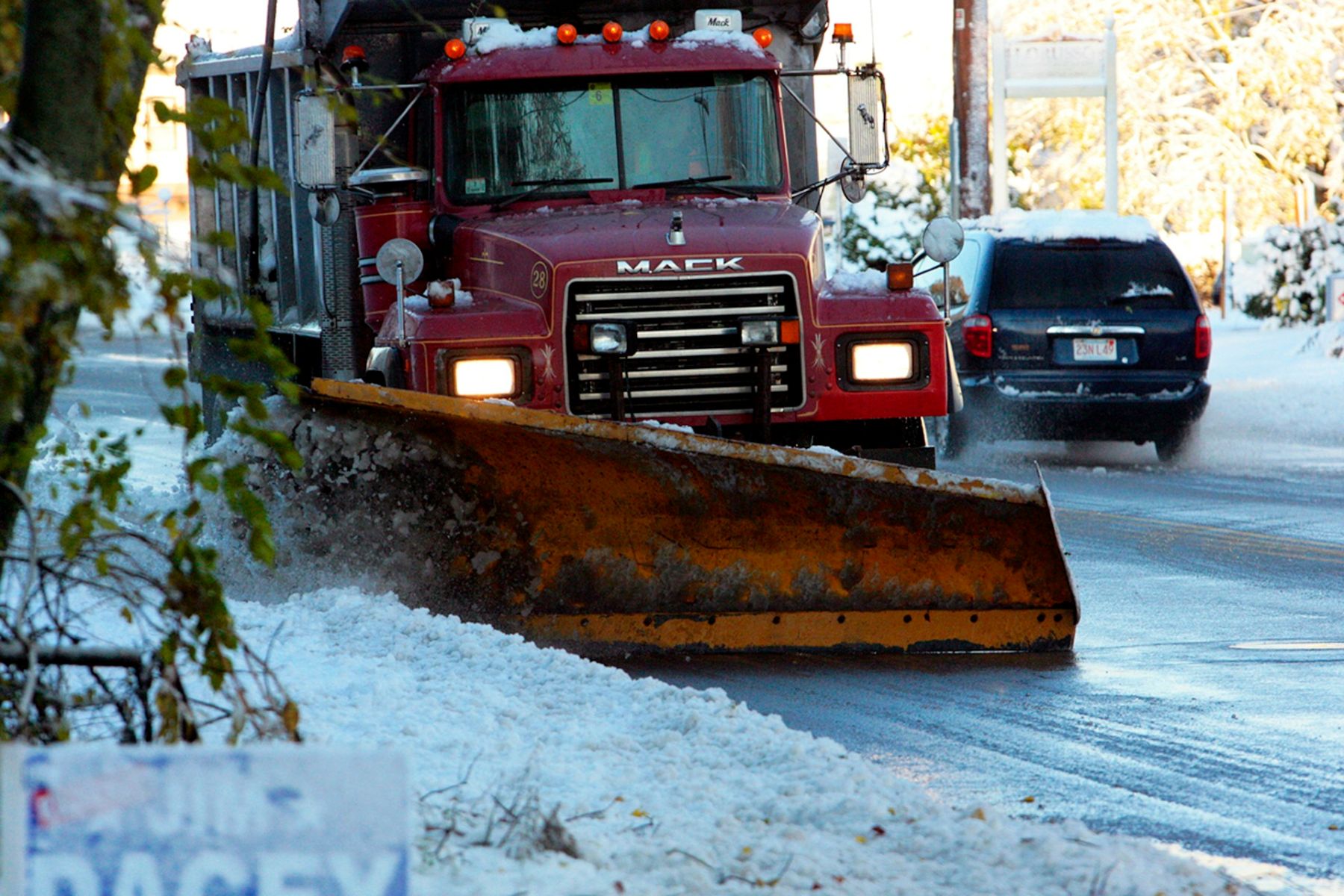
0:17:29.7 Jennifer Norris: I guess it depends what part of the mainland you’re in. Our snow is incredibly heavy because of the water content. And it’s a thing, and if you’re into weather and environment and meteorologists, like, we have some of the heaviest, heaviest snow you can find in North America, to the point where a traditional snowblower cannot blow it. When you get into roadways and large parking lots and public works infrastructure that you have to clear, we get into situations where the heavy equipment and the loaders and the plows that we have are probably a lot larger than what you would see normally. And then we have attachments for blowers and baskets that may be popular in some areas of large sizes, but just on local roadways, I don’t believe it’s used as much. And we have to blow it off the roads because you’re not moving it after. Like, if our sidewalks aren’t done within a day or two because of a storm event, it gets so hard and packed down, it’s like concrete. So then we have to go use these specialized blowers.
0:18:49.1 Bailey Dickman: How do you do emergency planning?
0:18:51.3 Steve Chippett: Well, [chuckle] it’s very difficult to do emergency planning, too. I mean, we rely heavily on each other. All of our municipalities, even though we’re all different towns, different municipalities, we’re always there to help each other, and that’s huge. For me, I may be small, but there are a whole lot smaller than us that come to me for help. And we’ll go to little bigger municipalities for help. Now, bigger municipalities come to us, too, but we rely heavily on each other. And we’ve got a couple of vendors on the island that really support public works, and they take care of us pretty well. [chuckle] Speaking of stuff, we had a brand new sewer jetter delivered to us two days ago. Came up from the States. Went to start it, nothing.
0:19:40.9 Bailey Dickman: Oh, no.
0:19:41.0 Steve Chippett: So we had to wait for a vendor to come in five hours away. He drove five hours this morning to come here to fix it, and it was a little pin in a plug that was broke.
0:19:54.7 Bailey Dickman: What is your biggest struggle that you think somebody who manages a mainland community would also relate to?
0:20:00.6 Steve Chippett: We all have the same issues. Like, it’s just on a larger scale or a smaller scale. I mean, you still got the dynamic of personalities interacting with each other. We’ve all got the same… Most of us got the same union issues with our workforce and things like that. The public, I mean, don’t matter where you go, if there’s 100 of them or if there’s 100,000 of them, the public are all the same problem. They want it fixed, they want it done now. “I pay taxes. Why is this not working for me? And it should have been done before it even broke” type thing, right? So we all run into all those same things. But the good thing that we all have going for each other, and I’ve been finding out since we’ve been part of the American Public Works Association, is we have each other to lean on, to vent to, to learn from each other’s experience. Like here, I’m it. That’s it. There’s just one… Everything to do with public works is me. So if I need something, whether it’s a safe work practice, advice on how to do something, whatever, it’s just me. So rather than me taking all of this time doing all of this research, doing all of these things, I’ll shoot off a mass email and within minutes everybody who’s got people to do this stuff for them is sending them my way and saves us a barrel of money and time because somebody’s already got it done. You don’t need to reinvent the wheel.
0:21:16.5 Bailey Dickman: What is it like dealing with this kind of changing tide levels, this water, this constant push, this constant ebb and flow of tide levels on an island?
0:21:29.7 Jennifer Norris: So dealing with water is something we do naturally every day. Sometimes that’s from water that’s on the land, like lakes, ponds, streams, rivers, and then other times, it’s on the coast. Like I said, most of our communities are all along the coast. And Newfoundland’s also called the Rock, and it’s called that and its nickname is that is because, literally, it’s like a giant rock and you have to blast and drill sometimes, [chuckle] and there’s a lot of rock when you expose the ground. So that type of stuff is day-to-day. Climate change and sea level rise is real and obviously our coastal exposure’s there. We just can’t use historical conditions anymore. 20-odd years ago when I started this, this is what we did. They never talked about climate change 20, almost 25 years ago. Now we need to reassess, and everything is, like, for the future. It’s not based on historical now, which is just a complete change in 180 how we did things. We looked back to design, and now we look forward to design. And maintenance and manage as well on the public works side.
0:22:47.6 Bailey Dickman: How do you begin to even prioritize investments in your community?
0:22:52.5 Steve Chippett: Everything revolves around water and sewer for me. That’s my biggest things. I gotta make sure that that stuff is running, literally. And as long as that part is taken care of, everything else is just bonus.
0:23:05.3 Bailey Dickman: What other unique struggles does Bishop’s Falls have?
0:23:07.6 Steve Chippett: For me, actually, one thing that I have that a lot of our places may not, not as much, is forest fire is normally a yearly thing for us, where we’re surrounded by the forest. Lots of times… I know a lot of other places on the island are dealing with fires, too. I mean, the East Coast, they had really, really bad fire last year, and because of its location, they were talking about evacuating the whole East Coast and coming this way because there’s only one way in and one way out. We’re on an island, right? So they had to get this side of the fire in order to make sure that they were safe in case the fire was, you know, took over their, God forbid, their community and stuff. But for us, normally every year, because we’re right on, right in the center of the island, we’re surrounded by forest, forest fire is becoming more of a prevalent thing for us than it ever used to be. So that’s becoming an issue. And like I say, we’ve only got one way in, one way out. It’s either we gotta go east or we gotta go west. If we go east, we’re flying out if we gotta move. If we’re going west, well, the boat better be running because that’s how we’re gonna get off the island.
0:24:14.6 Bailey Dickman: If you had… If there was a public works professional who was newly a public works director on an island on Newfoundland, what’s the advice you would give to them?
0:24:23.4 Steve Chippett: My number one advice would be, get involved with the local public works chapter because without them, your life is gonna be a whole lot more difficult. You gotta have support from everybody, and it’s a game changer. Not all of us can stock everything that we need all the time. So it’s good to be involved with other municipalities so that if it’s on the island, somebody’s gonna help someone else out and get it to them and just get a replacement when we can type thing. But the networking is huge. That is number one. You got to have… And I’d say that’s probably everywhere, I mean, for us specifically because, like I said, we can’t go to a store and purchase a lot of this stuff. If it’s not on the island to be purchased, it’s not there. You gotta know people that already has it to get you out of a jam.
0:25:17.5 Bailey Dickman: Let’s change gears just a little bit. I wanna make sure we talk about CPWA a little bit.
0:25:23.9 Jennifer Norris: Yeah. So it is a branch of American Public Works Association. We’re raising awareness for public works across Canada, and we are advocating. And some of those things may look a little differently in Canada, like broadband access and network is still a priority there. Transportation and water is still a priority. But the new things come up, which is similar… Which is AI and protecting your digital infrastructure. And we have our chapters, the same as chapters in the United States, and we have our chapters across the country. And every time I travel, no matter where it is, it’s similar stories. I mean, we’ve talked a lot today about differences managing public works on an island, and sure, there’s a lot, but there’s a lot of similarities, too. And starting in Conception Bay South and then going to the provincial president for the chapter and then being involved with the Canadian board and then becoming Canadian president and then being able to travel to PWX and different chapter meetings and being involved with Council of Chapters and different things, it very quickly kind of cemented my idea of public works family and community.
0:26:53.3 Bailey Dickman: What’s your favorite part about managing an island?
0:26:57.0 Jennifer Norris: Every day is different. It’s been… I think engineering, I started in engineering, and part of that was the creativity and the problem solving. And then when I transitioned into the public works side as well, I kind of thought… That was a second thought. I thought engineering was gonna be the main thing. Public works was just kind of run itself to the side. [chuckle] Very quickly, very, very quickly realized that wasn’t the case. And since my time here now, which is almost 14 years, I can’t tell you the list of different challenges and things that you wouldn’t think of. And every day is different, and there’s a different set of problems, and we always rise to the challenge. It doesn’t matter where I go, who I’m speaking to, the people that are involved in public works at whatever level it is will always rise to the challenge.
[music]
0:27:56.3 Bailey Dickman: Thank you for listening to Public Works Radio, the official voice of the American Public Works Association. And thank you to our guests, Jennifer Norris and Steve Chippett. And I know that I say this every time, but I really do mean it. If you haven’t already subscribed, please do so. Make sure that you don’t hesitate to rate and review the show, forward us along to a friend, and drop us a note over at podcast@apwa.org so we can hear your feedback directly. We’ll catch you next time.
Related Resources
Proficiency Levels
Introductory
Focuses on a general or broad overview of the topic, awareness of basic factual recall. Limited experience of the subject matter is necessary to understand content areas.
Applied
Focuses on practical implementation of technical steps or strategies, some prior knowledge and experience of the topic is necessary.
Advanced
Mastery of basic concepts associated with an area has been obtained. Focuses on understanding nuances, advanced concepts, and intricacies with implementation within knowledge area. Strong understanding of how the concept impacts other factors or areas of operations.
Program Types
CLL
Click, Listen & Learn (CLL) are interactive educational webinars. Each program is led by top experts in the field who share new ideas, methods, and technologies in a fast-paced two-hour time frame. These programs are available free to APWA members. CLL programs are eligible for continuing education units (CEUs).
Primer
Primers are used to educate policymakers about public works roles and responsibilities in public rights of way, the impact of federal workforce development policies on the industry and workforce, and the importance of resilient infrastructure.
Public Works Radio Podcast
Public Works Radio is the official podcast of the American Public Works Association (APWA), bringing the stories behind our communities to life. This podcast shines a spotlight on the people and projects that keep our cities running—humanizing the work and the professionals who make it happen. Each episode dives into a wide range of topics designed to educate and inspire, making public works more visible to everyone.
PWX
PWX session recordings cover a wide variety of topics, including integrating modes of transportation, traffic and transit, construction management, emergency management, engineering and technology, fleet and facilities, management, parks and grounds, snow and ice control, and stormwater/flood control, as well as solid waste, roads and bridges and water/wastewater. PWX sessions are eligible for continuing education units (CEUs).
Reporter Articles
APWA Reporter articles are written by public works practitioners on subjects such as solid waste management, water resources, municipal engineering, transportation, equipment services, buildings and grounds, snow removal, and other public works-related topics.
Snow
The Snow Conference session recordings feature public works professionals sharing the latest best practices in managing winter/snow operations more successfully, taking advantage of emerging technologies, understanding and preparing for the challenges ahead, and providing better service to their communities. Snow sessions are eligible for continuing education units (CEUs).
Tech Boxes
A tech box is a PDF take-away that provides information in lists, steps, or defined areas specifically focused on trending technologies.
Virtual Program
Virtual programs are live, interactive educational programs led by top experts in the field who provide timely information or address trending topics within an area. Programs often conclude with an open forum for Q&A.